Technical article. Written for readers who want the building science. Prefer the short version? Browse the Homeowner Guides.

Key takeaways
- In Arizona homes with attic ductwork, attic temperature drives both delivered air temperature and room heat gain. Insufficient attic ventilation lets that temperature climb higher and stay higher longer.
- The usual sources are soffit intake blocked by insulation, too little exhaust, unbalanced or short-circuited airflow, stagnant attic pockets and powered fans that do not perform.
- It shows as rooms that worsen in peak afternoon hours and improve after sunset, with attic ducts hot to the touch. Vent path inspection, attic temperature measurement and thermal imaging confirm it.
- Ventilation is not a standalone fix. It works together with attic insulation and duct thermal protection, and a powered attic fan should not be installed before the ceiling plane is sealed.
Hot and cold rooms are usually caused by measurable differences in either (a) delivered airflow, (b) delivered air temperature, or (c) room heat gain. In Arizona homes with attic ductwork, the attic environment often becomes the dominant driver of both delivered temperature and room heat gain during peak summer conditions.
When attic temperatures rise excessively, rooms with long duct runs, rooms under thin insulation, and rooms near knee walls become predictable hot zones. One factor that strongly influences attic temperature is ventilation performance.
Cause: Insufficient Attic Ventilation
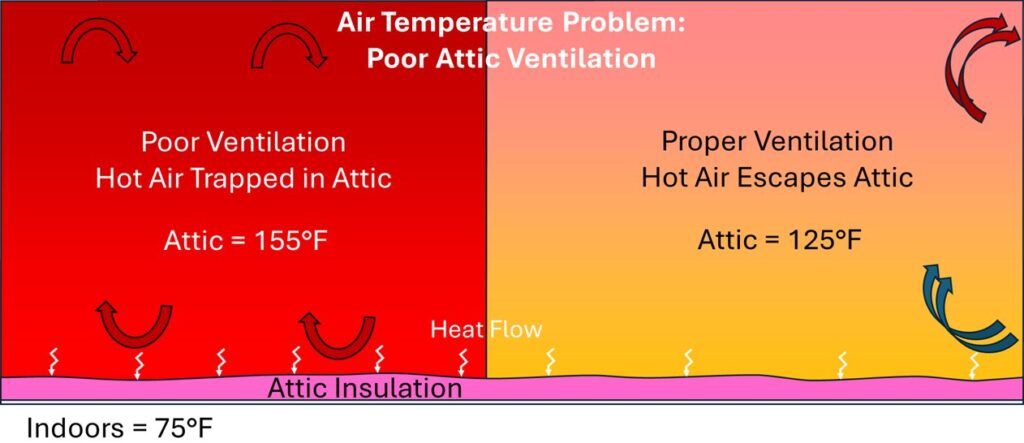
A common cause of hot and cold rooms is insufficient attic ventilation. Attic ventilation helps remove super-heated air and reduces the peak attic temperature that the home and duct system are exposed to. If ventilation is blocked, unbalanced, or inadequate, attic temperatures climb higher and stay higher longer, especially in late afternoon.
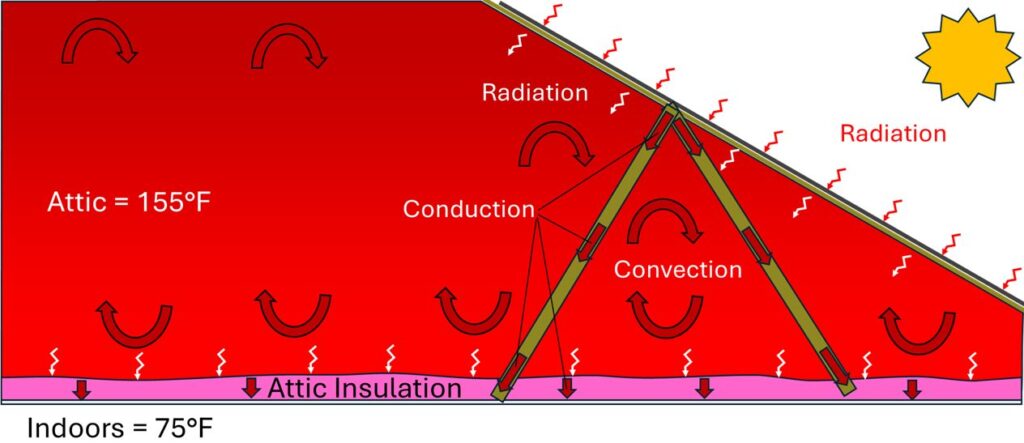
In Arizona, the attic can function like a solar-heated plenum above the home. Elevated attic temperatures increase (1) duct heat gain (warmer supply air delivered to rooms), (2) ceiling and knee wall heat gain (more load into certain rooms), and (3) material degradation in ducts and insulation. Insufficient ventilation does not create every attic temperature problem, but it often amplifies them.
Why Does Insufficient Attic Ventilation Create Hot Rooms?
The temperature difference between attic and conditioned space is the driving force behind heat transfer. When ventilation is poor, attic temperature rises farther above outdoor temperature, increasing ΔT across the ceiling and across duct insulation. That added ΔT increases heat gain into rooms and increases heat gain into supply air as it travels through the attic.
This effect is not uniform. Rooms with longer duct runs (greater surface area exposure) and rooms under roof geometries that trap heat (vaults, low-slope sections, attic pockets) experience more heat gain. That is why ventilation-related comfort complaints are often “the back bedrooms are always hotter,” even with adequate equipment capacity.1
Ventilation is also a multiplier: it works best when combined with proper insulation and duct thermal protection. For example, improved attic ventilation reduces peak attic temperature, while Hot & Cold Rooms: Insufficient Attic Insulation and Hot & Cold Rooms: Insufficient Duct Insulation determine how much of that attic heat actually reaches the rooms.
What Are the Sources of Insufficient Attic Ventilation?
Most ventilation problems come from blocked airflow paths or unbalanced systems.
Blocked Soffit Intake. Insulation installed without baffles can block soffit vents, starving the attic of intake air. When intake is blocked, exhaust vents cannot move sufficient air even if they exist.2
Insufficient or Inadequate Exhaust. Missing ridge vents, undersized roof vents, or poorly performing gable vents reduce the attic’s ability to remove heated air.
Unbalanced Ventilation (Short-Circuiting). In some attics, air enters and exits in ways that do not sweep heat uniformly. For example, strong gable vents can short-circuit flow and leave sections stagnant and hotter than others.
Attic “Pockets” and Complex Geometry. Vaulted ceilings, attic knee walls, and multiple attic sections can create stagnant zones that trap heat, disproportionately affecting the rooms below.
Non-Performing Mechanical Ventilation. Powered attic fans or garage fans that are undersized, installed without adequate intake, or not operating correctly fail to reduce temperature effectively. When correctly designed and installed, a powered attic or garage fan can significantly reduce peak attic/garage temperatures.3
Additional Effects of Insufficient Attic Ventilation
Premature Equipment Failure. Beyond hot rooms, insufficient attic ventilation contributes to long-term performance and durability problems.
Increased Duct Heat Gain. Higher attic temperature increases supply air temperature rise across duct runs, reducing delivered cooling and worsening room-to-room differences.
Higher Ceiling and Knee Wall Heat Gain. Rooms under the attic experience higher conductive and radiant load, increasing runtime and making comfort harder to maintain.
Accelerated Material Degradation. Extreme attic heat accelerates degradation of flex duct materials, sealants, and insulation, increasing the likelihood of Duct System Failure: Insufficient Attic Ventilation over time.
Common Signs of Insufficient Attic Ventilation
Ventilation-driven attic heat problems often show these patterns:
- Hot and cold rooms worsen most during peak afternoon hours.
- Attic air feels extremely hot and stagnant compared to the outdoor temperature.
- Supply ducts in the attic feel very hot to the touch while the system runs.
- Rooms under vaulted ceilings or knee walls are consistently hotter.
- Comfort improves noticeably after sunset as attic temperature falls.
For a plain-language overview of this condition, read the homeowner guide: A Hotter Attic Makes Hot Rooms Worse, and Ventilation Is the Valve.
How Professionals Confirm This Condition
Attic ventilation is confirmed by inspection and measurement.
Ventilation Path Inspection. Confirm that soffit intake is open and continuous, baffles are present, and exhaust paths (ridge/roof vents) are unobstructed.
Temperature Measurement. Measure attic temperature during peak conditions and compare to outdoor temperature. Excessive attic-to-outdoor temperature delta is a strong indicator that ventilation and/or radiant control is underperforming.
Thermal Imaging. Thermal imaging helps identify the hottest attic zones, overheated duct sections, and hot ceiling patterns in the rooms below.
KOTA Attic Heat-Reduction Options. Knights of the Attic evaluates attic heat as part of its Air Temperature Services and may recommend strategies such as radiant heat shielding and powered attic/garage fans, alongside duct thermal protection, to reduce the temperature exposure that drives hot rooms.4
What NOT to Do
These actions often underperform or create new issues:
- Do not install a powered attic fan without ensuring a sealed ceiling-plane. Creating a pressure difference between the attic and interior space will increase air leakage if not properly sealed first.
- Do not block soffit vents with insulation. Use proper baffles to maintain proper attic air ventilation.
- Do not treat attic ventilation as a standalone fix. If ducts and insulation are underperforming, attic temperature, duct protection, and insulation work together.
- Do not ignore attic sectioning (multiple attic zones). Stagnant pockets may require targeted solutions.
References
- 1 DOE Building America Solutions Center. Air Sealing, Insulating, and Venting Attics and Roofs to Reduce Heat Gain: https://basc.pnnl.gov/information/air-sealing-insulating-and-venting-attics-and-roofs-reduce-heat-gain
- 2 ENERGY STAR. About Attic Ventilation: https://www.energystar.gov/saveathome/seal_insulate/do-it-yourself-guide/about-attic-ventilation
- 3 DOE Building America Solutions Center. Attic Ventilation Fans: https://basc.pnnl.gov/information/attic-ventilation-fans
- 4 Knights of the Attic. Accessories & Ventilation Services: https://knightsoftheattic.com/accessories-ventilation-services/
Solution: Click here to learn about solutions to this problem.