Skip to content
Licensed, Bonded & Insured · Serving Metro Phoenix

Safety + Moisture Management Exhaust, garage fumes, sweating ducts and noisy vents corrected by Phoenix duct & attic specialists

Some problems never show up on the thermostat. Dryer and bath exhaust that ends in the attic, garage air in the house, ducts that sweat, vents that roar. We find where each one starts and fix it there.

Concern 7 of 7

The Problems That Have Nothing to Do With Comfort.

A dryer vent that ends in the attic. Garage air in the hallway. A vent that drips every monsoon season. A return that roars. None of them show up on the thermostat, and all of them start somewhere we can find.

  • Where every dryer, bath and kitchen exhaust actually ends: outside, or in the attic
  • Garage-to-house separation, tested with the doors closed
  • Cold ducts, vent boxes and the attic imaged for sweating and moisture
(602) 675-6827

Free Duct & Attic Assessment, about 2 hours, with you present. We do not sell or service HVAC equipment.

A dryer vent duct packed solid with lint
Lint packed where the air was supposed to leave.

Four Checks

Four Places We Check That Nobody Else Does.

Seen from above, every one of these starts at a wall, a duct or an opening we can put a hand on. Select a check, or a number on the plan, and switch between as found and corrected.

Floor plan of a single-story home with a garage, a laundry room, a bath, a kitchen, a hall with the return grille, two bedrooms and a living room. Check 1: as found, the dryer duct and the bath fan end in the attic, shedding lint and moisture; corrected, both run to caps on the outside wall. Check 2: as found, fumes drift from the garage through the shared wall, the door and the attic hatch; corrected, the wall, hatch and door are sealed. Check 3: as found, the vent box in the bath sweats and drips; corrected, it is insulated. Check 4: as found, the small return grille in the hall roars; corrected, a larger, sealed return is quiet.

Check 1 of 4

Dryer and Bath Exhaust

As found
The dryer duct and the bath fan end in the attic. Lint and moisture pile up above the ceiling, the clothes take longer to dry, and the laundry room runs hot.
Corrected
Both routed to a cap and terminated outside, the dryer duct short and straight, the lint cleared.
What we check
Where every exhaust actually ends, the dryer duct’s route and length, lint in the wall box, airflow at the bath fan.

Check 2 of 4

The Garage Separation

As found
Exhaust and fumes drift through the shared wall, the door to the house and the attic hatch whenever the house pulls air.
Corrected
The shared wall, ceiling and hatch sealed and the door weatherstripped, so the garage keeps its own air.
What we check
Room pressure with the doors closed, the shared wall and ceiling with the thermal camera, the hatch and the door seal.

Check 3 of 4

The Sweating Vent Box

As found
In monsoon season a bare duct or vent box runs cold enough to sweat. Drips, stains around the vent and a musty smell follow.
Corrected
The duct and the vent box insulated, so no cold surface meets humid air; exhaust moisture kept out of the attic.
What we check
Surface temperatures of ducts, vent boxes and vents; stains around the vents; moisture and ventilation in the attic.

Check 4 of 4

The Return Grille

As found
A return too small for the system roars and whistles as air is forced through it, and the blower strains.
Corrected
The return sized and sealed, the filter fitted, a return path for rooms whose doors close. The system goes quiet.
What we check
Return size against the system, filter fit, kinked or crushed ducts, and which doors change the sound when closed.
See each one in detail

The assessment finds which of these your home actually has: exhaust terminations photographed, room pressure with the doors closed, surface temperatures and thermal images.

Four Ways It Shows Up

Dryer Vents, Garage Fumes, Condensation and Noise

Each one is found during the same assessment, and each has a fix that goes in before the comfort work, so nothing gets buried that we would need to reach later.

  • Dryer vents and exhaust

    Dryer Vents and Exhaust

    A dryer vent that ends in the attic, or is clogged and kinked on the way out, dries slower, runs hotter and is a fire risk.

    Signs

    • Clothes take two cycles
    • Laundry room hot while the dryer runs
    • Lint behind the dryer
    • Bath mirror that stays fogged

    What we look at

    Where the dryer, bath and kitchen exhaust actually end: outside, or in the attic. The dryer duct’s route and length, and the lint packed in the wall box behind it. Bath fans tested for airflow at the grille, because a fan that spins is not always a fan that moves air.

    What usually goes in

    1. Dryer vent cleared, straightened and terminated outside; an inset dryer vent box where the dryer sits tight to the wall (Cleaning Services)
    2. Bath fans upgraded and terminated outside through a roof or wall cap (Accessories & Ventilation Services)
    3. The kitchen exhaust checked for a real path out, not a loop back into the room

    Next: Garage Fumes Back to top ↑

    A clogged dryer vent: lint packed solid in the wall opening behind the dryer
    Every load pushed its air into this. The dryer ran hotter and longer for it.
    An inset dryer vent box recessed into the wall behind a dryer
    An inset vent box: the dryer sits flat, the duct stays straight and clear.
  • Garage fumes

    Garage Fumes

    A garage shares walls, a ceiling and often an attic hatch with the house. Whatever is in its air follows the pull of the house.

    Signs

    • Exhaust smell indoors after parking
    • Odors in the room beside or above the garage
    • Chemical smells with the system running
    • A hot room next to the garage

    What we look at

    Room pressure with the doors closed, to see whether the house pulls from the garage; the shared wall, the ceiling above the garage and the hatch with the thermal camera, where every gap shows; and the seal on the door into the house.

    What usually goes in

    1. Insulated Attic Armor™ at the garage separation: the shared wall tops, every ceiling opening and the hatch sealed (Air Seal Services)
    2. Drill & Fill in the shared wall and blown-in insulation above the garage, which closes the gaps as it insulates (Garage Temperature Control)
    3. A return pathway for the room that pulls hardest, so it stops breathing garage air (Duct Services)

    Next: Condensation and Humidity Back to top ↑

    A thermal camera held up to a garage wall, showing the heat and gaps along the shared wall
    The shared wall through the thermal camera: every gap shows before it is sealed.
    A technician blowing fiberglass insulation into a garage wall cavity through a small drilled hole
    Drill & Fill: the shared wall filled, so it stops passing heat and air.
  • Condensation and humidity

    Condensation and Humidity

    Cold metal in humid air sweats. In monsoon season a bare duct, vent box or vent does exactly that, inside your ceiling.

    Signs

    • Water stains around a vent
    • Drips from a vent in monsoon season
    • Musty smell near the ceiling
    • Damp insulation in the attic

    What we look at

    Surface temperatures of the ducts, vent boxes and vents, where a cold spot is a wet spot waiting for humid air; insulation missing or thin on the duct; exhaust dumping moisture into the attic; and the attic’s ventilation, so moisture can leave the way heat does.

    What usually goes in

    1. Insulated Duct Armor™: the duct sealed and wrapped so no cold surface meets humid air Highest recommended
    2. Vent boxes insulated and sealed to the ceiling (Air Seal Services)
    3. Exhaust terminated outside and the attic ventilation corrected with baffles, soffit and ridge vents (Accessories & Ventilation Services)

    Next: Noisy Ducts and Vents Back to top ↑

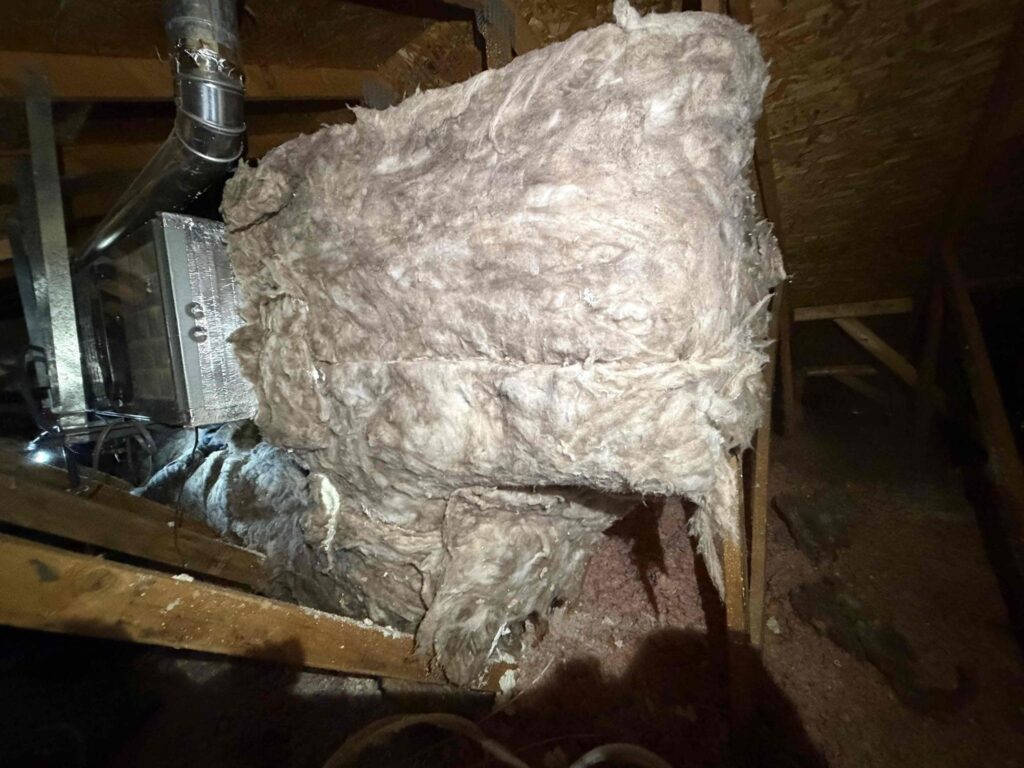
    A supply plenum and its takeoffs fully encapsulated and wrapped in insulation
    Insulated Duct Armor™: nothing cold left bare for humid air to find.
    Cardboard baffles stapled between the rafters at the eaves, holding the blown-in insulation back from the soffit vents
    Baffles keep the soffits open, so moisture and heat have a way out.
  • Noisy ducts and vents

    Noisy Ducts and Vents

    A noisy system is almost always a pressure problem: air fighting its way through ducts and returns that are too small for it.

    Signs

    • Whistling or roaring at the return
    • A loud blast when the AC starts
    • Doors that whistle or slam when closed
    • Rumbling behind the walls

    What we look at

    The return grille and return duct against what the system needs, the filter’s fit and how much it restricts, kinked or crushed ducts, and which doors change the sound when they close, which tells us where a return path is missing.

    What usually goes in

    1. The return sized to the system and sealed, the filter fitted to its can (Duct Services)
    2. Return pathways for the rooms whose doors close: jump ducts or transfer grilles, so the air has somewhere to go
    3. Duct modifications and airflow balancing, so air stops being forced through a bottleneck

    A higher fan speed pushes the same air into the same bottleneck. More pressure means more leakage and more noise, not more air in the far bedroom. The restriction has to be removed, not overpowered.

    How your plan is built Back to top ↑

    A ceiling return grille with sound marks around it
    Whistling and roaring are the sound of air forced through too small an opening.
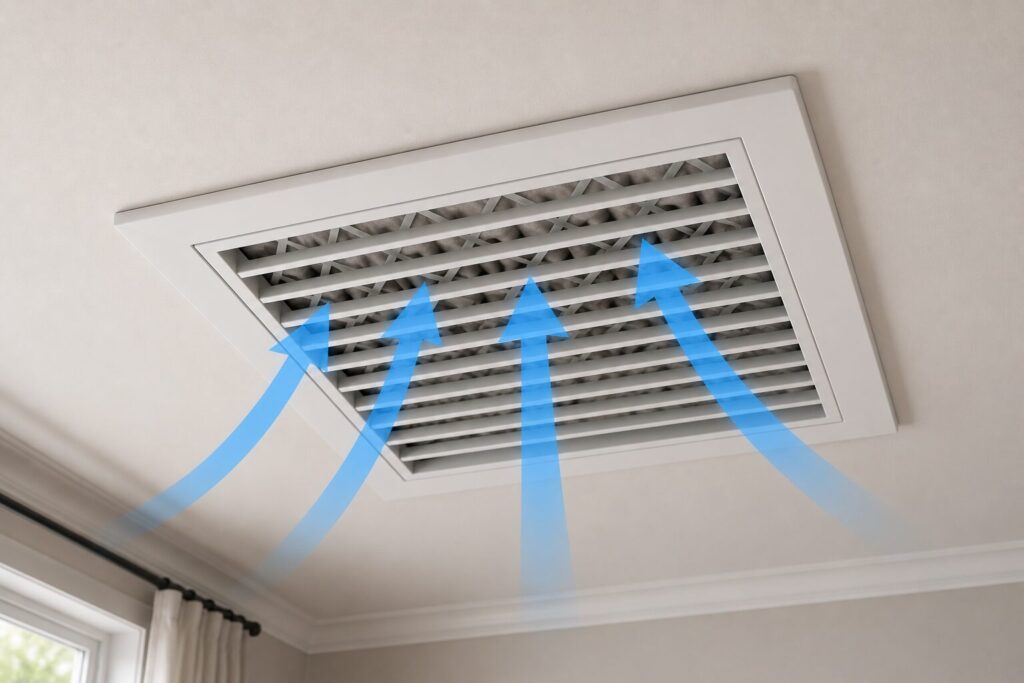
    A ceiling return grille with arrows showing air drawn in from the room
    A return sized to the system takes the air in without the strain or the noise.

The Order We Work In

Safety Items Go In First.

  • Step 1

    Exhaust out

    Nothing ends in the attic

    Dryer, bath and kitchen exhaust routed and terminated outside, the dryer duct cleared.

  • Step 2

    Garage sealed

    Fumes stay in the garage

    Shared walls, the ceiling and the hatch sealed, the door into the house weatherstripped.

  • Step 3

    Cold surfaces insulated

    Nothing left to sweat

    Ducts and vent boxes sealed and wrapped, so humid air never meets a cold surface.

  • Step 4

    Ventilation corrected

    Moisture and heat leave

    Intake low, exhaust high, baffles in, so the attic breathes the way it was designed to.

Scoped from the assessment. Only the items the readings support go in, and they go in before the comfort work, so nothing is buried under new insulation that we would need to reach later.

Backed By

Found First, Fixed at the Source

Safety and moisture corrections start the same way the comfort work does: with the reading that finds the cause. Which guarantees go into your package is decided with you.

  • From the assessment

    The checks that find it

    Exhaust terminations photographed outside. Room pressure with the doors closed. Surface temperatures and thermal images.

    Each one in your plan, with the photos.

  • Energy Savings Guarantee

    You pick the savings

    “Your system uses less energy after our improvements, by the amount you choose.”

    Sealing the garage separation and the ducts is sized from the assessment’s leakage test.

  • Also on every job

    20-year labor workmanship warranty

    Separate from the guarantees, which are about the result.

Questions

Exhaust, Fumes, Moisture and Noise, Answered

Is a dryer vent that ends in the attic really a fire risk?
Yes. Lint is fuel, and a vent that ends in the attic leaves it piled on hot ducts and dry framing with no way out. It also keeps the dryer running hotter and longer. We route it outside and clear the lint on the way.
Why does my house smell like the garage?
Because the house is pulling air from it. A return that is short on air, or a closed-door room with no return path, pulls through the shared wall, the ceiling and the hatch. We test the pull with the doors closed and seal the separation.
Why does a vent drip in monsoon season?
The duct or vent box behind it is cold and bare. Humid air reaches that cold surface and condenses, the same way a glass sweats. Insulating and sealing the duct and the vent box ends it.
Is a loud AC normal?
Usually not. Whistling and roaring at the return are the sound of air forced through an opening that is too small, and a blower straining against it. Sizing and sealing the return fixes the noise and the strain together.
Do you clean dryer vents?
Yes, as part of Cleaning Services, and we check where the vent ends and how it is routed at the same time, because a clean vent that still ends in the attic is only half fixed.
How long does the assessment take?
About 2 hours, with you present, free, no obligation. Exhaust terminations, room pressures with the doors closed, surface temperatures and thermal images, with photos of everything we find.

Google Reviews

What Valley Homeowners Say About Knights of the Attic

Posted on Google Google
Chuck D profile picture
Chuck D
Google star 1Google star 2Google star 3Google star 4Google star 5Trustindex verifies that the original source of the review is Google.
Damien Mendez at Knights of the Attic did an awesome job balancing our cooling system after the attic portion of the work was complete. Listened to us and made adjustments based on our issues/ needs. Thank you!
Posted on Google Google
Laura H profile picture
Laura H
Google star 1Google star 2Google star 3Google star 4Google star 5Trustindex verifies that the original source of the review is Google.
Every single one of their employees was personable, polite, punctual, and tidy. We had experience with Nick, Antonio, Jovan, Miguel, and Noah. Our house is significantly more comfortable. Our master suite is at the far end of the house and used to be 10 to 15° warmer than the rest of the home. We are sleeping so much better, thanks to Knights of the Attic! Highly recommend!
Posted on Google Google
Johnny G profile picture
Johnny G
Google star 1Google star 2Google star 3Google star 4Google star 5Trustindex verifies that the original source of the review is Google.
We have had a hot room upstairs since we moved in over a decade ago. Numerous AC companies told us different things, no solutions. These guys came out and fixed the airflow, sealed it up and everything is great now. I wish I called sooner honestly.
Posted on Google Google
Brian D profile picture
Brian D
Google star 1Google star 2Google star 3Google star 4Google star 5Trustindex verifies that the original source of the review is Google.
Knights of the Attic technician, Shane Ratliff did an outstanding analysis of our ductwork system and made recommendations for us. Shane was very knowledgeable, professional and personable!
Posted on Google Google
Lauren P profile picture
Lauren P
Google star 1Google star 2Google star 3Google star 4Google star 5Trustindex verifies that the original source of the review is Google.
One amazing company amazing owner
Posted on Google Google
Rhonda B profile picture
Rhonda B
Google star 1Google star 2Google star 3Google star 4Google star 5Trustindex verifies that the original source of the review is Google.
Shane was awesome explaining everything that was wrong & showing us everything that needs to be done! I highly recommend Shane & Knights of the Attic for the job!!!
Posted on Google Google
Loren O profile picture
Loren O
Google star 1Google star 2Google star 3Google star 4Google star 5Trustindex verifies that the original source of the review is Google.
Shane did a great job explaining the process of insulating the house and garage attic to me. I have a better understanding of the process and goals set.
Verified by Trustindex
Trustindex verified badge is the Universal Symbol of Trust. Only the greatest companies can get the verified badge who has a review score above 4.5, based on customer reviews over the past 12 months. Read more

Proudly Local

Safety and Moisture Corrections Across the Phoenix Metro

From Buckeye to Maricopa, and the communities below.

  • Scottsdale
  • Phoenix
  • Mesa
  • Tempe
  • Gilbert
  • Peoria
  • Chandler
  • Apache Junction
  • Avondale
  • Buckeye
  • Carefree
  • Cave Creek
  • El Mirage
  • Fountain Hills
  • Gila Bend
  • Glendale
  • Goodyear
  • Guadalupe
  • Litchfield Park
  • Maricopa
  • Paradise Valley
  • Queen Creek
  • Surprise
  • Tolleson
  • Youngtown

Not sure whether we serve your home? Call (602) 675-6827 and we’ll be happy to assist.

Map of the Knights of the Attic service area across the Phoenix metro

Free Duct & Attic Assessment

Find Out Where Your Exhaust Ends and What Your House Is Breathing

About 2 hours, with you present. Exhaust terminations, room pressures with the doors closed, surface temperatures and thermal images. Then a plan built around this concern.

(602) 675-6827

Knights of the Attic does not sell or service HVAC equipment. Exhaust, air sealing, duct insulation and ventilation are part of the delivery system we work on: the ducts, the attic, and the air that moves between them.

See how your plan comes together

Call