Indoor Air Quality Dust, stale air and attic air traced to the source by Phoenix duct & attic specialists
Whenever your system runs, your air cycles through ducts in a hot, dusty attic. If attic air is getting into that loop, no filter in the house can keep up. We find where it gets in and fix it there.
Concern 6 of 7
Indoor Air Quality Starts Where Your Air Comes From.
Many homes unintentionally pull air from the attic, the garage or outdoors through leaking ducts and open gaps, bringing dust, insulation particles and pollutants into every room. A better filter can’t catch air that enters after it. We find where it gets in and fix it there.
Leakage on the return side, tested separately from the supply
Room pressure with the doors closed, to find rooms that pull from the attic
Wall tops, vent boxes and the hatch imaged with the thermal camera; air quality readings taken
Free Duct & Attic Assessment, about 2 hours, with you present. We do not sell or service HVAC equipment.
You dust on Saturday. By Tuesday it’s back.
Follow the Air
Your Air Travels in a Loop. Every Stop Is a Chance to Pick Something Up.
Your system pulls air out of your rooms, runs it through a filter and the air handler, and pushes it back out through the ducts. The return side pulls. The supply side pushes. Wherever that loop has a gap, it pulls attic air in on the way back or pushes your cooled air into the attic on the way out. Select a stop, or a number on the house, to see what can happen there.
AtticReturnFilterAir HandlerSupplyYour Rooms
Conditioned air
Attic air and dust
Diagram of a home cross-section. Air leaves the rooms through a return grille with a filter, travels through a return duct in the attic to the air handler, and is pushed back out through supply ducts to the vents in each room. A gap in the return duct, past the filter, pulls attic air and dust into the loop, which is delivered to the rooms. A gap in the supply duct pushes cooled air into the attic. A gap at a wall top lets attic air seep into the rooms directly.
Stop 1 of 5
Your Rooms
Every time the system runs, it pulls air out of your rooms and sends it back to be cooled. That air should be the only thing the system breathes in.
What can go wrong
When the return side can’t pull enough air from the rooms, it pulls from wherever it can: the attic, the walls or the garage.
How we check it
Airflow and room pressure, room by room, with the doors closed.
Stop 2 of 5
The Return Side
The return duct is under suction. A gap, tear or loose connection here doesn’t leak air out. It pulls hot, dusty attic air in, along with insulation fibers.
What can go wrong
Attic air joins the loop after the filter, so it never gets filtered at all.
How we check it
Every reachable return duct, joint and connection, photographed. Leakage tested on the return side, separate from the supply.
Stop 3 of 5
The Filter and Air Handler
A filter only cleans the air that passes through it. Air that slips in past the filter, or around a loose grille, goes straight to the blower.
What can go wrong
An undersized or poorly sealed return grille and filter can let dust slip around the filter instead of through it.
How we check it
The filter’s location and fit, and whether the return grille is sized for the system.
Stop 4 of 5
The Supply Ducts
The supply side is under pressure. Gaps, tears and slipped connections here push the air you paid to cool into the attic before it ever reaches a vent.
What can go wrong
Air pushed out has to be replaced, so the house pulls attic air back in through every gap it can find.
How we check it
Every supply duct, joint and vent box, the main supply box, and the condition of each duct’s liner.
Stop 5 of 5
Back to Every Room
Whatever the air picked up on the way is delivered to every vent the system serves. Gaps at the wall tops and ceiling openings let attic air seep in directly, even when the system is off.
What can go wrong
The dust on your furniture may have started its trip in the attic.
How we check it
Wall tops, ceiling openings and the attic hatch, with the thermal camera from inside the house.
The assessment finds which of these your home actually has: leakage split by supply and return, room pressures, thermal images and air quality readings, all photographed.
Three Ways It Shows Up
Dusty or Stale Air, Allergies, and the Attic Air Behind Them
Source control first. Then filtration, treatment and fresh air, only if the readings call for them. Not every home needs every step.
1 Dust that comes back
Dust That Comes Back
Behind the filter, nothing is filtered. A return-side gap no wider than a pencil, under blower suction for hours a day, feeds attic air to every room.
Signs
Dust back within days
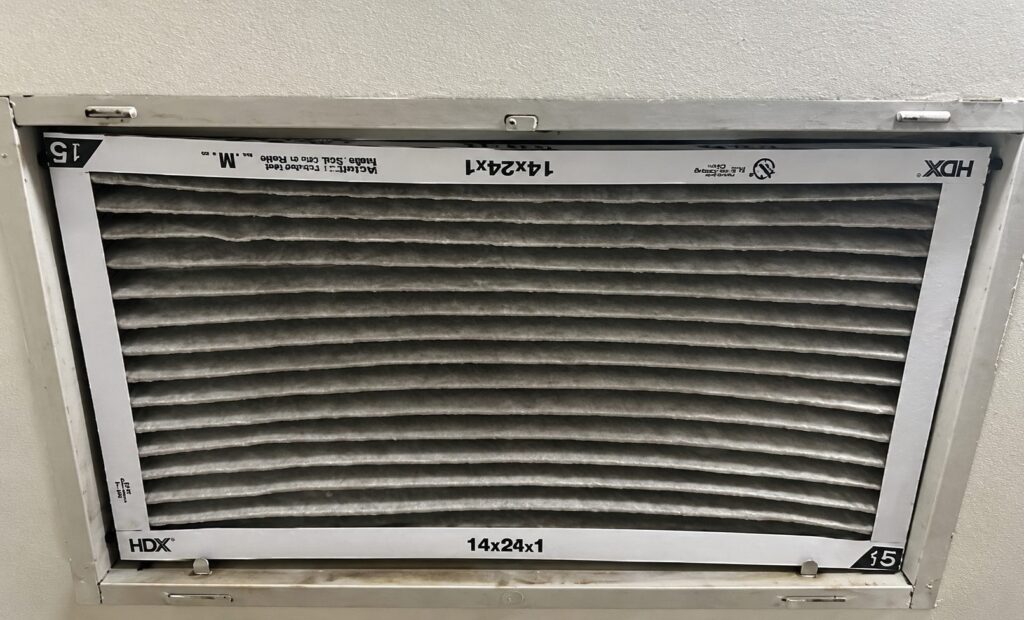
Filters grey in weeks
Dark streaks at vents and the hatch
Dust inside the ducts
What we look at
Every opening between the attic and the loop, the return side first: leaks behind the filter, ducts with failed jackets or torn liners, supply ducts pulled off their vent boxes, and a grille or filter can that lets air slip around the filter. Leakage is tested, split by supply and return.
What usually goes in
Failed ducts repaired first, then the return side, vent boxes and the main box sealed and wrapped with Insulated Duct Armor™Highest recommended
Aeroseal from the inside where foam can’t reach, verified by test
Ducts, coil and blower cleaned once the source is closed, so the dust doesn’t come straight back (Cleaning Services)
Air squeezing through a gap drags dust with it and leaves a mark.A filter that is grey in weeks is catching dust in the air that shouldn’t be there.
2 Allergies and stale air
Allergies and Stale Air
Clean the air you have, after you stop re-contaminating it. Each step only works on the air that reaches it.
Signs
Allergies that flare at home
Stuffy rooms with the system running
Exhaust fans pulling air in through gaps
Old or undersized filters
What we look at
Filter and grille sizing against the system, so a deeper filter doesn’t starve it; room pressure, because exhaust-only fans and closed doors pull air in through gaps; and air quality readings taken before and again after the loop is closed.
What usually goes in, once the loop is closed
Deep Pleat Filtration on the return: far more surface area, less restriction, slower loading. HEPA where the readings call for it
PuriFi air purification for the air that keeps circulating, added only after the loop is sealed and filtered
Fresh Air Ventilation: a controlled amount of outdoor air to dilute what the house itself makes
You will not be sold a filter, a purifier or a ventilation system to fight a leak that costs less to seal. If your home needs only source control and the right filter, that is what we’ll say.
Deep Pleat Filtration: more surface area per pass, without choking the airflow.Fresh air on purpose, through a filtered, controlled path instead of gaps in the attic.
3 Attic air getting in
Attic Air Getting In
The dirtiest air in the house is right above the ceiling, and the top of every interior wall is open to it.
Signs
Attic smell when the blower starts
Warm interior walls near the ceiling
Garage odors indoors
Dust at outlets, switches and trim
What we look at
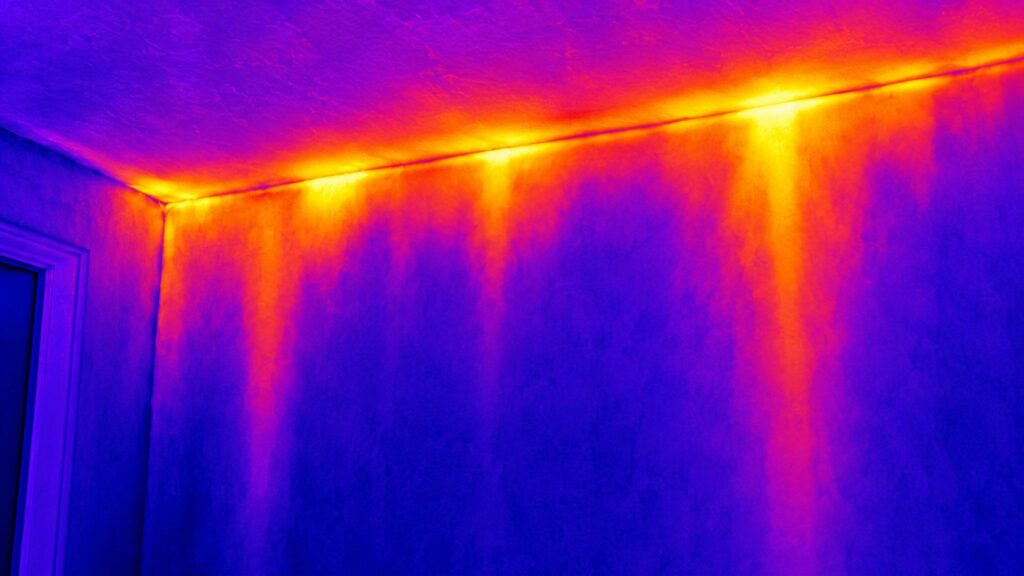
The wall tops and every ceiling opening with the thermal camera from inside the house, where attic air shows up as a warm streak; the attic hatch; the garage’s shared wall, ceiling and hatch; and which rooms pull hardest, measured with the doors closed.
What usually goes in
Insulated Attic Armor™ at the wall tops and every plumbing, electrical and duct opening; the hatch sealed and insulated
The glow along the ceiling seam is attic air coming through the wall top.Insulated Attic Armor™: the wall tops closed before any insulation goes down.
The Order We Work In
Close the Loop First. Then Clean What’s Inside It.
It is tempting to start with a better filter or an air purifier. But a filter can’t clean air that never passes through it, and a purifier has to work against every gap still letting attic air in. That is why we correct indoor air quality in this order. Select each step to see what it changes.
From your roomsFilterAtticDuct gapsSealedAir HandlerYour RoomFresh Air
Attic dust and particles reaching your roomMore →
Illustrative, not to scale
Illustrative diagram of air travelling from the rooms, through a filter, through a return duct in the attic, into the air handler and out to a room. As found, gaps in the return duct pull attic dust in after the filter and the room is hazy. Step 1, source control, seals the gaps and stops the attic dust. Step 2, filtration, upgrades to Deep Pleat Filtration so it catches the everyday dust circulating from the rooms. Step 3, treatment, adds PuriFi air purification. Step 4, dilution, adds a filtered fresh-air intake, and the room is clearest.
As Found
Attic Air Gets In Past the Filter
Gaps in the return duct sit under suction and pull attic dust into the loop after the filter. A standard filter catches some of what comes from your rooms, and none of what comes from the attic.
Step 1 · Source Control
Stop It Getting In
Sealing the ducts and the attic stops contaminated air at the source, so the system only breathes the air from your rooms. Every other step depends on this one.
With the leaks sealed, all of the air passes through the filter, so Deep Pleat Filtration can finally do its job on the everyday dust circulating through your home.
Last, Fresh Air Ventilation brings outdoor air in through a filter, so stale indoor air is diluted instead of simply recirculated. Only if the readings after the loop is closed call for it.
Each step only works on the air the step before it left behind. A filter can’t clean air that enters after it, and fresh air can’t dilute a leak that never stops. Not every home needs every step.
Backed By
Measured, Not Assumed
Every air-quality plan starts with source control, chosen from the readings the assessment takes. Which guarantees go into your package is decided with you.
See the difference
PuriFi comes with particle monitors
PuriFi air purification comes with particle monitors, so you can see the difference in your air for yourself.
Energy Savings Guarantee
You pick the savings
“Your system uses less energy after our improvements, by the amount you choose.”
Sealing the loop is sized from the leakage test; typical results run 80 to 90 percent lower.
Also on every job
20-year labor workmanship warranty
Separate from the guarantees, which are about the result.
Not if the dust is entering after the filter. A return-side leak feeds the house unfiltered attic air no matter what filter is in the grille. Seal the leak first; then the same filter does the job it was bought for.
Do I need an air purifier?
Only if the readings after the loop is closed and filtered say the circulating air still needs it. Added first, a purifier treats a problem that refills itself with every cycle.
What is that “attic” smell when the system kicks on?
Attic air riding the airstream into the house, usually through return-side leaks or open wall tops, pulled in by the blower’s suction. The thermal camera and the leakage test find where.
Will fresh air ventilation help?
It dilutes what the house itself makes: cooking, cleaning, people, pets. It cannot dilute a leak that never stops. Fresh air into a loop still pulling attic air is the same problem with more air moving.
Is duct cleaning enough on its own?
Cleaning removes what is already there. If the return side still pulls attic air, the dust comes straight back. We clean once the source is closed, and test the return side first.
How long does the assessment take?
About 2 hours, with you present, free, no obligation. Leakage split by supply and return, room pressures, thermal images and air quality readings, with photos of every opening we find.
Google Reviews
What Valley Homeowners Say About Knights of the Attic
             Posted on Google        Chuck D     Trustindex verifies that the original source of the review is Google. Damien Mendez at Knights of the Attic did an awesome job balancing our cooling system after the attic portion of the work was complete. Listened to us and made adjustments based on our issues/ needs. Thank you!         Posted on Google        Laura H     Trustindex verifies that the original source of the review is Google. Every single one of their employees was personable, polite, punctual, and tidy. We had experience with Nick, Antonio, Jovan, Miguel, and Noah.
Our house is significantly more comfortable. Our master suite is at the far end of the house and used to be 10 to 15° warmer than the rest of the home. We are sleeping so much better, thanks to Knights of the Attic! Highly recommend!         Posted on Google        Johnny G     Trustindex verifies that the original source of the review is Google. We have had a hot room upstairs since we moved in over a decade ago.  Numerous AC companies told us different things, no solutions.  These guys came out and fixed the airflow, sealed it up and everything is great now.  I wish I called sooner honestly.         Posted on Google        Brian D     Trustindex verifies that the original source of the review is Google. Knights of the Attic technician, Shane Ratliff did an outstanding analysis of our ductwork system and made recommendations for us. Shane was very knowledgeable, professional and personable!         Posted on Google        Lauren P     Trustindex verifies that the original source of the review is Google. One amazing company amazing owner         Posted on Google        Rhonda B     Trustindex verifies that the original source of the review is Google. Shane was awesome explaining everything that was wrong & showing us everything that needs to be done! I highly recommend Shane & Knights of the Attic for the job!!!         Posted on Google        Loren O     Trustindex verifies that the original source of the review is Google. Shane did a great job explaining the process of insulating the house and garage attic to me. I have a better understanding of the process and goals set.               Verified by Trustindex  Trustindex verified badge is the Universal Symbol of Trust. Only the greatest companies can get the verified badge who has a review score above 4.5, based on customer reviews over the past 12 months. Read more
From Buckeye to Maricopa, and the communities below.
Scottsdale
Phoenix
Mesa
Tempe
Gilbert
Peoria
Chandler
Apache Junction
Avondale
Buckeye
Carefree
Cave Creek
El Mirage
Fountain Hills
Gila Bend
Glendale
Goodyear
Guadalupe
Litchfield Park
Maricopa
Paradise Valley
Queen Creek
Surprise
Tolleson
Youngtown
Not sure whether we serve your home? Call (602) 675-6827 and we’ll be happy to assist.
Free Duct & Attic Assessment
Find Out What’s Getting Into Your Air Before You Buy Anything to Clean It
About 2 hours, with you present. Leakage split by supply and return, room pressures, thermal images and air readings. Then a plan built around this concern.
Knights of the Attic does not sell or service HVAC equipment. Filtration, purification and fresh air are part of the delivery system we work on: the ducts, the attic, and the air that moves between them.