
Technical article. Written for readers who want the building science. Prefer the short version? Browse the Homeowner Guides.

Key takeaways
- Under-insulated ducts in a hot attic let supply air absorb heat along the run, so rooms on the longest or hottest runs receive warmer air and drift above the thermostat set point.
- Sources: R-4 duct insulation, compressed or damaged insulation, uninsulated plenums, boots and metal sections, ducts near or touching the roof deck, and ducts not buried in attic insulation.
- Supply air temperature measured near the air handler and at distant registers during peak attic heat, an inspection of the duct insulation and thermal imaging confirm it.
- More attic insulation over suspended ducts, thermostat or fan changes and attic ventilation alone do not fix duct heat gain. Duct insulation and duct placement do.
In many Desert Southwest homes, occupants notice that some rooms are consistently hotter or colder than others. One room may be several degrees warmer than the thermostat set point while another room feels comfortable. These room-to-room temperature differences are rarely “normal.” They are typically caused by measurable problems in the duct system, attic thermal conditions, or pressure relationships inside the home. When the HVAC system delivers the wrong amount or temperature of air to a specific room, that room will drift away from the thermostat set point even while the system runs.
Cause: Insufficient Duct Insulation
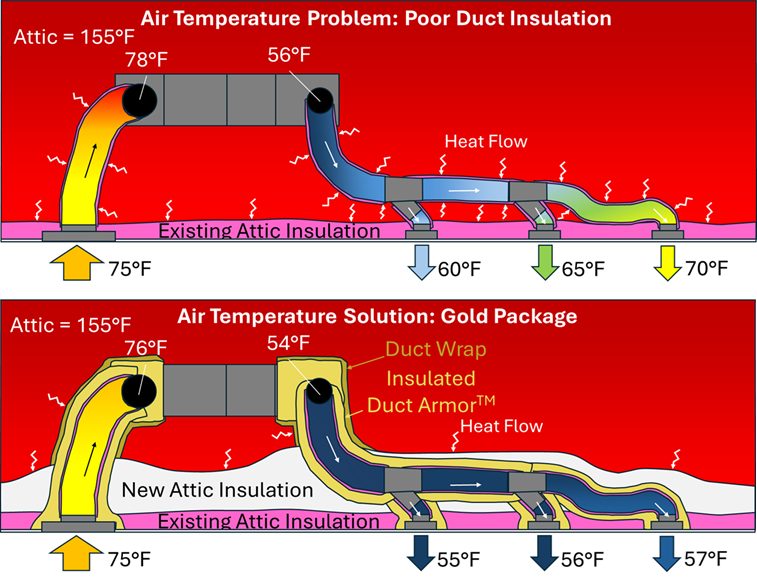
A common cause of hot and cold rooms is insufficient duct insulation, especially in homes with ducts located in a super-heated attic. Even if the HVAC equipment produces cold supply air, that air must travel through duct runs before it reaches each room. If the ducts have low insulation value, damaged insulation, or compressed insulation, the supply air absorbs attic heat along the way. The rooms served by the longest or hottest duct runs often receive warmer air than rooms served by short runs, creating room-to-room temperature differences.
In the Desert Southwest, attic temperatures can soar well above 150°F. When ducts are exposed to that environment, insulation level and duct placement strongly influence how much heat the supply air picks up before it reaches the rooms.1
Why Does Insufficient Duct Insulation Create Hot Rooms?
Delivered room cooling depends on both airflow (CFM) and supply air temperature. If two rooms receive similar airflow but one room receives supply air that is 4 to 8°F warmer due to duct heat gain, that room will have less cooling capacity delivered and will drift above the thermostat set point. Long runs and poorly insulated sections amplify the effect. This is why some homes have “hot back bedrooms” or “warm bonus rooms” even when the equipment appears to be operating normally.
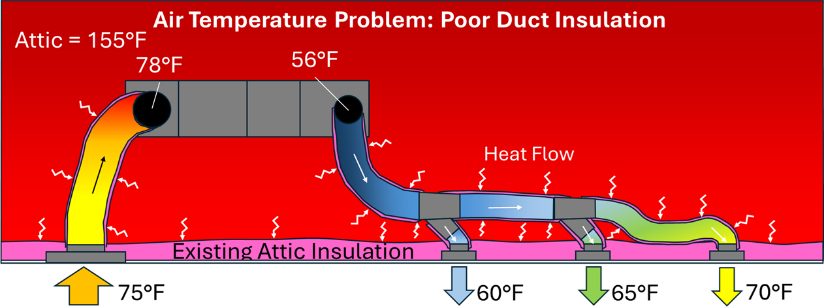
What Are the Sources of Insufficient Duct Insulation?
Duct insulation problems are typically caused by design choices, installation defects, or deterioration over time.
Low R-Value Duct Wrap or Jacket. Most duct systems were installed with minimal insulation (typically R-4) that is not adequate for extreme attic temperatures. ENERGY STAR and many energy programs commonly target at least R-8 duct insulation for ducts located in unconditioned attics, because heat gain through under-insulated ducts can be significant.2
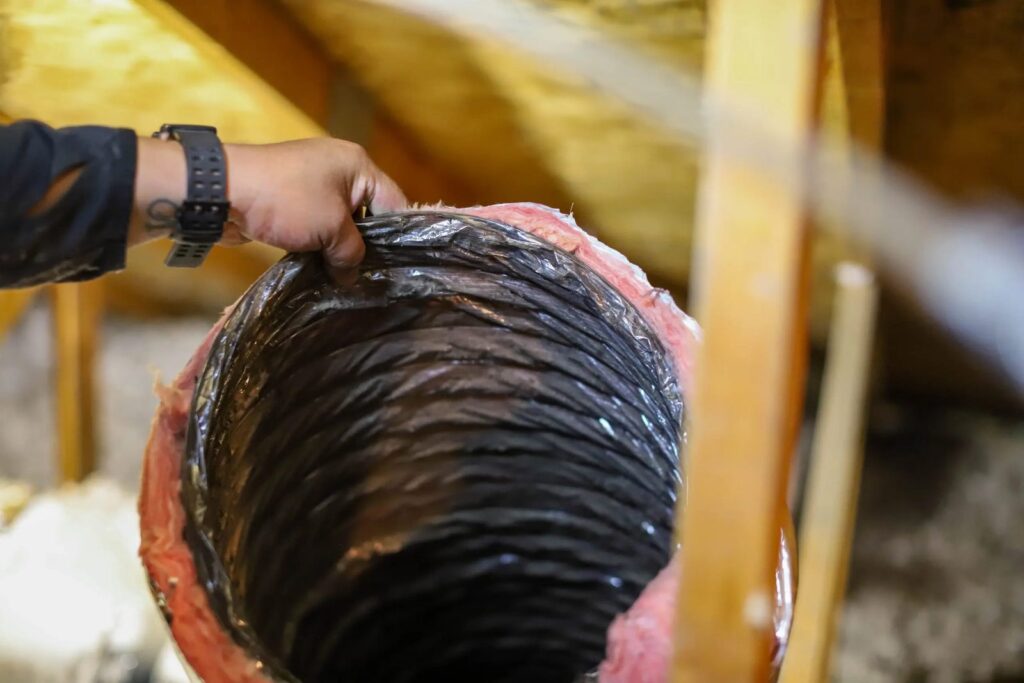
Compressed or Damaged Insulation. Duct insulation loses effectiveness when it is compressed, torn, or missing. Compression reduces the thickness of the insulating layer, and gaps allow direct heat transfer.
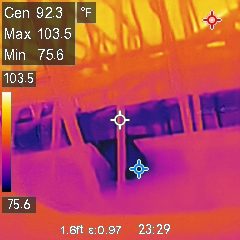
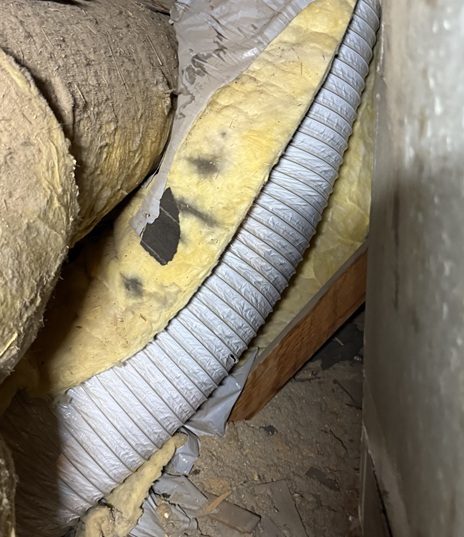
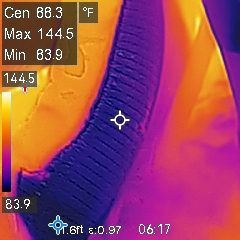
Uninsulated Metal Components. Plenums, boots, takeoffs, and hard metal duct sections are sometimes left uninsulated. These components can become heat-transfer “hot spots” that warm supply air and radiate heat to surrounding attic insulation.
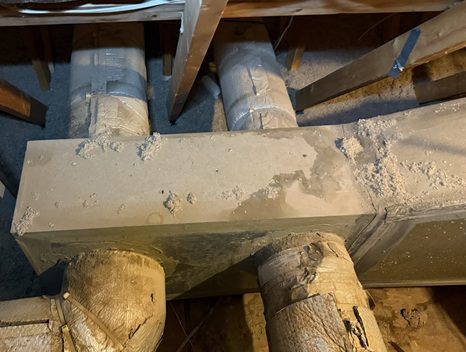
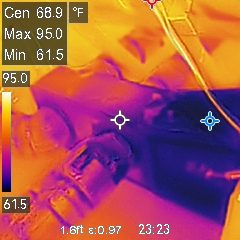
Duct Location and Exposure. Ducts suspended high near the roof deck are exposed to the highest radiant and convective heat. Even a moderately insulated duct can gain more heat if it is positioned in the hottest attic zone. Worse yet are ducts in contact with the roof deck allowing direct conductive heat transfer.
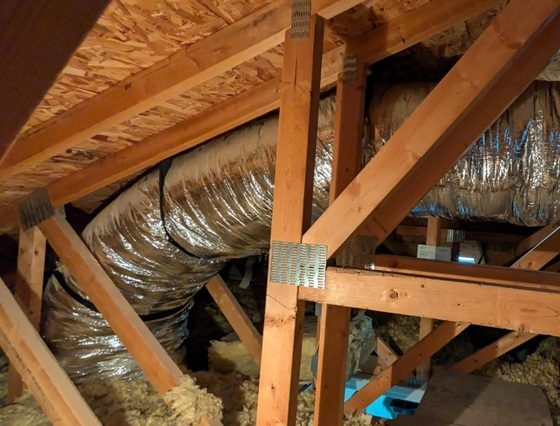
Ducts Not Thermally Protected by Attic Insulation. If ducts must remain in a vented attic, Building America describes encapsulating and then burying ducts in attic insulation as an approach to reduce heat transfer, as long as duct sealing and minimum duct insulation levels are verified first.3
Additional Effects of Insufficient Duct Insulation
Poor duct insulation increases HVAC run time and utility bills because the system must work harder to deliver the same cooling effect. It can also increase discomfort by creating warmer supply air during peak heat. Over time, higher attic heat exposure can contribute to duct material deterioration, jacket failure, and increased duct leakage.
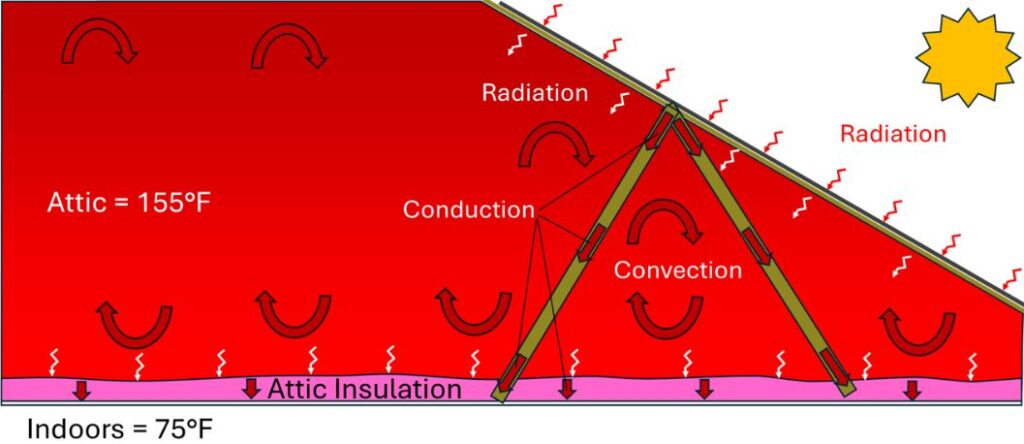
The duct heat gain can be calculated using the basic building-science relationship: Q ≈ (A × ΔT) ÷ R, where A is the total duct area, ΔT is the attic-to-room temperature difference, and R is the effective R-value of the insulation.
An example of this could be a total duct area of 800 ft² (typical in a 2000 ft² home) that has an insulation value of R-4. There is about 55°F of cold air running through the supply ducts with the attic temperature being 150°F (ΔT = 95°F). The duct heat gain is roughly (800 × 95) ÷ 4 ≈ 19,000 BTU/hr. Only about an inch of insulation (R-4) around the largest temperature difference (95°F) in the home makes a tremendous impact on the heat gain the home accrues.
Common Signs of Insufficient Duct Insulation
Homeowners typically notice patterns that point to duct heat gain and insulation deficiency:
- Rooms served by longer attic duct runs are warmer than rooms closer to the air handler.
- Supply air feels noticeably cooler at some registers than others, especially late afternoon.
- The home cools better at night and in the morning, but hot rooms appear during peak attic heat.
- Duct jackets feel very hot to the touch; attic insulation around ducts looks darkened or degraded.
- Thermal imaging shows ducts as bright/hot surfaces compared to surrounding attic insulation.
For a plain-language overview of this condition, read the homeowner guide: The Back Bedroom Gets Lukewarm Air, Even Though the AC Works Fine.
How Professionals Confirm This Condition
Professionals confirm duct insulation problems through measurement and inspection.
Supply Temperature Rise Along the Run. Measure supply air temperature near the air handler and at multiple registers. A meaningful temperature increase at distant registers during peak attic heat indicates duct heat gain.
Verify Duct Insulation Level and Condition. Inspect the duct jacket, seams, and insulation thickness for compression, tears, missing sections, and uninsulated components. Compare the installed insulation level to applicable program/code targets (often R-8 for ducts in unconditioned attics).²
Thermal Imaging. Infrared imaging helps identify overheated duct sections, uninsulated boots/plenums, and areas of high radiant exposure.
Attic Thermal Assessment. Measure attic air temperature and evaluate duct placement relative to roof deck and insulation depth.
At Knights of the Attic (KnightsOfTheAttic.com), duct temperature delivery is treated as a measurable performance outcome. Our Air Temperature Services are designed to reduce duct heat gain using durable thermal protection methods such as Insulated Duct Armor™ and optimized duct placement (suspended, dropped, or buried configurations). The work is designed from those measurements, and the results are guaranteed in writing, so the cold air produced by the equipment actually reaches the rooms.¹
What NOT to Do
Avoid these common mistakes when dealing with duct heat gain and room temperature imbalance:
- Do not just blow in additional attic insulation. Insulating your ducts will most often have a much greater impact on room level comfort and energy efficiency than adding additional attic insulation with your ducts still suspended above.
- Do not adjust the thermostat setpoint or fan settings as a substitute for fixing duct heat gain. The problem is heat gain as the ducts are positioned in the attic, not thermostat behavior.
- Do not compress duct insulation to fit around tight spaces. Compression reduces R-value and increases heat gain.
- Do not ignore uninsulated boots and plenums. Small uninsulated sections can have an outsized impact.
- Do not assume attic ventilation alone will solve duct heat gain. Ventilation helps, but duct insulation and placement still matter.
References
- 1 Building Science Corporation. BSI-074: Duct Dynasty: https://buildingscience.com/documents/insights/bsi-074-duct-dynasty
- 2 Building Science Education (U.S. DOE). HVAC High-R Duct Insulation (why R-value matters; ENERGY STAR duct insulation targets): https://bsesc.energy.gov/energy-basics/hvac-high-r-duct-insulation
- 3 DOE Building America Solutions Center. Ducts Buried in Attic Insulation and Encapsulated: https://basc.pnnl.gov/resource-guides/ducts-buried-attic-insulation-and-encapsulated
- 4 DOE Building America Case Study. Cooling Seasonal Energy and Peak Demand Impacts of Improved Duct Insulation on Fixed-Capacity (SEER 13) and Variable-Capacity (SEER 22) Heat Pumps: https://www1.eere.energy.gov/buildings/publications/pdfs/building_america/64695.pdf
- 5 Knights of the Attic. Insulated Duct Armor™: https://knightsoftheattic.com/insulated-duct-armor/
Solution: Click here to learn about solutions to this problem.


