
Technical article. Written for readers who want the building science. Prefer the short version? Browse the Homeowner Guides.

Key takeaways
- Hot and cold rooms are usually a delivery problem. When duct leakage varies from room to room, some rooms lose part of their supply air before it reaches the register, or receive air warmed by the attic.
- Supply leaks spill conditioned air into an attic that routinely exceeds 150°F, and return leaks pull attic air and dust in. Disconnected ducts, leaky boots, unsealed fittings, failed flex duct and high static pressure are the sources.
- Signs include one room hotter than the thermostat setting, weaker airflow at its register, dust streaking around registers and a dirty coil despite regular filter changes. A duct blaster test (CFM25) quantifies the leakage.
- Adding refrigerant, closing registers, cloth duct tape or new equipment does not fix a leaking delivery system. The leaks have to be located and sealed, including the hidden joints.
In many Desert Southwest homes, occupants notice that some rooms are consistently hotter or colder than others. These temperature differences are usually not caused by the thermostat, and they are rarely solved by replacing HVAC equipment alone. Hot and cold rooms are typically a delivery-system problem: the right amount of conditioned air is not reaching the right rooms at the right temperature.
When duct leakage varies from room to room, common in attic duct systems, some rooms effectively lose part of their supply air before it reaches the register, or they receive air that has been contaminated or warmed by attic conditions. The result is uneven comfort even when the HVAC equipment is functioning normally.
Cause: Excess Duct Air Leakage
A common cause of hot and cold rooms is excessive duct air leakage. When supply ducts leak, conditioned air escapes into the attic before reaching the intended rooms. When return ducts leak, superheated attic air and dust can be pulled into the system downstream of the filter, increasing load and degrading delivered air quality. In the Desert Southwest, where attic temperatures routinely exceed 150°F, duct leakage has an outsized effect on room-level comfort.1
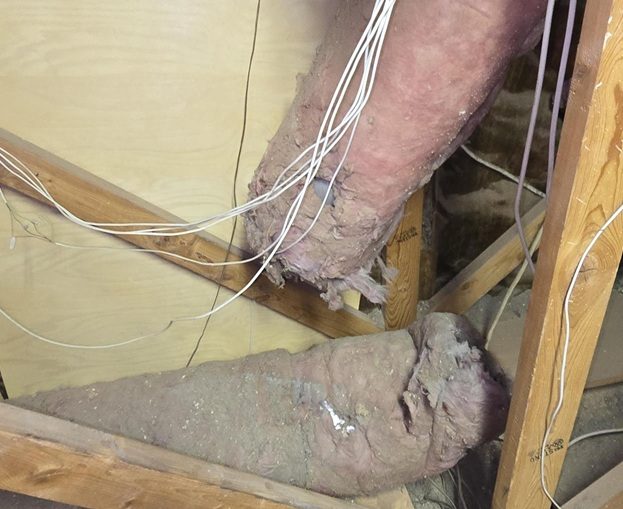
Duct leakage rarely affects all rooms equally. A single disconnected branch duct, a failed boot, or a leaky wye fitting can starve one bedroom while the rest of the house seems “mostly fine.” That room becomes the hot room because its delivered CFM and delivered supply-air temperature are both compromised.2
Why Does Excess Duct Leakage Create Hot Rooms?
Room cooling depends on delivered airflow (CFM) and delivered supply air temperature. If a room needs 120 CFM to offset its heat gain but a leak upstream steals 25 to 35 CFM, the room may only receive 85 to 95 CFM. That reduction alone can cause a steady temperature drift above the thermostat set point, especially during peak afternoon conditions.
Leakage can also reduce the temperature difference delivered from what enters the HVAC system to the room. Supply leaks waste the coldest air into the attic, while return leaks pull in hotter attic air that raises the temperature of air entering the equipment. The combined effect can reduce effective delivered capacity by double digits in the rooms most affected. This is why duct leakage frequently shows up as “one or two rooms never cool down,” even when equipment capacity seems adequate.
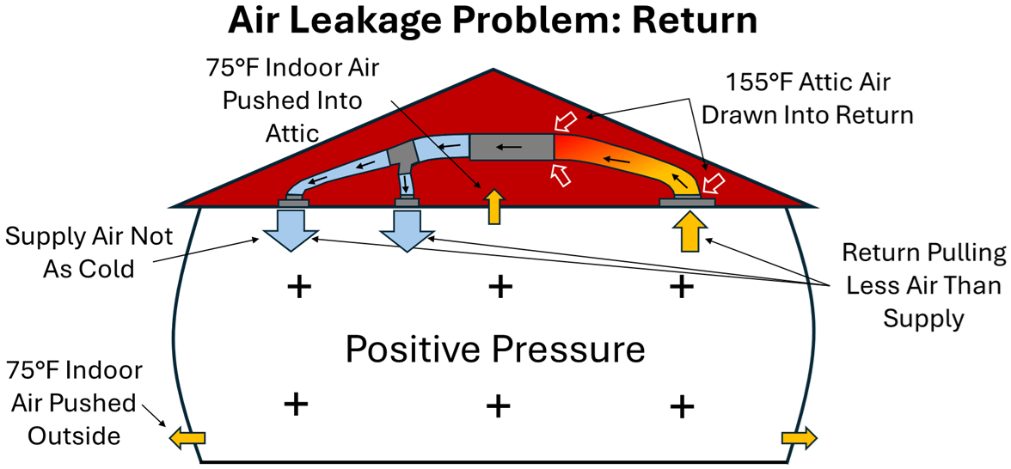
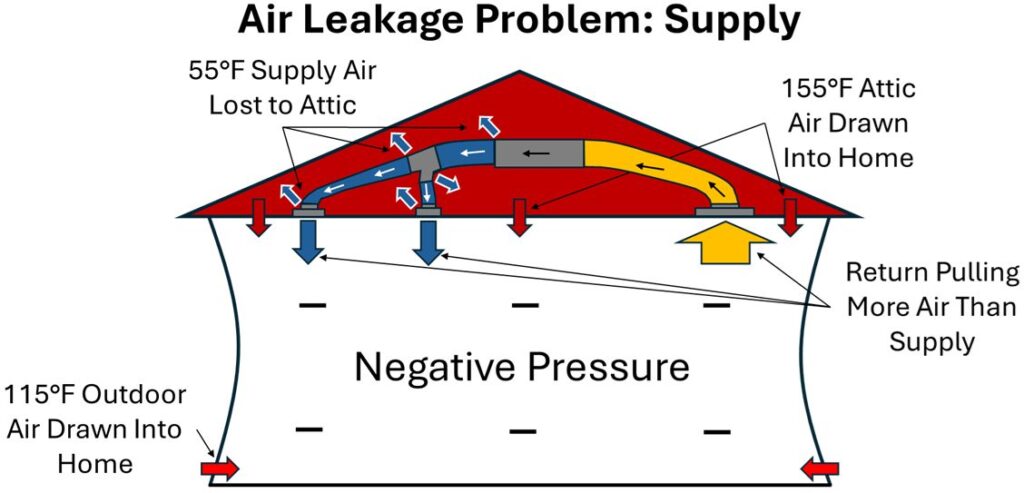
Duct leakage is also pressure-driven: as duct static pressure increases (often from undersized or restricted ducts), leakage rates typically increase. A leaky duct system under high static pressure can be significantly worse than the same leakage area at normal pressure.
What Are the Sources of Excess Duct Air Leakage?
Duct leakage is usually caused by a combination of material aging, installation practices, and pressure conditions.
Disconnected Ducts. A full or partial disconnect at a collar, wye, or boot is one of the highest-impact failures because it can remove most of the airflow intended for a room.3
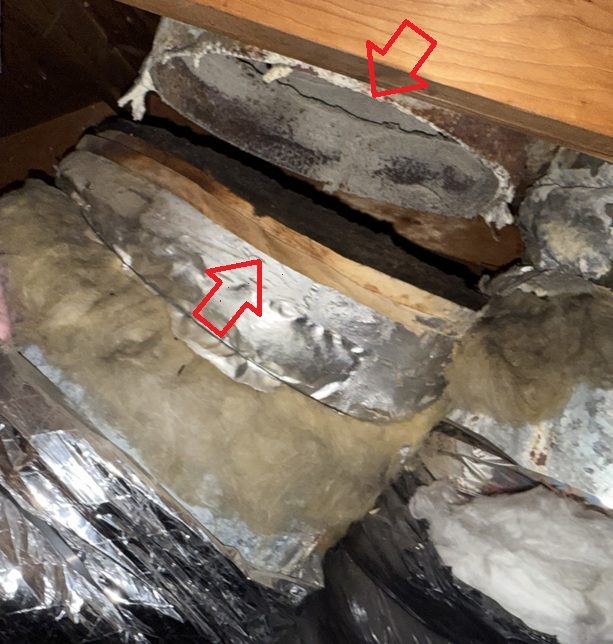
Leaky Boots and Register Cans. Leakage often occurs at the boot seams and at the drywall interface. Even when the duct is intact, air can leak around the boot into the attic cavity.4
Unsealed Plenums and Fittings. Plenums, collars, and branch fittings leak when joints are not sealed with durable materials (mastic/approved tapes) or when older tape fails in attic heat.5
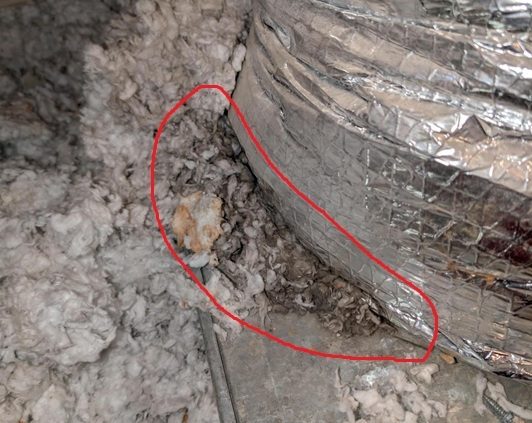
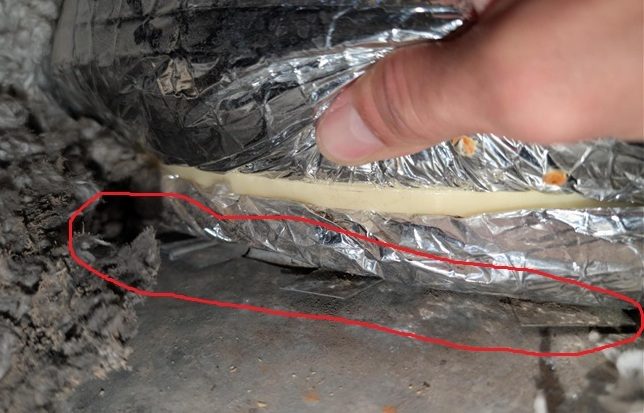
Failed or Brittle Flex Duct. Over time, attic heat cycling can degrade the flex duct jacket and inner liner, creating splits and leaks that are not obvious from a quick glance.
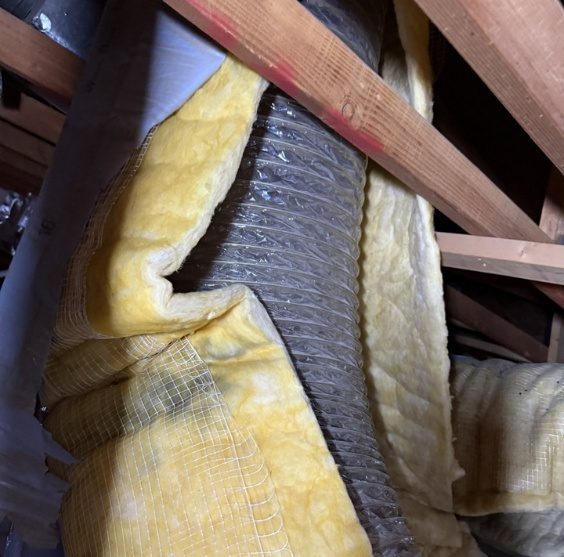
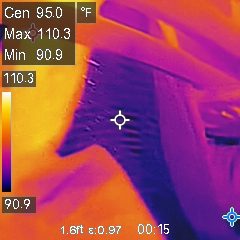
High Static Pressure. Excess system pressure from undersized ducts, restrictive grilles, or dirty components increases leakage flow through existing openings. Leakage is not only an “area” problem. It is also a “pressure” problem.
Additional Effects of Excess Duct Air Leakage
Duct leakage creates cascading effects beyond room comfort.
Higher Utility Bills. Any supply air that leaks into the attic is paid-for cooling that never reaches the living space, increasing runtime.
Equipment Stress and Premature Wear. Longer runtimes and higher blower effort (especially in high-static conditions) increase wear on motors and refrigeration components.
Dust and Indoor Air Quality Problems. Return leaks can pull attic dust and insulation fibers into the system downstream of the filter, contaminating the blower wheel and evaporator coil and circulating particulates through the home.
Worse Duct Heat Gain. Leaks often occur at the same fittings and transitions that also create turbulence and heat soak. The result is not only less air delivered, but warmer air delivered.
Common Signs of Excess Duct Air Leakage
Homeowners often observe several indicators when duct leakage is driving hot and cold rooms:
- One or more rooms (often far rooms) are consistently hotter than the thermostat setting.
- Airflow at the affected room’s register is weaker than nearby rooms.
- Dust streaking around supply registers or at ceiling penetrations.
- Musty/attic odors that appear when the HVAC system runs.
- The air handler coil/blower are dirty despite regular filter replacement.
- Doors move, slam, or are difficult to close when the system turns on (pressure imbalance).
For a plain-language overview of this condition, read the homeowner guide: One Bedroom Is Always Hot, and the Answer May Be a Leaky or Disconnected Duct.
How Professionals Confirm and Correct This Condition
Professionals confirm duct leakage with testing and targeted inspection.
Visual Inspection. Identify disconnected runs, failed flex duct, unsealed boots, and obvious gaps at plenums and fittings. Visual inspection alone is not enough, but it can find high-impact failures quickly.
Duct Leakage Testing. A duct blaster test quantifies leakage (CFM25) so the sealing work can be designed around what it shows. Pressure pan testing can help identify which duct runs show the highest leakage signatures.
Thermal Imaging and Smoke. Thermal imaging during system operation can reveal cold plumes (supply leaks) and hot infiltration points (return leaks). Smoke pencils can help locate leakage at boots and fittings.
Duct Sealing. Insulated Duct ArmorTM completely seals, protects, and insulates ducts end-to-end from the outside. Aeroseal seals ducts end-to-end from the inside. Mastic and mechanical fasteners seal specifically identified leak points.
KOTA Diagnostic Workflow. Knights of the Attic commonly combines room-level airflow measurement, duct leakage testing, and duct sealing. The work is designed from those measurements, and the results are guaranteed in writing.6
What NOT to Do
These actions commonly waste money or make the underlying problem worse:
- Do not “fix” hot rooms by adding refrigerant. Duct leakage can mimic low-capacity symptoms but is not a charge problem.
- Do not seal only the easy-to-see leaks. Hidden joints often account for a large share of leakage.
- Do not use cloth duct tape as a permanent repair in an attic. Adhesive failure is common in high heat.
- Do not close supply registers to “push air” to other rooms. This increases static pressure and can increase leakage.
- Do not replace HVAC equipment expecting the new unit to overcome a leaking delivery system. New equipment will continue to lose cooling at the same leakage points.
References
- 1 Building Science Corporation. Info-603: Duct Sealing: https://buildingscience.com/documents/information-sheets/information-sheet-duct-sealing
- 2 ENERGY STAR. Duct Sealing: https://www.energystar.gov/saveathome/heating-cooling/duct-sealing
- 3 DOE Building America Solutions Center. Sealed and Insulated Flex Ducts: https://basc.pnnl.gov/resource-guides/sealed-and-insulated-flex-ducts
- 4 DOE Building America Solutions Center. Sealing Duct Boots to Floor or Drywall: https://basc.pnnl.gov/resource-guides/sealing-duct-boots-floor-or-drywall
- 5 DOE Building America Solutions Center. Sealed and Insulated Metal Ducts: https://basc.pnnl.gov/resource-guides/sealed-and-insulated-metal-ducts
- 6 Knights of the Attic. Air Seal Services: https://knightsoftheattic.com/air-seal-services/
Solution: Click here to learn about solutions to this problem.


