

Key takeaways
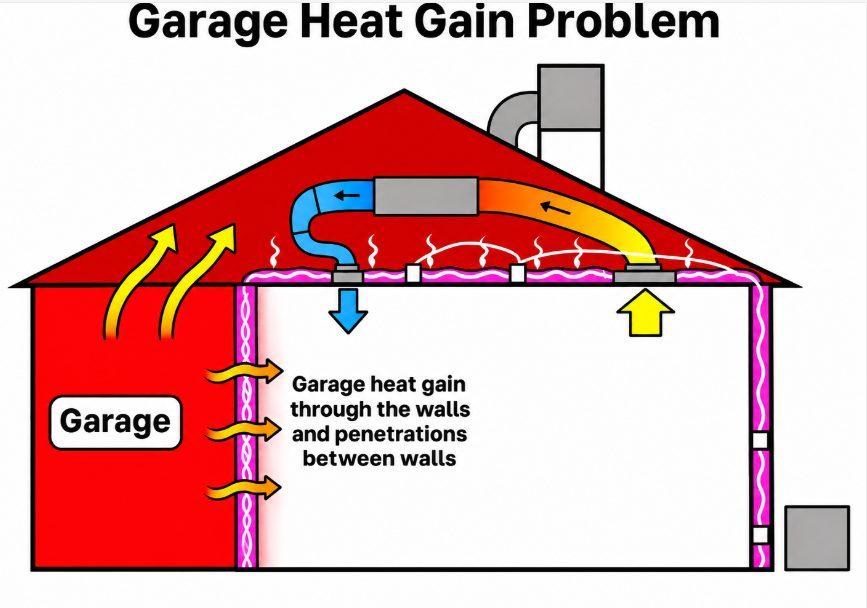
- Garages in the Southwest absorb enormous amounts of solar heat. With no meaningful ventilation, that heat builds up and conducts through the shared wall or ceiling into your living space.
- Two forces work against you: conduction through insulation that is thin, missing or compressed, and air leakage through pipe, wire and HVAC penetrations in the garage boundary.
- The signs: your hottest room shares a wall or ceiling with the garage, that surface feels warm to the touch, you notice faint chemical or exhaust odors, and it is worst on sunny afternoons.
- The fix treats the garage boundary as a thermal and air barrier: evaluate the insulation, seal the air leakage paths, and assess whether garage ventilation can reduce peak garage temperatures.
If someone asked you to rank the rooms in your house from coolest to hottest, would the room above or next to the garage always be near the top of the list?
You’re not imagining it. Garages in the Southwest absorb enormous amounts of solar heat. The concrete slab, the garage door, the roof: all storing and radiating heat. And when that garage has no meaningful ventilation, the heat has nowhere to go. It builds up, hour after hour, and conducts straight through the shared wall or ceiling into your living space.
The room on the other side becomes the permanent hot room. Your AC may be delivering plenty of cold air to it. But the heat load from the garage boundary is overwhelming what the supply duct can offset.
Two Forces Working Against You
Conduction. Heat flows from the hot garage through the shared wall or floor/ceiling assembly. If insulation in that assembly is thin, missing, or compressed, the transfer rate is high.
Air leakage. Penetrations for pipes, wires, and HVAC connections through the garage boundary let hot (and often contaminated) garage air seep into the living space. When the home is depressurized by duct leaks or exhaust fans, this infiltration intensifies.
Signs the Garage Is Your Hot-Room Source
- The hottest room shares a wall or ceiling with the garage.
- You detect faint chemical or exhaust odors in the adjacent room.
- The shared wall or ceiling surface feels warm to the touch.
- The problem is worst on sunny afternoons and persists into evening.
Want the measurements and building science behind this? Read the technical article: Hot & Cold Rooms: Insufficient Garage Ventilation.
How Knights of the Attic Solves This
We address the garage boundary as a thermal and air barrier system. That means evaluating insulation in the shared assembly, sealing air leakage paths between the garage and the living space, and assessing whether garage ventilation can reduce peak garage temperatures. The goal is to isolate the garage heat source from the conditioned space, so the room on the other side of the wall can finally cool down.
If the room next to or above the garage is always the hottest room in the house, the garage boundary is where Knights of the Attic starts looking.
Solution: Click here to learn about solutions to this problem.


