Key takeaways
- Attic insulation is not uniform. Rooms under thin, compressed or missing patches take in 150°F attic heat through the ceiling at two or three times the normal rate.
- The weak spots come from vaulted ceilings, knee walls, plywood storage platforms, wind washing at the eaves, and insulation moved during other work and never put back.
- Signs: the same room is always the hottest, its ceiling feels warm to the touch, and it is worst on sunny afternoons and stays hot into the evening.
- Do not just add insulation. Map the depth over every room, seal the ceiling penetrations first, get the ducts under the insulation, then bring the weak zones up to R-38 to R-49.
Here’s something most homeowners never think about.
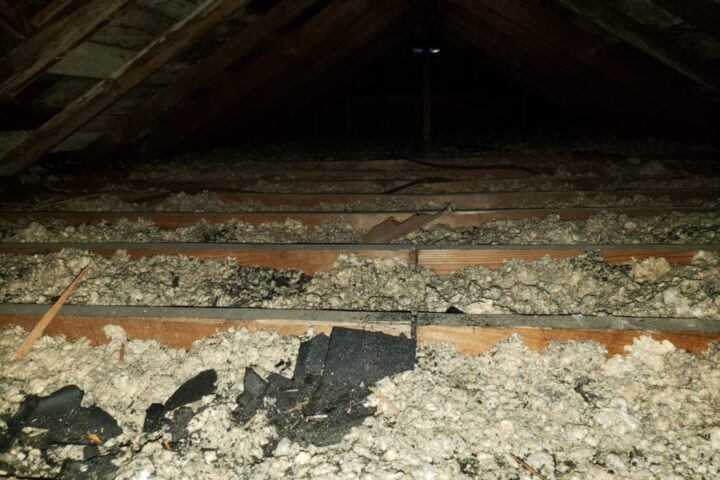
The insulation in your attic isn’t uniform. It was installed in sections, disturbed over the years by cable installers, plumbers, and pest control technicians, and has settled unevenly over decades. Some parts of your ceiling have full insulation coverage. Other parts, often over bedrooms, under attic storage areas, or around the attic hatch, have half the insulation or less.
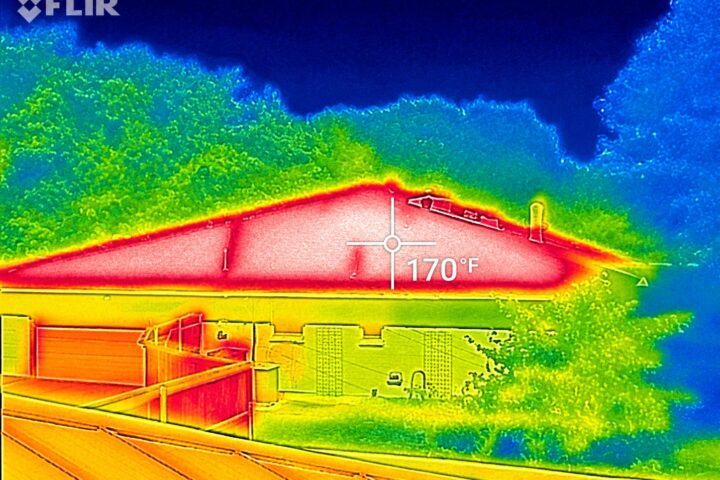
Those thin spots are invisible from inside the house. But from the attic’s perspective, they’re glowing hot targets, places where 150°F heat pours through the ceiling and into the room below at two or three times the normal rate.
The room below feels it. The thermostat in the hallway doesn’t. Your AC satisfies the thermostat and cycles off while the bedroom under the thin insulation drifts to 80°F or higher.
Why Insulation Varies Room to Room
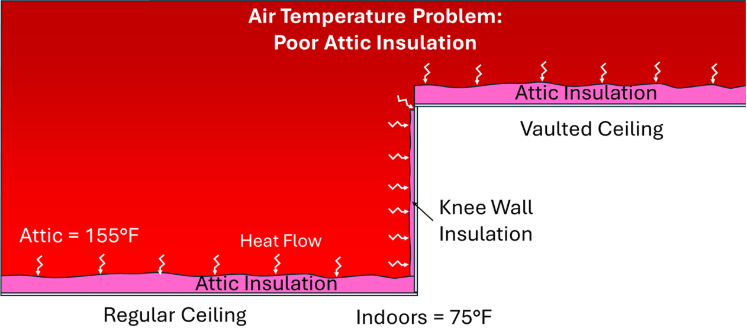
Vaulted ceilings. Rooms with vaulted or cathedral ceilings have less space for insulation. The gap between the roof deck and the ceiling may only allow R-13 instead of R-38.
Knee walls. These are the walls that connect your vaulted ceiling to the attic, not the outdoors. Without supportive backing, knee wall batt insulation often pulls away from the drywall due to gravity and may fall out of the wall cavity completely, losing all of its insulation value.
Attic storage areas. If plywood was laid over insulation for storage, the insulation underneath was compressed to a fraction of its rated R-value.
Perimeter rooms and eaves. Where the roof slopes down to the exterior walls, insulation depth is naturally limited. Wind washing, attic air moving through the insulation at the edges, further reduces effective R-value.
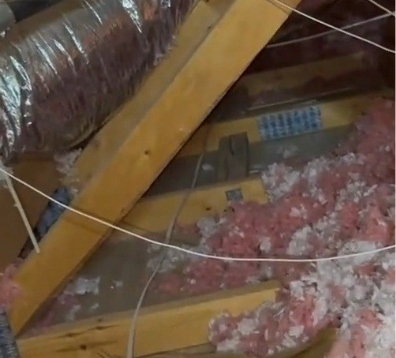
Disturbed or missing patches. Any work done in the attic (electrical, plumbing, pest control) often displaces insulation that never gets put back.
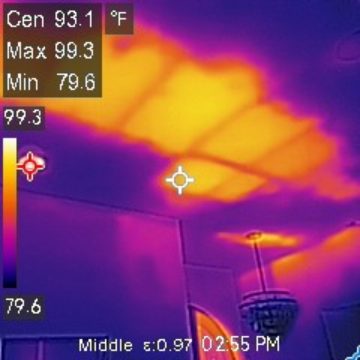
The Math That Creates Hot Rooms
Consider a 200-square-foot bedroom ceiling with 150°F attic above and a 75°F indoor target. With full R-38 insulation, that ceiling conducts about 395 BTU/hr of heat into the room. With R-19 (common in older homes), it’s about 790 BTU/hr. With compressed or displaced insulation at an effective R-10, it jumps to nearly 1,500 BTU/hr.
That’s nearly four times the heat load through the ceiling, focused entirely on one room. Your AC supply duct delivers a fixed amount of cooling. If the ceiling is dumping heat into the room faster than the supply can remove it, the room stays hot. Period.
Signs of Room-Specific Insulation Problems
- The same room(s) are always the hottest in the house.
- The ceiling in the problem room feels warm to the touch.
- The hot room is under a vaulted ceiling, near the attic edge, or below an attic storage platform.
- The problem is worst on sunny afternoons and persists into the evening.
Want the measurements and building science behind this? Read the technical article: Hot & Cold Rooms: Insufficient Attic Insulation.
How Knights of the Attic Fixes Room-Level Insulation Problems
We don’t just “add insulation.” We diagnose where the insulation is failing and why.
Attic inspection maps insulation depth and condition over every room, identifying the thin spots, bare patches, and compressed zones that create hot rooms.
Air sealing comes first. Ceiling penetrations under the insulation are sealed to prevent hot air from bypassing the insulation entirely.
Drop & insulate your ducts at the same time. Get dramatically more performance for the same cost by getting your ducts UNDER your attic insulation before you add more.
Targeted insulation upgrades bring the weak zones up to the same performance level as the rest of the home, typically R-38 to R-49.
A written guarantee comes with the plan. The work is designed from those measurements, and the results are guaranteed in writing.
The Bottom Line
Hot rooms are often caused by something you’d never see from inside the house: uneven attic insulation directly above.
Knights of the Attic finds the thermal weak spots, seals the air leaks, and insulates to a consistent level, so every room gets the same protection from the attic. If one bedroom is always the hottest, the ceiling above it may be the reason.
Solution: Click here to learn about solutions to this problem.