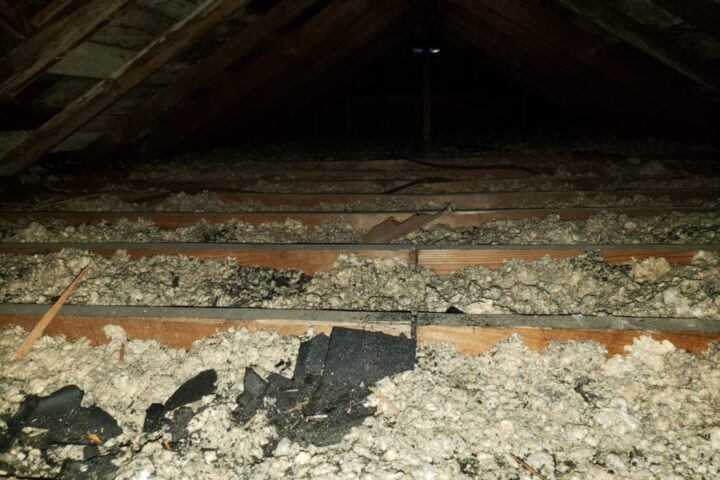
Technical article. Written for readers who want the building science. Prefer the short version? Browse the Homeowner Guides.

Key takeaways
- A room above or beside the garage that stays hotter than the rest of the house usually has localized heat gain, not bad HVAC equipment. A poorly ventilated garage traps heat that transfers into it.
- Heat crosses the garage-to-house boundary by conduction and air leakage. With a 125°F garage and a 75°F room, even moderate R-values can allow thousands of BTU/hr of heat gain into a single room.
- Signs include a shared wall that feels warm in the afternoon and garage odors indoors. Temperature profiling, infrared imaging, blower door testing and smoke diagnostics confirm the heat and leakage paths.
- Do not supply conditioned air to the garage, which is a code violation, or add a garage fan without intake and relief paths. Insulation and air sealing at the boundary still matter alongside ventilation.
A common complaint in Arizona homes is that a bedroom above the garage, a room adjacent to the garage, or a bonus room near the garage stays noticeably hotter than the rest of the house. When a single zone stays hot while the thermostat location is comfortable, the driver is usually localized heat gain and localized airflow delivery, not “bad HVAC equipment.”
Garages are typically unconditioned spaces with large solar-exposed surfaces (roof deck, garage door, exterior walls). If the garage space traps heat, that heat transfers into adjacent rooms through shared walls and ceilings and can also influence pressure-driven airflow pathways between the garage and the home.
Cause: Insufficient Garage Ventilation
A common cause of hot and cold rooms (especially rooms near or above the garage) is insufficient garage ventilation. Without adequate ventilation, the garage and any attached garage attic can accumulate extreme heat during the day. That heat then transfers into the home through the garage-to-house boundary, most commonly as wall heat gain and ceiling heat gain over the garage.
In the Southwest, peak summer conditions can create a garage environment that is significantly hotter than outdoors. If the garage is poorly ventilated and the separation between garage and home is not airtight, the adjacent living spaces experience both thermal and air quality impacts. Knights of the Attic treats the garage as part of the home’s overall performance system because garage heat and leakage often show up as persistent hot rooms.
Why Does Insufficient Garage Ventilation Create Hot Rooms?
Heat moves from the hotter garage zone to the cooler, conditioned zone through conduction and air leakage. Conduction through the shared wall/ceiling follows the same general principle as other assemblies: Q ≈ (A × ΔT) ÷ R. If the garage is 125°F and the room is 75°F (ΔT = 50°F), even moderate R-values can still allow thousands of BTU/hr of heat gain into a single room, especially if insulation is missing, compressed, or bypassed by air leakage.
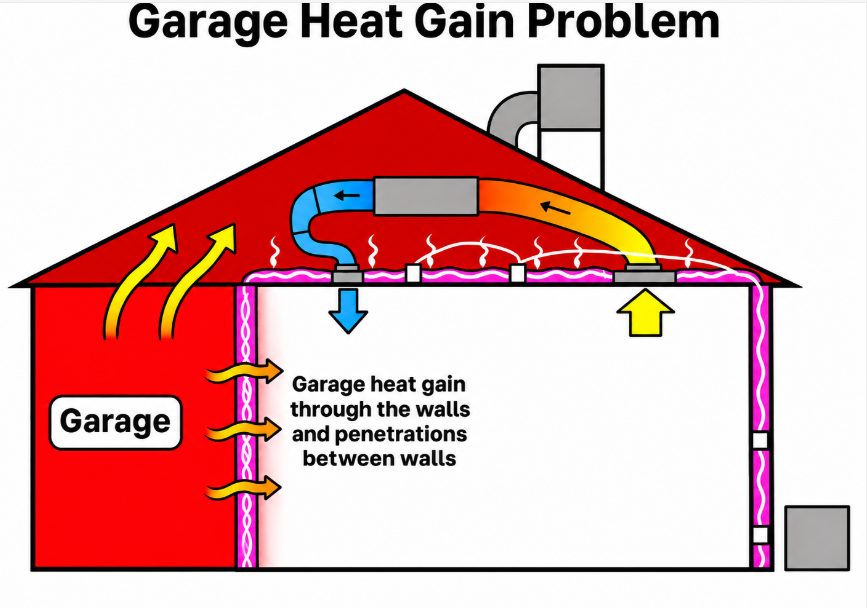
In addition, many homes have leakage pathways between the garage and the home (rim/band joists, penetrations, attic transitions). Under certain pressure conditions, such as when the HVAC system runs or when exhaust fans operate, air can be pulled from the garage into the home. This can worsen comfort and raise indoor air quality concerns, particularly with vehicle fumes and stored chemical vapors.¹
What Are the Sources of Insufficient Garage Ventilation?
Garage heat and room hot spots are typically caused by multiple overlapping conditions.
Lack of Active Heat Removal. Many garages have no dedicated ventilation strategy. Without air exchange, heat accumulates and remains elevated well into the evening.2
Poor Passive Ventilation. Garages with minimal venting or blocked vent paths can trap heat. If the garage attic is also poorly vented, the ceiling over the garage can become a strong radiant and conductive heat source to the room above.
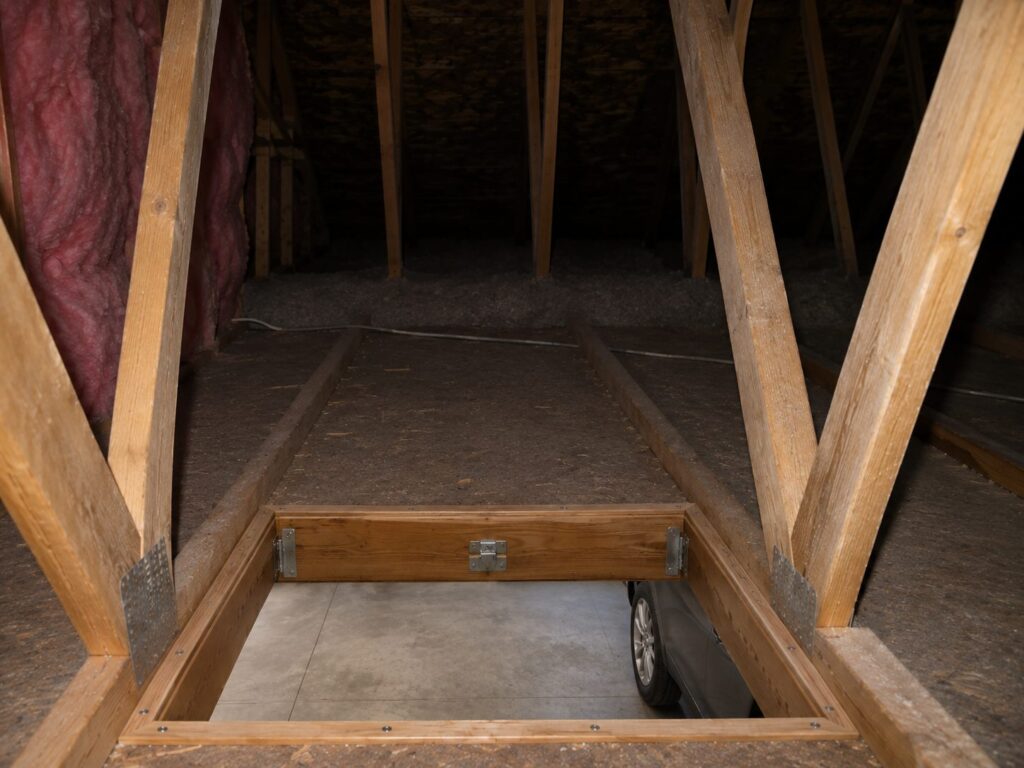
Insufficient Insulation over the Garage. The ceiling above the garage often has thinner insulation or insulation defects compared to the rest of the attic. This increases ceiling heat gain into rooms over the garage.
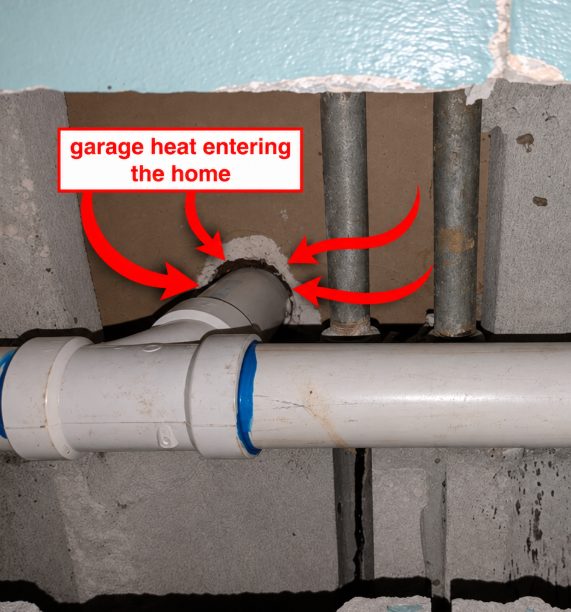
Garage-to-House Air Leakage. Open cavities, rim/band joist gaps, and penetrations allow garage air and heat to leak into the living space. Proper air sealing is critical to both comfort and safety.¹
Large Radiant Surfaces (Garage Door and Roof Deck). Sun-heated garage doors and roof decks elevate garage temperature. Radiant control (e.g., radiant barriers) and ventilation can reduce peak temperatures, but the boundary insulation and air sealing still matter.
Ducts or Air Handlers Near the Garage. If ductwork or HVAC platforms are near or connected to the garage/garage attic, pressure effects can amplify leakage-driven comfort and air quality issues.
Additional Effects of Insufficient Garage Ventilation
Garage heat and leakage create additional impacts beyond one hot room.
Higher Cooling Load. Rooms over/adjacent to the garage require more cooling to offset wall and ceiling heat gain, increasing HVAC runtime.
Indoor Air Quality Risk. Poor separation can allow garage pollutants (CO, VOCs, fuel odors, stored chemical vapors) to migrate into living spaces.3
Comfort Instability. As the garage heats up through the day, the adjacent room performance degrades. Many homes show a distinct “afternoon hot room near the garage” pattern.
Common Signs of Insufficient Garage Ventilation
Common indicators include:
- A bedroom above the garage or a room adjacent to the garage is consistently hotter than other rooms.
- The shared wall between the garage and the home feels warm to the touch in the afternoon.
- The room gets hotter quickly when the garage is used or when the garage door faces afternoon sun.
- Odors from the garage are occasionally noticeable inside the home.
- Thermal imaging shows a hot ceiling/wall pattern that maps to the garage boundary.
For a plain-language overview of this condition, read the homeowner guide: The Bedroom Above the Garage: Why It’s Always the Hottest Room.
How Professionals Confirm This Condition
Professionals confirm garage-driven hot rooms with a combination of temperature measurements, infrared imaging, and leakage diagnostics.
Temperature Profiling. Measure garage temperature, garage attic temperature (if accessible), and adjacent room temperatures during peak afternoon conditions to quantify ΔT and timing.
Infrared (Thermal) Imaging. Identify hot surfaces on the house side of the garage boundary (walls and ceilings) and correlate to missing insulation, thermal bridging, or radiant load patterns.
Air Leakage Testing. Blower door testing and targeted smoke diagnostics can identify leakage pathways between garage and home. The DOE Building America Solutions Center emphasizes continuous air barriers and sealed transitions between attached garages and living space to reduce pollutant transport.¹
KOTA Options. Knights of the Attic addresses garage-driven comfort issues using a systems approach: improve thermal resistance (insulation over the garage and at interfaces), improve air sealing (attic/garage boundary sealing), and reduce garage/attic heat buildup using powered attic/garage fan solutions.4
What NOT to Do
Avoid these common missteps:
- Do not treat the garage as “outside” and ignore leakage paths. Garage-to-house leakage is both a comfort and safety concern.
- Do not add supply air to the garage as a “cooling solution.” This is a code violation and can depressurize the home and introduce pollutants.
- Do not install a garage ventilation fan without verifying intake/relief airflow paths. Ventilation must be designed as a system.
- Do not skip insulation inspection over the garage. Many hot-room complaints are driven by low effective R‑value above the garage.
References
- 1 DOE Building America Solutions Center. Air Sealing Attached Garage (continuous air barrier and pollutant control): https://basc.pnnl.gov/resource-guides/air-sealing-attached-garage
- 2 DOE Building America Solutions Center. Mechanical Ventilation for Attached Garage: https://basc.pnnl.gov/resource-guides/mechanical-ventilation-attached-garage
- 3 ENERGY STAR. Indoor Air Quality Features: https://www.energystar.gov/newhomes/features-benefits/indoor-air-quality-features
- 4 Knights of the Attic. Garage Temperature Control: https://knightsoftheattic.com/problems-we-solve/garage-temperature-control/
Solution: Click here to learn about solutions to this problem.