Key takeaways
- A ventilated attic lets hot air out at the ridge or roof vents and draws cooler air in at the soffits. Block either one and the attic becomes a sealed oven.
- A hotter attic means warmer air from your vents, more heat through the ceiling, and duct tape and sealants that age faster.
- The usual faults are soffit vents blocked by insulation or paint, too little vent area, and exhaust with no matching intake.
- A powered attic fan without air sealing can pull cooled air out of the house. Ventilation works best alongside insulation and duct protection.
Have you ever gotten into a car that’s been sitting in the sun all day?
The dashboard is scalding. The air is suffocating. You crank the AC and crack the windows to flush out the superheated air. Within a few minutes, the temperature drops dramatically, not because the AC suddenly got more powerful, but because you let the trapped hot air escape.
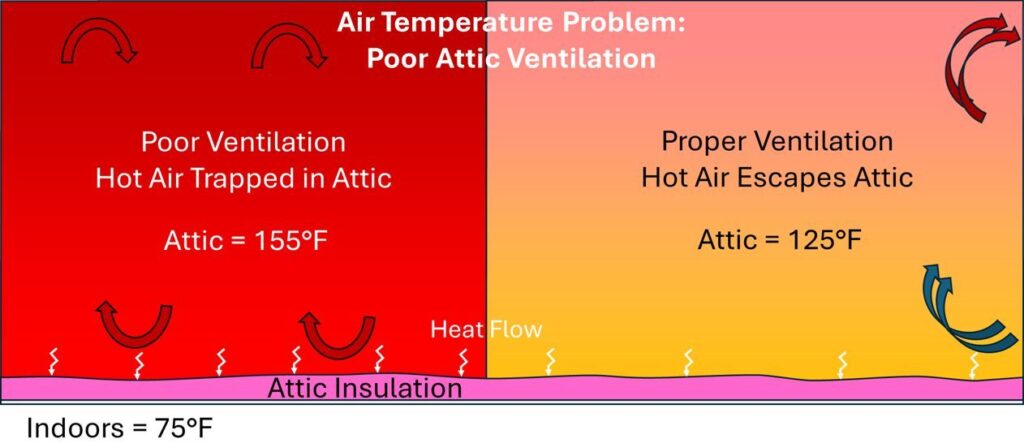
Your attic works the same way. When it’s properly ventilated, hot air rises and exits through ridge or roof vents while cooler air is drawn in through soffit vents at the eaves. It’s a continuous flush that keeps attic temperatures from climbing too far above outdoor levels.
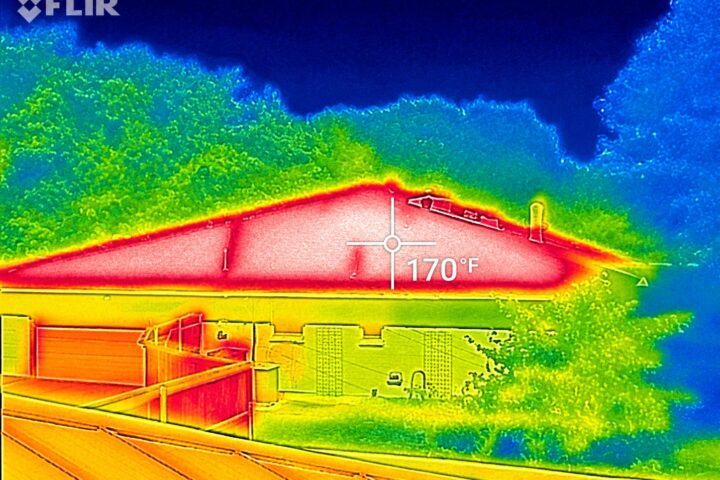
When attic ventilation is blocked, insufficient, or unbalanced? The attic becomes a sealed oven. Temperatures can soar well above 150°F, even higher than they need to be, and that extra heat hammers your ductwork, your insulation, and your ceiling from above.
Why Attic Temperature Matters to Your AC
Your attic isn’t just dead space. It’s the environment that surrounds your duct system and sits on top of your ceiling insulation. The hotter it gets, the harder everything else has to work:
- Duct heat gain increases. Supply air traveling through hotter attic air picks up more heat. Rooms get warmer supply air, and the system runs longer.
- Ceiling heat gain increases. A hotter attic pushes more heat through the ceiling insulation into your living space. Rooms directly below feel warmer.
- Materials degrade faster. Extreme temperatures accelerate the aging of duct tape, sealants, and duct jacket materials. Your duct system ages faster in a poorly ventilated attic.
What Goes Wrong With Attic Ventilation
Blocked Soffit Vents
Soffit vents are the intake. They let cooler outside air into the attic at the eaves. They’re commonly blocked by insulation that was blown or pushed against them, by paint, or by debris. Without intake, the exhaust vents at the top can’t create the flow pattern needed to flush hot air.
Not Enough Total Vent Area
Building codes specify minimum vent area ratios. Many homes, especially older ones, were built with less ventilation than current standards require. A handful of small vents on a large roof simply can’t move enough air.
Unbalanced Intake and Exhaust
Effective ventilation requires both low intake (soffits) and high exhaust (ridge, roof, or gable vents). A ridge vent with no soffit intake, or gable vents with no low openings, short-circuits the airflow. Heat stagnates instead of flushing.
Signs Your Attic Isn’t Ventilating Properly
- Your attic is dark during the daytime with minimal light from outdoors coming through attic vents.
- Your attic feels noticeably hotter than you’d expect, even compared to other Arizona homes.
- The home heats up dramatically in the afternoon and takes a long time to recover.
- Back bedrooms or rooms under the peak of the roof run consistently hot.
- Duct tape or sealant in the attic appears dried out, cracked, or peeling.
- You can see soffit vents from outside that appear painted over or blocked.
Want the measurements and building science behind this? Read the technical article: System Cannot Keep Up: Insufficient Attic Ventilation.
What NOT to Do
Don’t install a powered attic fan without addressing air sealing first. Powered fans can pull conditioned air from the house into the attic through ceiling leaks if the ceiling plane is not sealed first, increasing your AC’s workload instead of reducing it.
Don’t assume ventilation alone will solve everything. Ventilation reduces peak attic temperature, but it works best when combined with proper insulation and duct thermal protection. It’s one piece of the puzzle.
Don’t forget about the garage. Attic ventilation is important, but your garage gets hot too. Look to properly ventilate both spaces.
How Knights of the Attic Evaluates Ventilation
We assess your attic ventilation as part of the complete attic system, not in isolation.
We inspect intake and exhaust. Are soffit vents clear? Is the total vent area adequate? Is the balance between intake and exhaust correct?
We check for blocked air channels. Even if vents exist, air must be able to flow through rafter bays from soffit to ridge. Insulation baffles ensure this path stays open.
We assess the combined impact. Ventilation improvements are most valuable when paired with duct insulation upgrades, duct sealing, and ceiling air sealing. We prioritize the highest-impact improvements for your specific home.
The Bottom Line
A properly ventilated attic flushes trapped heat and reduces the thermal assault on your ducts and ceiling. A poorly ventilated attic traps extreme heat and makes every other attic problem worse.
Knights of the Attic evaluates ventilation as part of a comprehensive attic performance assessment. If your attic is cooking your ducts and baking your ceiling, restoring airflow is part of the solution.
Solution: Click here to learn about solutions to this problem.