

Key takeaways
- Building air leakage is uncontrolled air moving through gaps in your home’s shell. In Arizona the air coming in is often 150°F attic air.
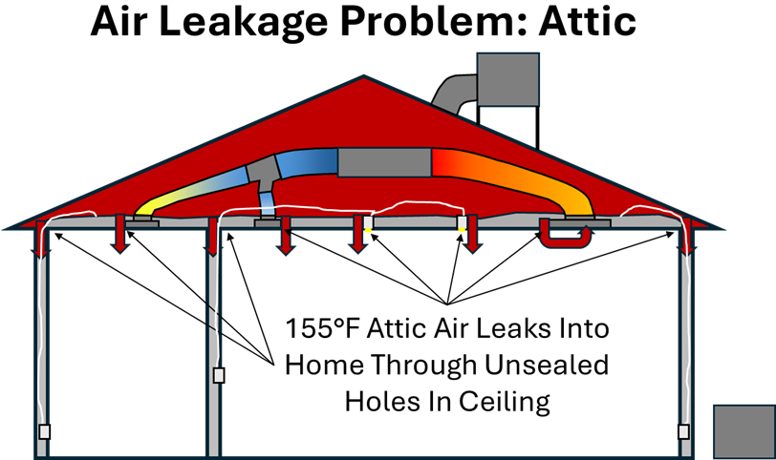
- The biggest leaks are overhead: ceiling penetrations, recessed can lights, the attic hatch and the gaps where walls meet the ceiling. Duct leaks drive more air through them.
- The classic sign is a house that cools fine in the morning and falls behind after lunch, along with dust, warm drafts near ceiling fixtures and doors that move when the system starts.
- Seal the ceiling first. New windows, more insulation or an attic fan will not stop air that flows through open holes.
Think of your home as a cooler at a tailgate party.
If the lid is sealed tight, the ice lasts all day. But if the lid is cracked open, even a little, warm air creeps in, the ice melts faster, and by halftime everything is lukewarm. Now imagine that “cooler” is your house, the “ice” is your air conditioning, and the warm air is 150°F attic heat pouring in through hundreds of tiny cracks you can’t even see.
That’s building air leakage. It’s the uncontrolled movement of air through gaps, cracks, and holes in your home’s shell, and in Arizona, it’s one of the biggest reasons your AC can’t keep up.
Where Is the Air Getting In?
Most people picture air leaks as drafty windows. And yes, windows matter. But in Arizona homes, the biggest leakage pathways are usually overhead, in the ceiling plane between your living space and the attic.
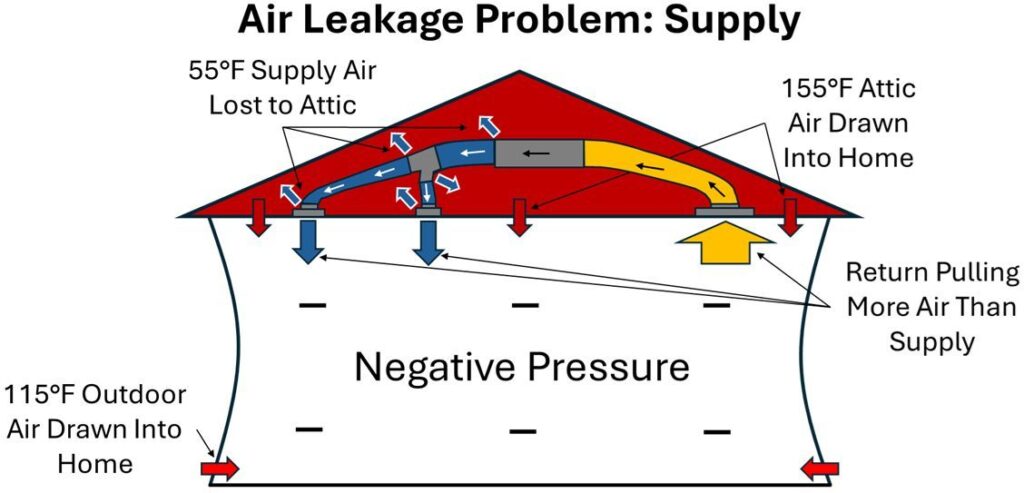
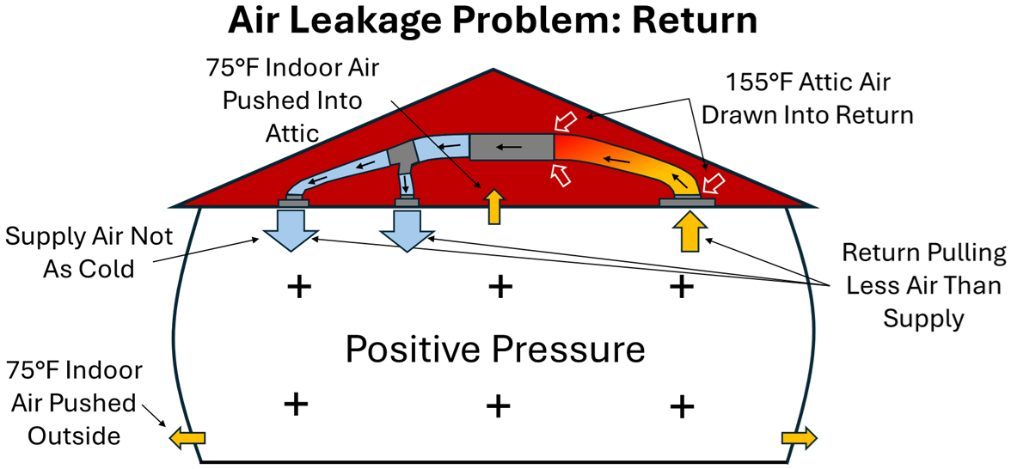
Duct air leakage. Even if the building shell is moderately tight, duct leakage and airflow imbalance can drive large pressure differences between the living space and attic/outdoors. Positive pressure pushes conditioned air out; negative pressure pulls hot air in. This is why building leakage problems often appear alongside duct leakage and room pressure issues.
Ceiling penetrations. Every wire, pipe, recessed light, exhaust fan, and plumbing vent that passes through your ceiling creates a hole. These holes connect your living space directly to the attic, whether behind a wall or directly in a room. When your home is slightly depressurized (which happens when duct leaks or exhaust fans pull more air out than comes in), those holes suck in 150°F+ attic air.
The attic access hatch. If your attic hatch isn’t sealed and insulated, it’s essentially an open window into a 150°F room. During peak afternoon heat, you can sometimes feel the heat radiating down from an unsealed and/or uninsulated hatch.
Top plates and framing gaps. Where walls meet the ceiling, small gaps between drywall and framing connect wall cavities to the attic. These are invisible from inside the house but can move significant volumes of air over time.
Recessed can lights. Older recessed lights are essentially open cylinders punched through your ceiling directly into the attic. They leak air and conduct heat simultaneously.
Why Does This Hit So Hard in Arizona?
In a mild climate, air leakage is an energy annoyance. In Arizona, it’s a comfort nightmare. The math is straightforward: if 200 CFM of 150°F attic air infiltrates your home, this consumes more than a full ton of your AC cooling capacity before the system can even begin cooling the rest of the house.
And it gets worse in the afternoon. As the attic heats up, the temperature difference grows, the driving force increases, and more hot air pushes in through every available opening. This is why so many homeowners say their system “keeps up fine in the morning but falls behind after lunch.”
Signs of Excessive Building Leakage
- The house cools adequately in the morning but falls behind in the afternoon
- You feel warm drafts near ceiling fixtures or the attic hatch
- Persistent dustiness despite regular cleaning and filter changes
- Rooms directly below the attic are consistently warmer
- Interior doors slam or move when the system kicks on (pressure imbalance)
- The house feels stuffy or humid even when cooled
Want the measurements and building science behind this? Read the technical article: System Cannot Keep Up: Excess Building Air Leakage.
What NOT to Do
Don’t install a powered attic fan without sealing the ceiling first. Without attic air seal first, attic fans can actually make things worse by pulling conditioned air up through ceiling leaks. You’d be using electricity to suck the cool air out of your house.
Don’t assume new windows will solve it. Windows get all the attention, but in most Arizona homes, the ceiling plane leaks far more air than all the windows combined.
Don’t just add more insulation. Insulation slows heat conduction. Air leaks allow heat convection, actual hot air flowing through the insulation. You have to seal the air leaks first, then insulate to make the insulation effective.
How Knights of the Attic Approaches Building Leakage
We test the house, not just the equipment. Using diagnostic pressure testing and thermal imaging, we measure how much your home leaks overall and where the biggest pathways are.
We seal the ceiling plane. Every penetration (wire chases, plumbing stacks, light housings, top plates, and the attic hatch) gets sealed with appropriate materials to create a continuous air barrier between the living space and the attic.
We coordinate with insulation and duct work. Air sealing is most effective when paired with proper insulation and duct sealing. We treat the attic as a complete system, not a checklist of unrelated tasks.
We guarantee the result. The plan is built from your home’s test numbers, and the result is guaranteed in writing. The goal is measurable, not just “we sealed some stuff.”
The Bottom Line
Your home has hundreds of small holes connecting it to a 150°F attic. Each one is a pathway for extreme heat to enter your living space. Your AC was never designed to fight that kind of uncontrolled heat gain.
Knights of the Attic identifies and seals those pathways so your AC can focus on cooling your home, not fighting your attic. If your house cools fine in the morning but loses the battle every afternoon, the ceiling is almost certainly part of the answer.
Solution: Click here to learn about solutions to this problem.


