
Technical article. Written for readers who want the building science. Prefer the short version? Browse the Homeowner Guides.
Key takeaways
- When supply airflow is restricted, delivered cooling drops, runtime increases and the blower operates at elevated pressure, raising operating cost and stress on components.
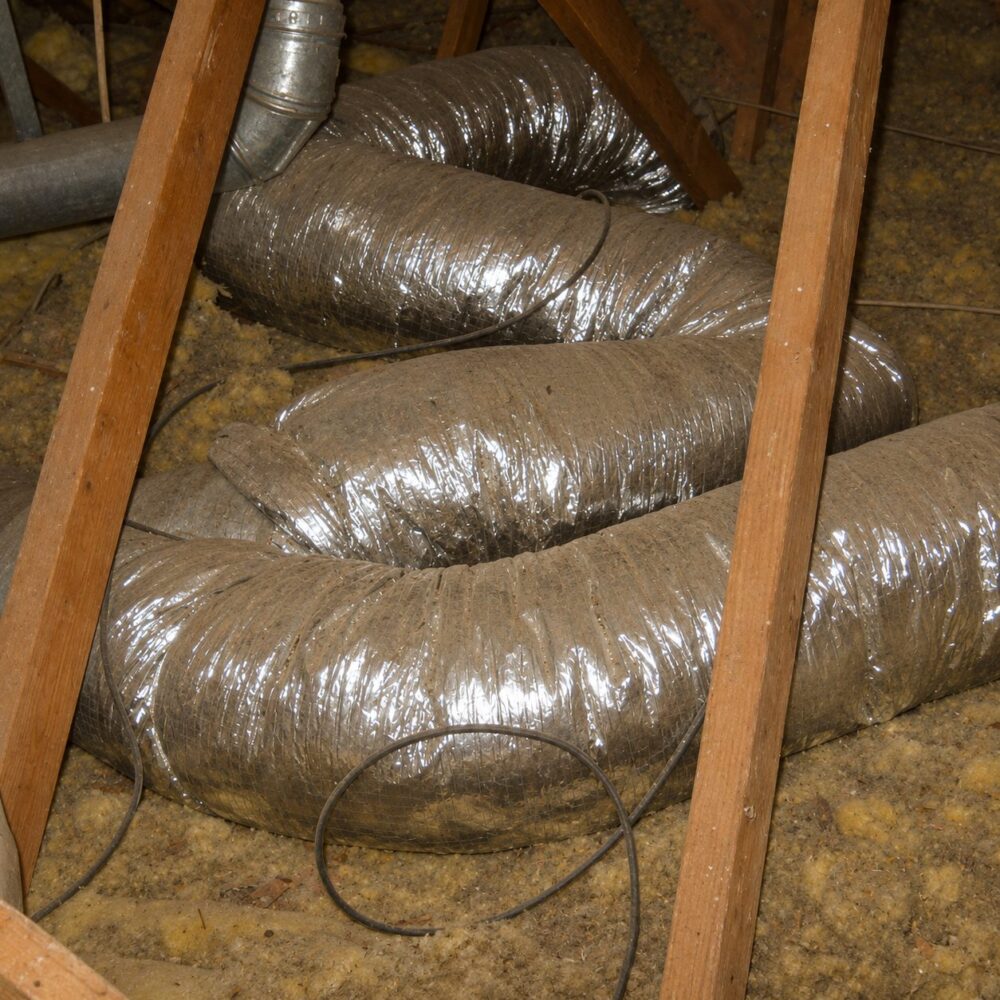
- Sources include trunks or branches undersized for the system tonnage, long attic duct runs, crushed or kinked flex duct, sharp turns, poor transitions, closed dampers, restrictive registers and closed supply registers.
- Supply restriction is confirmed by comparing total external and supply static pressure to the manufacturer maximum, measuring airflow at each register with a flow hood, and inspecting the ducts.
- Do not close registers to push air elsewhere, rely on a higher blower speed, or add refrigerant because rooms are warm. Crushed flex duct and poor duct components are correctable problems.
High utility bills and premature HVAC wear often trace back to one fundamental issue: the system is forced to run longer and harder than necessary to deliver the required comfort. When supply airflow is restricted, delivered cooling drops, runtime increases, and the blower operates at elevated pressure, raising operating cost and stress on components.
Cause: Undersized or Restricted Supply
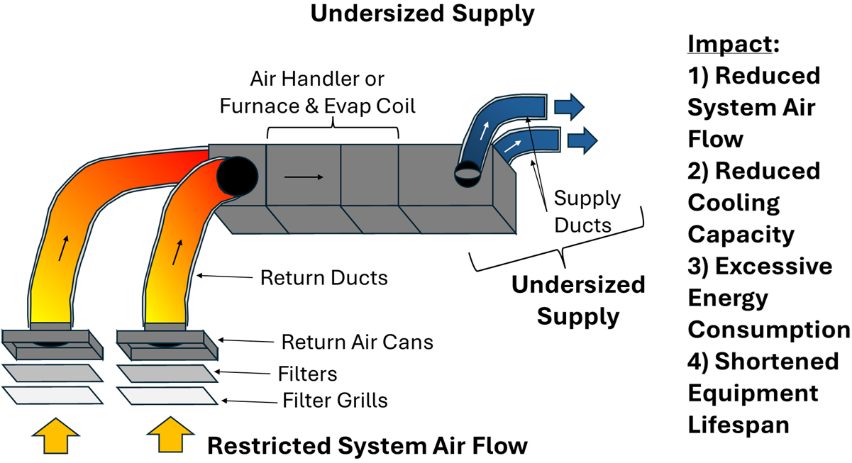
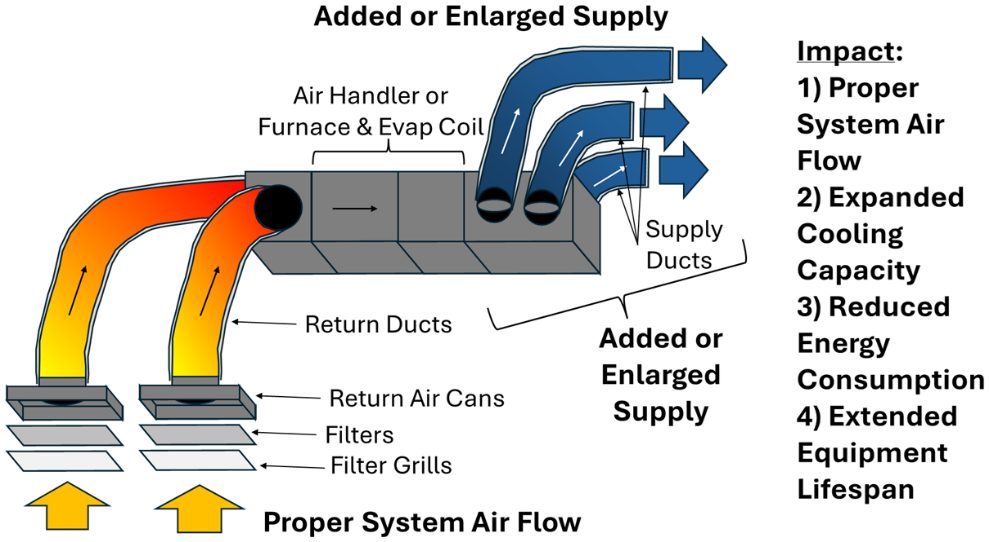
One cause of excess runtime and equipment stress is undersized or restricted supply ducting. The supply side delivers conditioned air from the air handler to the rooms. If trunks, branches, fittings, or registers create excessive resistance, supply static pressure rises and total airflow falls.
Why Does Undersized or Restricted Supply Increase Utility Bills and Equipment Wear?
Supply restrictions increase backpressure in the duct system. As supply static pressure rises, the blower must work against greater resistance. Higher pressure generally means lower airflow for PSC motors, and higher watt draw for ECM motors trying to maintain airflow. Reduced airflow decreases delivered cooling capacity and forces longer runtime to maintain setpoint, directly increasing energy consumption.¹
Higher supply pressure also increases supply duct leakage. Any existing leaks waste more conditioned air as pressure rises, which further increases runtime. Over time, elevated static pressure accelerates blower wear and can contribute to noisy operation, vibration, and motor overheating.²
What Are the Sources of Undersized or Restricted Supply?
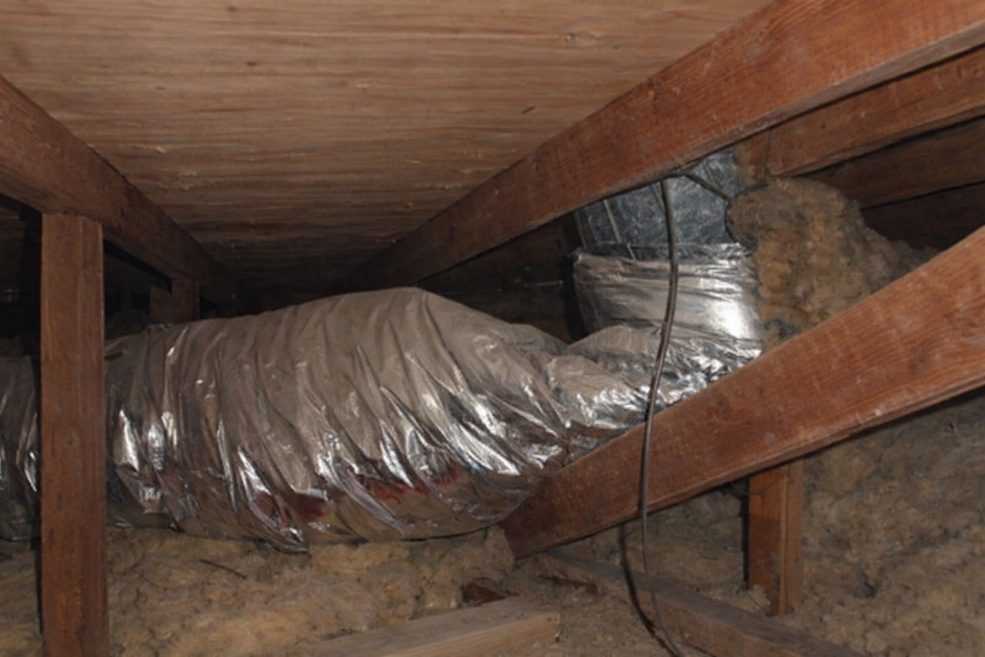
Common sources include undersized trunks/branches for the system tonnage, long equivalent duct runs through the attic, crushed or kinked flex duct, sharp turns and poor transitions, closed or partially closed dampers, restrictive registers, and homeowner actions like closing multiple supply registers.
Supply restrictions also interact with room-to-room balance: pressure takes the path of least resistance. Restricted runs starve distant rooms while near rooms receive more airflow, creating hot and cold room complaints and encouraging occupants to “adjust” registers, often making static pressure even worse.
Additional Effects of Undersized or Restricted Supply
Extended runtime increases compressor hours and cycling, accelerating wear on contactors, capacitors, and motors. Higher static pressure increases leakage and can raise delivered supply air temperature at distant registers due to longer residence time and heat gain in hot attics. The system becomes less efficient while operating longer, the combination that drives high bills.
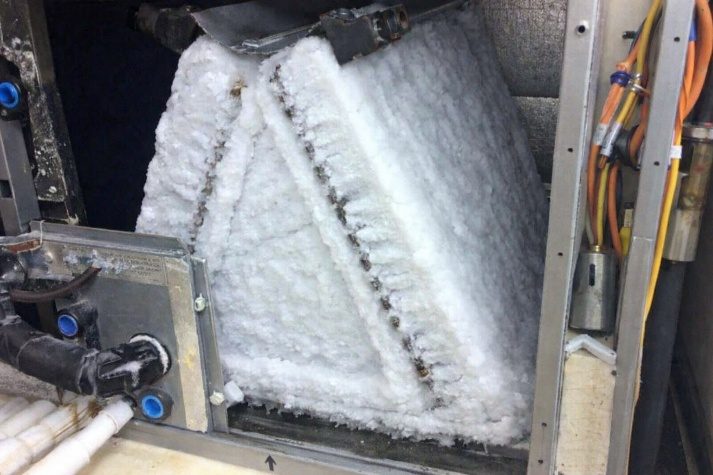
In severe cases, restricted airflow can contribute to coil icing and unstable refrigerant conditions, increasing the likelihood of expensive repairs that are ultimately rooted in airflow restriction rather than refrigerant charge.
Common Signs of Undersized or Restricted Supply
Common indicators include:
- High cooling bills and long runtimes, especially during peak afternoon hours.
- Noticeably weak airflow at certain registers (often the farthest rooms).
- Noisy supply registers (hissing/whistling from high velocity through small openings).
- Rooms near the air handler cool well while distant rooms remain hot.
- Registers or dampers are frequently adjusted with little improvement.
- Evidence of excessive duct leakage or dust streaking around registers.
For a plain-language overview of this condition, read the homeowner guide: Restricted Supply Ducts: The Silent Reason Your AC Runs All Day.
How Professionals Confirm This Condition
Professionals confirm supply restriction through measurements and targeted inspection.
TESP and Supply Static Pressure. Measure total external static pressure and supply-side static pressure. Compare to manufacturer maximum values. Elevated supply pressure often indicates restrictions in trunks, branches, fittings, or registers.²
Room-by-Room Airflow. Measure register airflow (CFM) using a flow hood and compare to room targets. Low flow in one room can indicate a localized restriction; globally low flow indicates a system-level restriction.
Duct Inspection and Pressure Mapping. Inspect for crushed flex, closed dampers, poor fittings, and restrictive registers. Where needed, measure static pressure at multiple points to locate the restriction by identifying where pressure drop occurs.
KOTA Workflow. Knights of the Attic’s Air Flow Services address supply restrictions by restoring duct capacity (repairing crushed runs, improving fittings, resizing ducts where needed), then balancing airflow so each room receives appropriate CFM. The work is designed from those measurements, and the results are guaranteed in writing.³
What NOT to Do
Avoid these common mistakes:
- Do not close multiple registers to “push air” elsewhere. This typically increases static pressure and reduces total airflow.
- Do not assume increasing blower speed is a permanent fix. It can increase energy use and motor stress if ducts remain restrictive.
- Do not add refrigerant based on warm rooms alone. Distribution restrictions frequently mimic low capacity.
- Do not ignore crushed flex duct or poor installed duct components. These are correctable engineering problems.
References
- ¹ ACCA Manual D: Residential Duct Systems, duct sizing, friction rate, and fitting loss concepts. https://www.acca.org/standards/manuals
- ⁴ DOE Building America Solutions Center. No Kinks or Sharp Bends in Flex Duct Installation: https://basc.pnnl.gov/resource-guides/no-kinks-or-sharp-bends-flex-duct-installation
- ³ Knights of the Attic. Duct Services: https://knightsoftheattic.com/duct-services/
Solution: Click here to learn about solutions to this problem.


