Key takeaways
- Your AC can make enough cold air for the whole house and still leave rooms warm. When the air is shared unevenly, some rooms get flooded and others get a trickle.
- Balance problems start when a system was never balanced after installation, and grow with register adjustments, remodeling and duct restrictions such as crushed flex or disconnected branches.
- Signs: some rooms overcooled while others stay warm, differences of 5°F or more between rooms, and registers that blow strong in some rooms and weak in others.
- Do not partially close registers to fix an overcooled room. That raises system pressure, reduces total airflow and makes the underserved rooms worse. Have each room’s airflow measured and adjusted to its target.
Imagine a restaurant kitchen with five burners.
The gas line has enough fuel for all five. But the valve that controls the distribution is stuck, three burners get a roaring flame while two barely flicker. The kitchen has plenty of gas. It just isn’t being shared properly.
That’s air balance. Your HVAC system produces enough cold air for the whole house. But the way that air is distributed through the duct system may be wildly uneven. Some rooms get flooded with cold air (you might even feel a chill). Other rooms get a trickle. The thermostat, sitting in one of the well-served rooms, says everything is fine. But the under-served rooms never reach setpoint.
What Is an Air Balance?
An air balance is the proportional distribution of supply airflow to each room. Every room has a specific cooling load (i.e. rate of heat gain) based on its size, sun exposure, number of windows, ceiling & wall dimensions, internal heat sources, etc. Proper design calculates the CFM (airflow measurement) each room needs and sizes the duct system to deliver it. When those proportions are wrong, because the system was never balanced, because dampers were misadjusted, or because duct restrictions changed the flow pattern, comfort becomes uneven.
The problem is often self-reinforcing. Homeowners often try to fix overcooled rooms by partially closing registers. That raises system pressure, reduces total airflow, and makes the underserved rooms even worse. It’s like stepping on part of the garden hose to fix the sprinkler that’s too strong: the other sprinklers suffer.
Why Balance Problems Happen
The system was never balanced after installation. Many HVAC installations end with the equipment running and the installer leaving. Nobody measured room-by-room airflow and adjusted dampers to match design targets.
Homeowner adjustments over the years. Closing registers, opening others, and living with the results: each adjustment changes the pressure balance elsewhere in the system.
Remodeling or additions. Adding or removing rooms, changing window sizes, or opening up floor plans changes room loads without corresponding duct adjustments.
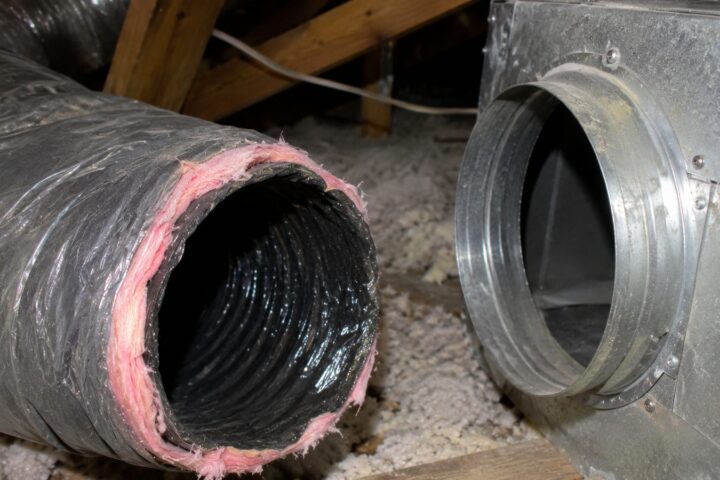
Duct restrictions developed over time. Crushed flex, disconnected branches, and closed dampers can gradually shift the airflow distribution away from the original design.
Signs of an Air Balance Problem
- Some rooms are consistently overcooled while others are warm.
- Noticeable temperature differences (5°F+) between rooms.
- Registers in some rooms blow strong while others are weak.
- The problem has developed gradually or worsened after changes to the home.
Want the measurements and building science behind this? Read the technical article: Hot & Cold Rooms: Improper Air Balance.
How Knights of the Attic Balances Your System
Load-based targeting determines what each room actually needs via a 3D scan of your home.
Room-by-room airflow measurement establishes what each room is currently receiving.
Duct system modifications and damper adjustment redistribute airflow to match targets while keeping total system pressure in range.
Balancing by measurement continues until every room is receiving its designed airflow. Not guessing, not estimating: measuring.
The Bottom Line
Air balance is measurable and fixable. Knights of the Attic calculates what each room needs, measures what every room gets, and adjusts the distribution until the numbers are in range. Even rooms don’t happen by accident. They happen with engineered solutions.
Solution: Click here to learn about solutions to this problem.