Key takeaways
- Every degree of heat your supply air gains in the attic is a degree your AC has to work longer to overcome, and that extra runtime shows up directly on your electric bill.
- Thin insulation around the ductwork is the main culprit. Most homes have 6 to 14 inches of attic insulation, while duct insulation ranges from less than one inch to 2 inches.
- Signs include lukewarm supply air at far registers, a system that keeps up in the morning but struggles in the afternoon peak, and visible damage, tears or thin insulation on attic ductwork.
- Have supply temperatures measured at the equipment and at each register to quantify the heat gain, then have damaged, thin or compressed duct insulation upgraded.
Every degree of heat your supply air gains in the attic is a degree your AC has to work longer to overcome. In a 150°F attic with poorly insulated ducts, the supply air can warm by 10 to 15°F before reaching the registers. That means your system needs 50+% more runtime to deliver the same comfort, and that extra runtime shows up directly on your electric bill.
Why This Costs So Much in the Southwest
In mild climates, duct heat gain is a nuisance. In the Desert Southwest, it’s a budget buster. The temperature difference between the duct interior and the attic can exceed 100°F. Over long duct runs, that differential relentlessly heats the supply air. And because the problem is worst during peak afternoon hours, when electricity rates are highest, the financial impact is compounded.
Extended runtime also means more compressor hours, more blower hours, and faster aging of every component. What should be a 15- to 20-year equipment lifespan might become 10 or 11. Unfortunately, homeowners are unaware that for most Southwestern homes, duct heat gain is 3 to 5 times as much as the home’s ceiling heat gain.
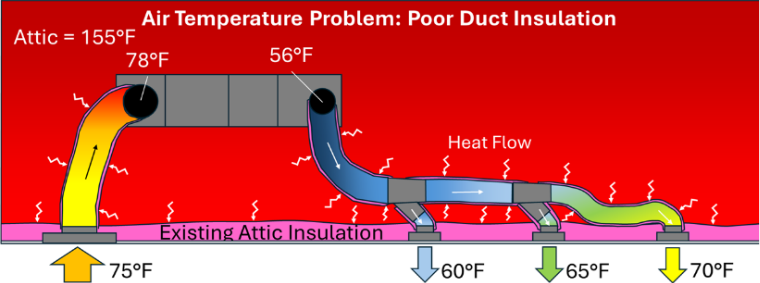
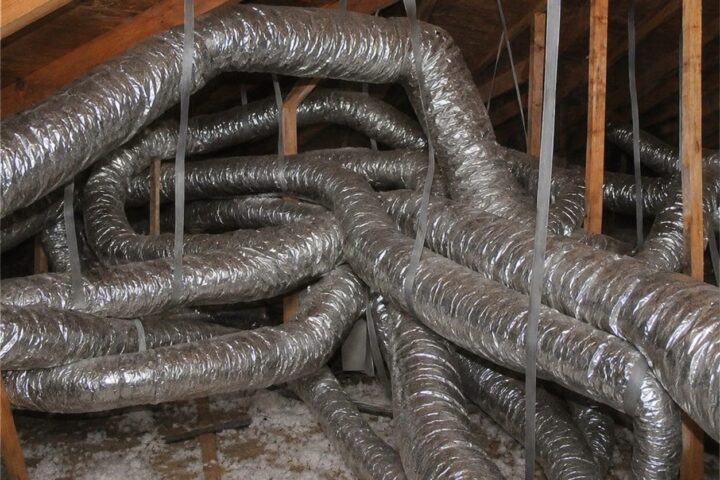
Thin insulation around ductwork is the main culprit to this major heat gain. Most homes have anywhere between 6 to 14 inches of standard attic insulation. Duct insulation ranges from less than one inch to 2 inches. Because of the thin duct insulation, heat is able to infiltrate the duct system that is supposed to be supplying cold air to the home. Now that warmer air is being pumped into the home, the air conditioner has to work considerably harder to fight against this heat, thus increasing utility bills dramatically.
Signs Duct Insulation Is Costing You
- Supply air feels lukewarm at far registers.
- The system keeps up in the morning but struggles in afternoon peak.
- Visible damage, tears, or thin insulation on attic ductwork.
- Higher-than-expected summer electric bills.
Want the measurements and building science behind this? Read the technical article: High Utility Bills & Premature Equipment Failure: Insufficient Duct Insulation.
How Knights of the Attic Reduces Heat Gain
We measure supply temperatures at the equipment and at each register to quantify heat gain. Then we inspect the attic to find damaged, thin, or compressed duct insulation. Targeted upgrades (Insulated Duct ArmorTM, ducts lowered and buried under additional attic insulation, replacement of failed sections, and proper support that avoids compression) reduce the heat absorbed in transit. The work is designed from those measurements, and the results are guaranteed in writing.
Less heat gained in the attic means less runtime, lower bills, and longer equipment life. If your supply air arrives warm and your bills run hot, duct insulation is a prime suspect.
Solution: Click here to learn about solutions to this problem.