

Key takeaways
- When a supply duct leaks or disconnects in the attic, the cold air meant for one room pours into the attic instead, and that room becomes the permanent hot spot in your home.
- Leaks hide at boot-to-drywall connections, wye fittings and takeoffs, flex duct that has pulled off its collar, failed tape and old sealant, and ducts that have failed outright.
- Look for one room that is consistently warmer, weak airflow with warmer-than-expected air at its register, dust streaks around the ceiling register, or loose ductwork in the attic.
- Room-by-room airflow testing, duct leakage testing and an attic inspection find the leak. Sealing with Insulated Duct Armor™, Aeroseal, or mastic and mechanical fasteners stops it at the source.
Imagine watering your garden with a soaker hose.
Every plant gets water because the hose distributes it evenly. Now imagine one section of the hose develops a massive split. All the water pressure drops. The plants downstream of the split get almost nothing. Meanwhile, water gushes uselessly into the dirt at the split point.
That’s exactly what happens when a supply duct develops a leak or disconnects in the attic. The cold air meant for your bedroom pours into the attic instead. The room that duct serves gets starved, both in airflow and in supply temperature (because the remaining little bit of air absorbs extra attic heat quicker). One leaky or disconnected branch can turn one room into the permanent hot spot in your home.
Why Duct Leakage Creates Specific Hot Rooms
Unlike whole-house problems that affect every room somewhat evenly, duct leakage can be localized. A single leaky boot, a disconnected wye fitting, or a failed connection on one branch run primarily affects the room(s) downstream of that leak. That’s why the complaint is usually “one room” rather than “the whole house.”
And the leak doesn’t have to be dramatic. Even a partially loose connection can bleed off 25 to 35 CFM of cold air, enough to turn a comfortable room into an uncomfortable one during peak afternoon conditions.
Where Leaks Hide
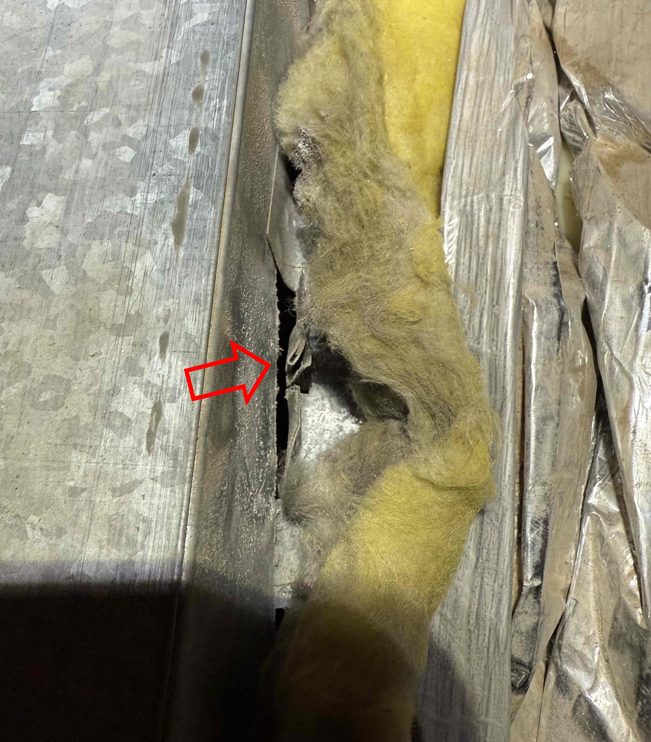
Boot-to-drywall connections. Where the duct meets the ceiling register, gaps between the metal boot and the drywall can leak attic air into the airstream at the delivery point.
Wye fittings and takeoffs. Where branch ducts split off from trunk lines, connections can loosen over time from thermal cycling.
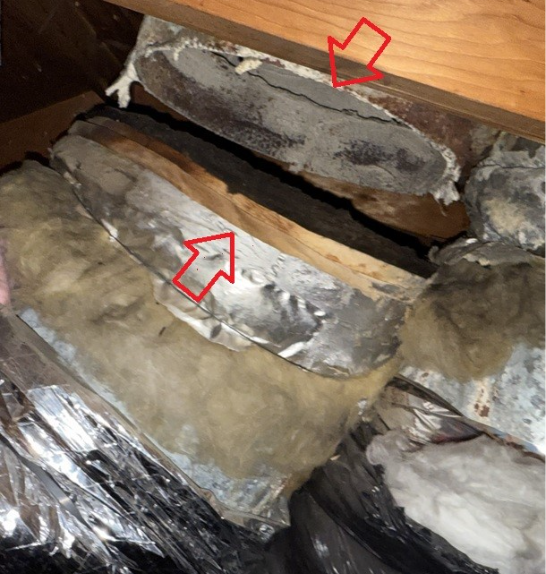
Flex duct that has pulled loose. Gravity, vibration, and attic work can gradually disconnect flex duct from its collar. A duct that’s pulled off its connection dumps 100% of its airflow into the attic.
Failed tape and old sealant. Standard duct tape degrades in attic heat. Sealant dries and cracks. Joints that were sealed 15 years ago may be wide open today.
Failed ducts. Plastic flex duct past the point of failure or rusted out metal ducts after decades connected to an evaporative (aka swamp) cooler can leak massive amounts of air into the attic.
Signs a Duct Leak Is Causing Your Hot Room
- One specific room is consistently warmer than the rest.
- The problem room’s register has weak airflow AND warmer-than-expected air.
- Dust streaks around the ceiling register.
- You see or feel loose ductwork during an attic visit.
Want the measurements and building science behind this? Read the technical article: Hot & Cold Rooms: Excess Duct Air Leakage.
How Knights of the Attic Finds and Fixes These Leaks
Room-by-room airflow testing identifies which rooms are receiving less air than expected.
Duct leakage testing quantifies total duct leakage and helps prioritize repairs.
Attic inspection traces the affected duct run looking for disconnected sections, loose fittings, and failed sealant.
Professional sealing with Insulated Duct ArmorTM, Aeroseal, or mastic and mechanical fasteners restores connections and stops leakage at the source.
A written guarantee comes with the plan. The work is designed from those measurements, and the results are guaranteed in writing.
The Bottom Line
A single duct leak can make a single room miserable. Knights of the Attic finds the leak, seals it properly, and guarantees the result in writing. If one room is always the outlier, the duct serving it is suspect.
Solution: Click here to learn about solutions to this problem.


