Technical article. Written for readers who want the building science. Prefer the short version? Browse the Homeowner Guides.

Key takeaways
- In a 155°F attic, R-4 flex duct can warm 55°F supply air by 10°F or more before it reaches a distant register, roughly 1.6 tons of heat gain across a typical duct system at peak.
- The usual causes are insulation installed below today’s R-8 minimum, insulation compressed by straps or framing, damaged jackets, bare metal plenums and trunks, and long runs to far bedrooms.
- The loss grows through the afternoon as the attic heats up, which is why a system that keeps up at 2 PM falls behind by 4 PM and the far rooms run warm and humid.
- Supply air temperature at the air handler and at distant registers, attic temperature, an insulation inspection and thermal imaging confirm it. Longer runtime or more refrigerant does not fix it.
Summertime temperatures are extreme in the Desert Southwest. The HVAC systems in many homes are unable to maintain the temperature at the thermostat set point during the afternoon heat. This leads to comfort problems inside the home. If the HVAC system continues to struggle to recover after the sun goes down, the comfort problems are amplified because it becomes difficult for home occupants to sleep.
Cause: Insufficient Duct Insulation
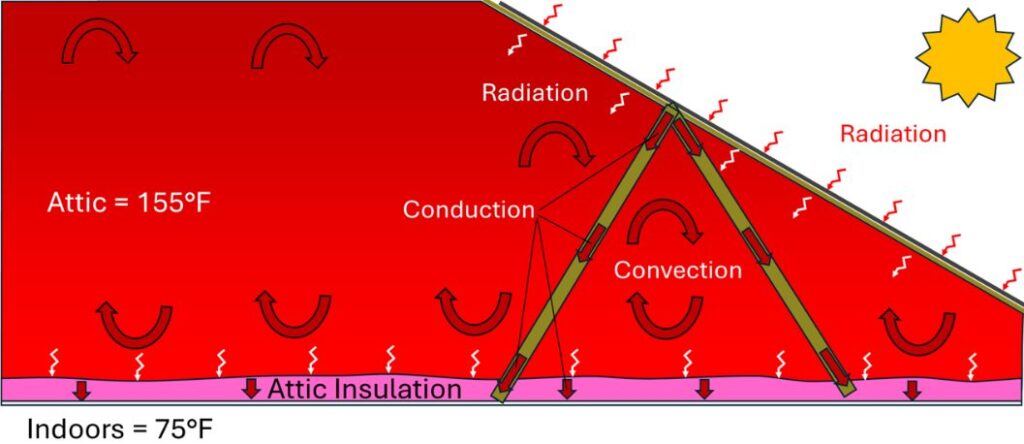
One cause of this problem is insufficient duct insulation. When supply ducts run through a hot attic or other unconditioned space, heat transfers through the duct walls into the supply air. The conditioned air warms as it travels from the equipment to the rooms, reducing the effective cooling delivered. In Arizona’s extreme climate, where attic temperatures routinely exceed 150°F during summer afternoons, duct heat gain can dramatically reduce system performance.
Why Does Insufficient Duct Insulation Reduce Cooling Capacity?
The physics of duct heat gain are straightforward: heat flows from hot to cold. In an Arizona attic during summer afternoons, the temperature difference between the attic (150 to 160°F) and the supply air inside the duct (55°F leaving the equipment) can exceed 100°F. This massive temperature differential drives rapid heat transfer through the duct walls.1
The rate of heat transfer depends on three factors: the temperature difference between attic and duct interior, the surface area of the duct (length and diameter), and the thermal resistance (R-value) of the duct insulation. More temperature difference, more surface area, or less insulation all increase heat gain.
The most common level of flex duct insulation for existing homes in the Southwest is R-4. In a 155°F attic with 55°F supply air, the temperature difference is roughly 100°F. Over a long duct run, supply air can warm by several degrees before reaching the register, often 10°F+ and sometimes as much as 15°F in severe cases depending on duct R-value, duct diameter & length, air velocity, and attic temperature. Instead of delivering ~55°F air to the room, a distant register may deliver air in the 60s or even the 70s, reducing the effective cooling delivered per CFM of airflow.
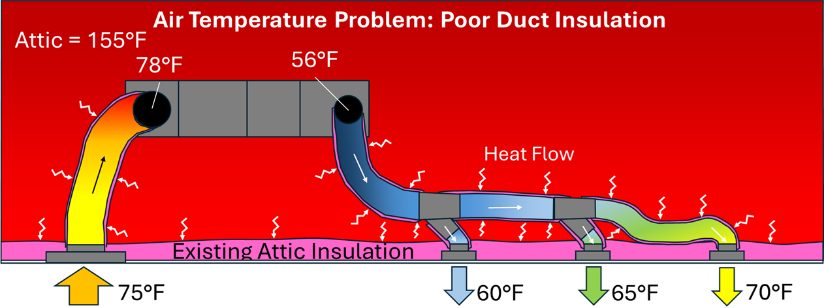
Using the simple steady-state conduction relationship (Q ≈ [A × ΔT] / R), an 800 ft² duct system, a 100°F temperature difference (155°F attic to 55°F supply duct air), and effective R-4 insulation yields roughly 19,000 BTU/hr of conductive heat gain at peak conditions. That is roughly 1.6 tons of conductive heat gain in the duct system the unit needs to fight at peak conditions in order to cool the indoor space.
Rooms served by the longest duct runs suffer the most. A bedroom at the far end of the house may receive supply air that is 15°F warmer than air delivered to rooms near the air handler. This contributes to both whole-house capacity problems and room-to-room imbalances.
What Are the Sources of Insufficient Duct Insulation?
Inadequate duct insulation results from several conditions.
Original Installation Below Current Standards. Many homes were built when lower R-values were standard practice or code-minimum. R-4 flex duct was once common and is still found in many Southwestern homes. It performs poorly in extreme attic conditions. Even R-6 insulation, while meeting older codes, provides inadequate protection when attic temperatures exceed 150°F. Modern code minimum for duct insulation is R-8.2
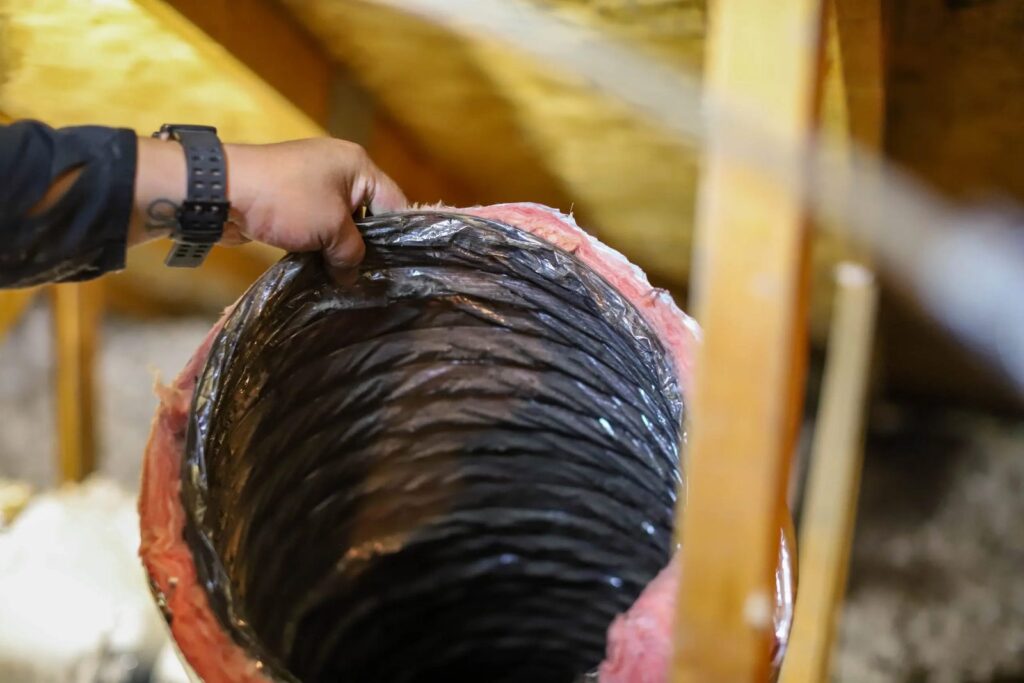
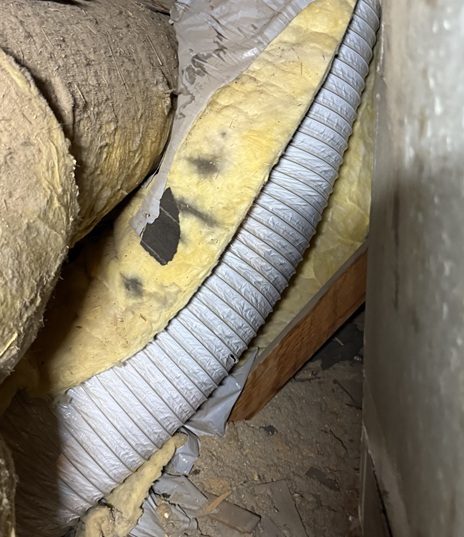
Insulation Compression. Duct insulation loses effectiveness when compressed. Flex duct supported by straps that squeeze the insulation and ducts pressed against roof framing or other obstacles with insufficient clearance all experience reduced effective R-value. Compressed insulation may look adequate but delivers significantly less thermal protection than its rated value.
Insulation Damage. Physical damage from foot traffic during attic work, pest activity, or age-related deterioration reduces insulation effectiveness. Torn outer jackets expose insulation to attic conditions and allow moisture intrusion that further degrades performance. UV exposure through attic vents accelerates material breakdown over time.
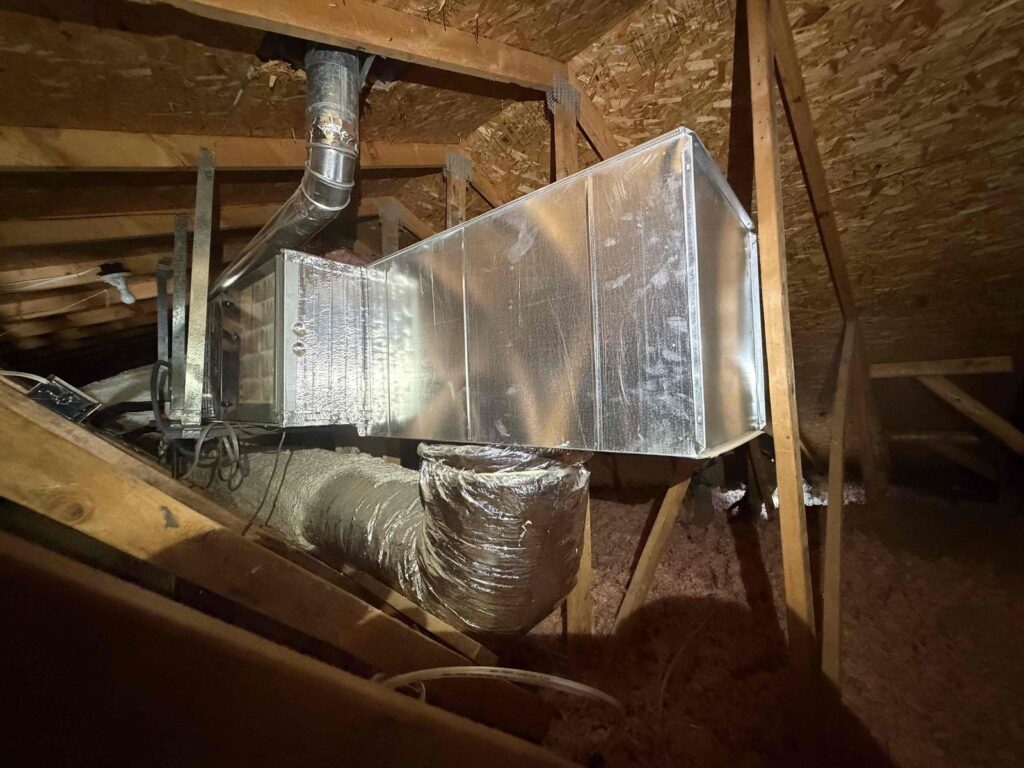
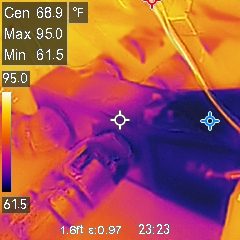
Even when flex duct is adequately insulated, metal plenums, trunk ducts, fittings, and transitions are often poorly insulated or uninsulated entirely. Metal conducts heat rapidly. An uninsulated metal supply plenum or trunk duct acts as a heat sink, warming the supply air before it even enters the insulated flex runs.³
Long Duct Runs. The longer the duct run through unconditioned space, the more heat gain occurs. Duct systems with runs exceeding 30 to 40 feet through attic space are particularly vulnerable. Some Southwest home designs result in duct runs of 50 feet or more to reach distant bedrooms. These rooms are extremely difficult to cool adequately with standard duct insulation.
Additional Effects of Insufficient Duct Insulation
Beyond reduced cooling capacity, duct heat gain creates compounding problems.
Duct heat gain doesn’t just reduce delivered cooling. It creates a moving target. As the attic heats up through the afternoon, duct heat gain increases. A system that maintains temperature adequately at 2:00 PM may fall behind by 4:00 PM as attic temperatures peak. This creates the common complaint of systems that “can’t keep up” during the hottest part of the day even though they seemed adequate in the morning.
Higher supply air temperatures mean reduced dehumidification. Warmer air holds more moisture, so supply air that has warmed in the ducts removes less moisture from the home than properly cooled air would. Homes with significant duct heat gain often feel humid even when temperature is marginally acceptable.
Because duct heat gain affects rooms differently based on duct run length, it frequently causes or worsens hot and cold room complaints. The problem is most apparent during peak afternoon and early evening conditions when the supply air temperature difference between near and distant rooms is greatest.
Extended equipment runtime from reduced capacity means more hours of duct heat gain, more hours of energy consumption, and more wear on equipment. The system works harder while delivering less, amplifying inefficiency.
Common Signs of Insufficient Duct Insulation
Homeowners typically notice several indicators of duct heat gain problems:
- Supply air at distant registers feels noticeably warmer than at registers near the air handler.
- Temperature rise can be felt by hand or measured with a thermometer. More than a 5°F rise indicates a problem.
- Rooms at the end of long duct runs are consistently warmer than rooms with short duct runs.
- The system struggles most during peak afternoon hours (2:00 PM to 7:00 PM) when attic temperatures are highest.
- Morning performance is acceptable, but afternoon performance deteriorates.
- Supply ducts in the attic feel hot to the touch during system operation.
For a plain-language overview of this condition, read the homeowner guide: Your Cold Air Is Getting Cooked Before It Reaches Your Rooms.
How Professionals Confirm This Condition
Professionals confirm duct heat gain through direct measurement and inspection.
Supply Air Temperature Measurement. Measure supply air temperature at the air handler (leaving the equipment) and at distant registers. The difference indicates duct heat gain. A small rise can be normal, but a rise consistently above ~5°F is a strong indicator of significant attic heat gain, and ~10°F+ typically indicates severe losses in need of correction.⁴
Attic Temperature Measurement. Measure attic temperature during peak conditions to understand the driving temperature differential. Compare the attic air temperature to outdoor air temperature. In many homes, a well-performing vented attic is often on the order of ~20 to 30°F above outdoor ambient during peak sun; poorly performing attics may run 40°F+ above outdoor ambient, which significantly increases duct heat gain.
Duct Insulation Inspection. Inspect duct insulation for R-value (often printed on the outer jacket), compression, damage, and coverage. Identify uninsulated metal components. Document insulation condition throughout the accessible duct system.
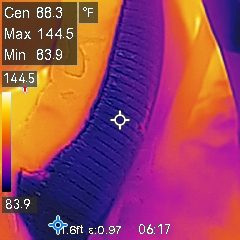
Thermal Imaging. Thermal imaging during system operation shows temperature patterns along duct runs and identifies areas of high heat gain. Cold spots on duct exteriors, compared to hot attic surfaces, indicate insulation failures.
At Knights of the Attic, we use each of these techniques to identify the source of excessive duct heat gain in your system and design customized solutions to correct this issue in your home.
What NOT to Do
Certain responses to duct heat gain problems are ineffective or counterproductive.
- Do not simply increase equipment runtime expecting to overcome duct heat gain. Longer runtime means more hours of duct losses and does not address the root cause. The system runs longer while delivering the same inadequate supply air temperature.
- Do not address attic temperature alone without addressing duct insulation. Improving attic ventilation helps reduce peak attic temperatures, but if duct insulation is inadequate, heat gain will still be excessive. Both strategies work together.
- Do not confuse duct heat gain with equipment problems. The equipment may be producing adequate cooling capacity at the air handler (55°F supply air), but that capacity is being lost in the duct system. Adding refrigerant or replacing equipment does not fix duct insulation problems.
- Do not compress duct insulation when adding support or routing ducts. Compressed insulation loses R-value. Proper support maintains insulation thickness while preventing duct sagging.
References
- ¹ Building Science Corporation. BSI-074: Duct Dynasty: https://buildingscience.com/documents/insights/bsi-074-duct-dynasty
- ² 2021 IECC (International Energy Conservation Code). Duct Insulation Requirement: https://codes.iccsafe.org/content/IECC2021P2/chapter-4-re-residential-energy-efficiency#IECC2021P2_RE_Ch04_SecR403.3.1
- ³ DOE Building America Solutions Center. Duct Insulation Requirements: https://basc.pnnl.gov/resource-guides/sealed-and-insulated-metal-ducts
- ⁴ ACCA Manual D: Residential Duct Systems. Air Conditioning Contractors of America. https://www.acca.org/standards/manuals
Solution: Click here to learn about solutions to this problem.