
Why Your AC Can’t Keep Up During Arizona Summers
The Real Hidden Culprit in Your Return Ducts.
Picture this.
It’s a July afternoon in Arizona. The thermometer outside reads 115°F. Inside, your thermostat is set to 76°F; but the display shows 82°F and climbing. The AC has been running nonstop since noon. The vents are barely pushing out air. The kids are cranky, the dog is sprawled on the tile, and you’re starting to wonder if your air conditioner is dying.
You call an HVAC company. They check the refrigerant, shrug, and tell you the unit is “too small for the house.” They quote you $12,000 –15,000 for a bigger system.
But here’s the thing: your equipment might not be the problem at all.
In many Arizona homes, the real reason the AC can’t keep up has nothing to do with the age or size of the unit. It’s the return ducts; the “intake” side of your system that are choking off airflow before the equipment ever gets a chance to do its job.
How Your AC Actually Cools Your Home (A Simple Analogy)
Think of your HVAC system like a straw in a glass of water. The return duct is the straw; it’s how your system “sips” warm air out of your home. That air passes through a filter, flows over the cold evaporator coil (where the heat gets absorbed), and then gets pushed back out through the supply vents as cool air.
Now imagine trying to drink a thick milkshake through a tiny coffee stirrer. You’d suck as hard as you can, but barely anything comes through. Your cheeks would ache. The motor in your straw; your mouth, is working overtime for almost no result.
That’s exactly what happens when your return ducts are undersized or restricted. Your blower motor is straining to pull air through a pathway that’s too small. Less air crosses the coil, less heat gets removed, and your home stays hot; no matter how long the system runs.
What’s Actually Choking Your Airflow?
The frustrating part is that most homeowners never see these problems. They’re hidden in your attic, behind your walls, or built into the original construction of your home. Here are the most common culprits:
Return Ducts That Were Never Big Enough
Many Arizona homes were built in the 1980s and ’90s with ductwork sized for the smaller AC units common at the time. When the original 2.5-ton unit was replaced with a 4-ton unit (because “bigger is better,” right?), nobody enlarged the return ducts to match. It’s like upgrading to a V8 engine but keeping the fuel line from a 4-cylinder. The engine can’t get what it needs to perform.
A Filter Grille That’s Too Small
Your filter grille is the opening in the wall or ceiling where air enters the return system. If that opening is too small, air gets forced through at high speed: like putting your thumb over the end of a garden hose. And here’s the kicker: if you upgrade to a higher-quality filter (say, MERV 13 for allergies) on a grille that’s already too small, you make the problem dramatically worse. The denser filter media needs more surface area, not less.
Dirty or Overloaded Filters
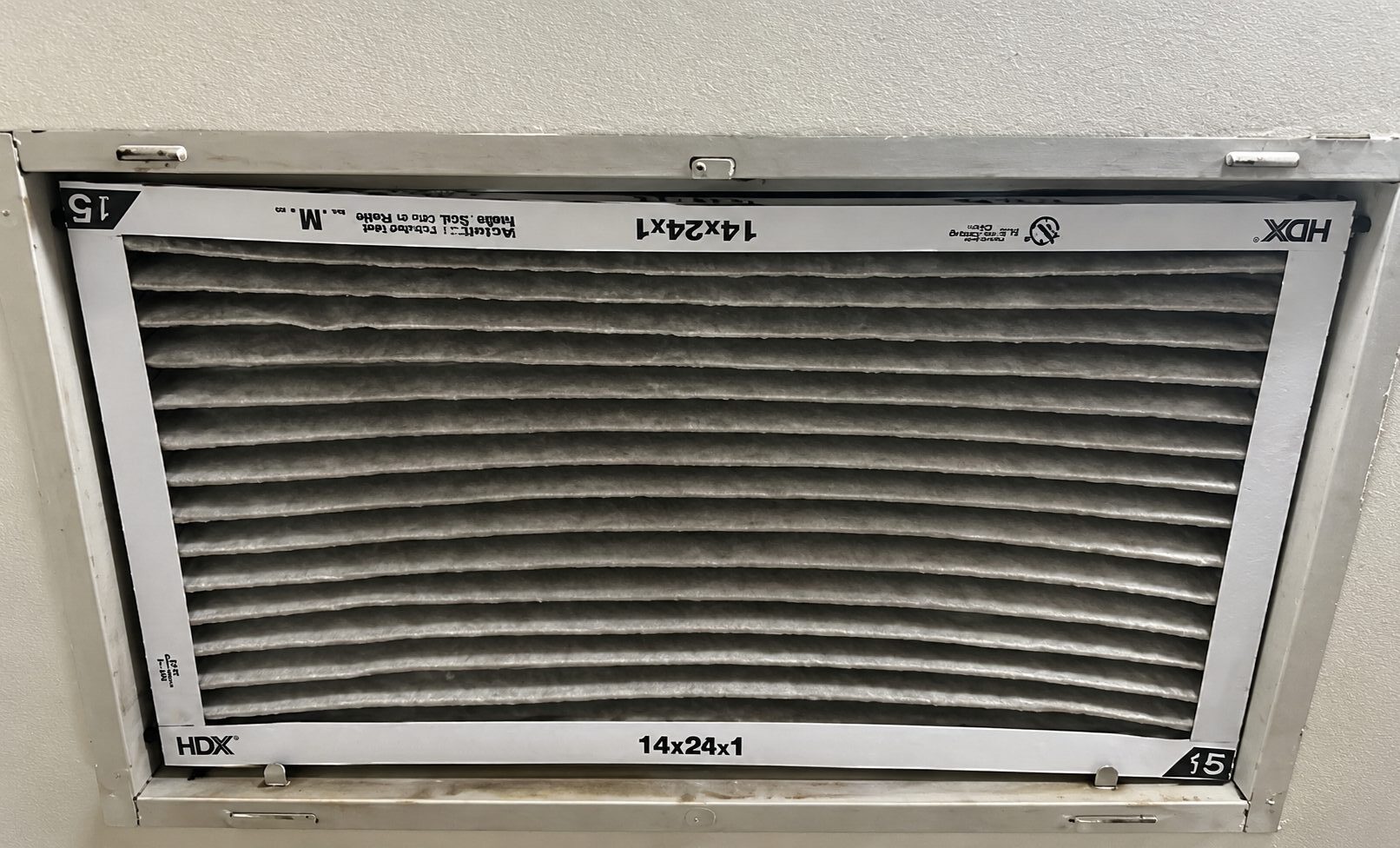
This one is in every homeowner’s control, but it’s easy to forget. A filter that starts out fine gradually turns into a wall as it collects dust, pet hair, and debris. In the Southwest’s dusty environment, filters can load up faster than you’d expect. By the time you notice the house isn’t cooling well, the filter may already be severely clogged.
Crushed or Kinked Flex Duct in the Attic
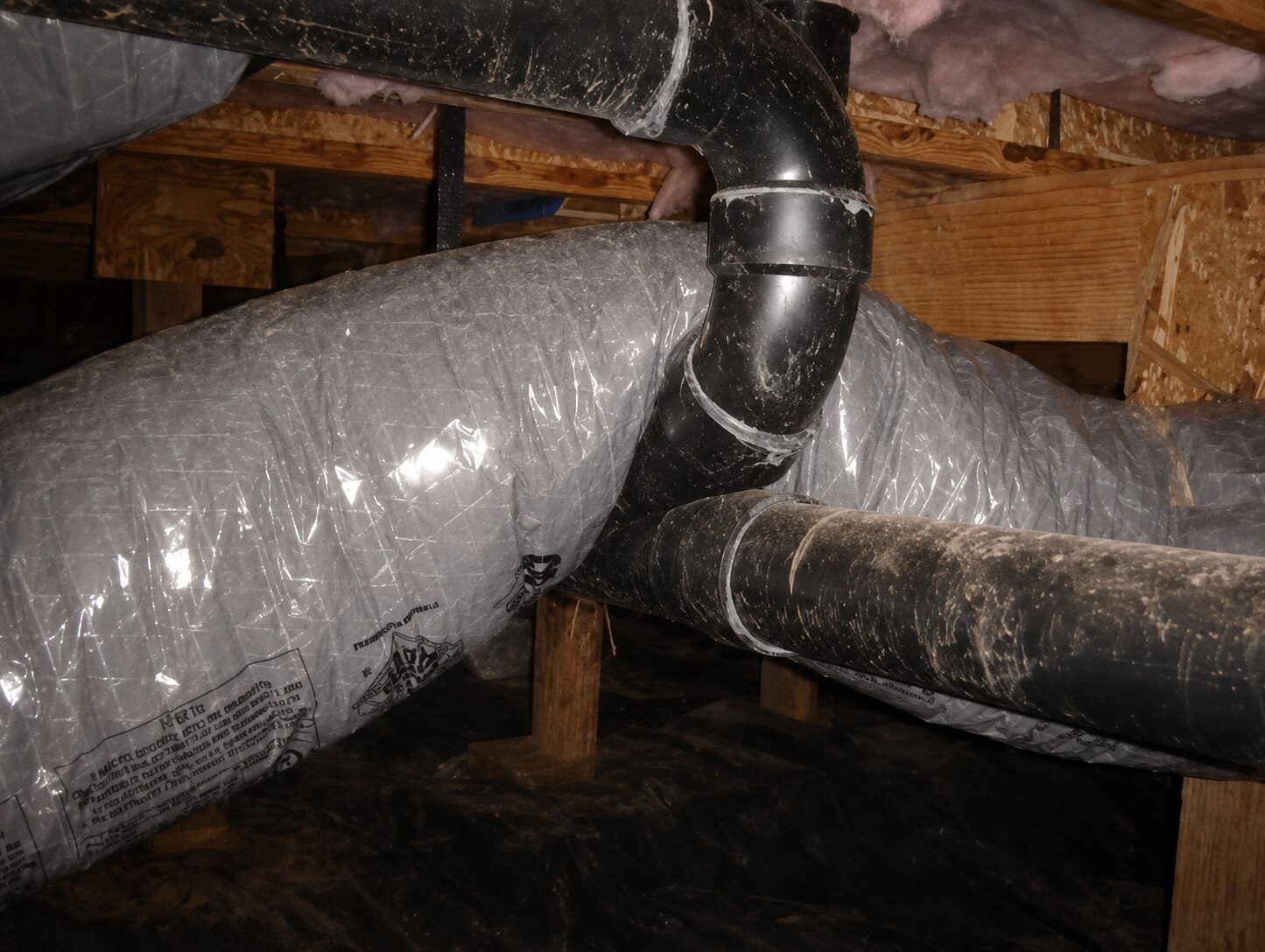
Flex duct is the corrugated, insulated tubing that connects most of the ductwork in Southwestern attics. It’s lightweight and flexible; which also means it’s easy to crush. Blown-in insulation piled on top of it, a careless cable installer stepping on it, or just gravity and time can compress the duct. A flex duct squeezed to half its width doesn’t just lose half its airflow; it can lose far more, because the resistance increases dramatically with every bit of compression.
Bedrooms With No Way to “Breathe”
If your home has one central return (usually in a hallway) and you close your bedroom doors at night, you’ve just cut off the airflow loop. The AC pushes cooled air into the bedroom, but the warm air in that room has no way to get back to the return. The bedroom pressurizes, the hallway depressurizes, and total system airflow drops. The gap under the door? It’s usually not even close to enough.
The Domino Effect: How a Restriction Grows Into a Bigger Problem
A restricted return doesn’t just make your house hot. It sets off a chain reaction that gets worse over time:
- Your blower works harder, drawing more electricity and generating extra heat inside the air handler. That’s a motor that’s aging prematurely with every summer.
- Duct leaks get worse because higher pressure inside the ducts pushes more cooled air out through every crack and gap, into your attic, where it does you zero good.
- Your filter fails faster. High-velocity air through the filter pulls dust and particles through the media and can pull air around the edges, bypassing the filter entirely. That unfiltered dust coats your evaporator coil and blower wheel, reducing cooling capacity even further.
- Humidity problems appear. Less airflow means less moisture removal. Your home might hit the right temperature but still feel damp and clammy.
- In severe cases, the coil freezes solid. Ice forms on the evaporator, blocking airflow completely. Liquid refrigerant can slug back to the compressor, and now you’re looking at a potential compressor replacement, one of the most expensive HVAC repairs there is. All because the return was too small.
Signs You Might Have a Return Airflow Problem

You don’t need instruments to spot the warning signs. Walk through your home while the AC is running and look for these clues:
- The system runs all afternoon but the house never reaches the set temperature.
- Airflow at supply vents feels weak throughout the house.
- You hear whistling or rushing air near the return grille or filter.
- Your filter bows inward: sucked tight against the grille like a vacuum seal.
- Doors slam shut or feel hard to open when the system kicks on.
- You see dust streaks around the edges of the return grille.
- Filters get dirty unusually fast.
- The house feels humid even when the temperature seems OK.
If you’re checking two or three of those boxes, there’s a strong chance your return system is the bottleneck.
What NOT to Do (Common Mistakes That Make It Worse)
When the house won’t cool down, the instinct is to try something, anything. But several common responses actually make the problem worse:
Don’t add refrigerant. An airflow problem looks like a refrigerant problem on gauges, and some technicians jump straight to adding Freon. But if low airflow is the real issue, adding refrigerant can flood liquid back to the compressor and cause serious damage.
Don’t crank up the blower speed. If the ducts are the bottleneck, making the blower push harder just increases pressure, noise, and motor wear without actually moving more air through the home.
Don’t just change the filter and call it done. Yes, replace dirty filters. But if the filter is clean and you still have problems, the restriction is somewhere else — in the ducts, the grille, or the room-to-return pathways. A filter change won’t fix undersized ductwork.
Don’t lower the thermostat to “force” the system to catch up. All this does is extend runtime, increase your electric bill, and potentially freeze the coil. The system isn’t holding back — it’s starving for air.
Don’t close vents in other rooms. Closing supply registers increases static pressure across the whole system and reduces total airflow. You’re not redirecting air, you’re making the restriction worse.
How Knights of the Attic Finds and Fixes the Real Problem
This is where the guessing stops and the measuring starts.
When our team arrives, we don’t start by looking at your outdoor unit or checking refrigerant. We start by testing the entire system as a connected, measurable machine. Here’s what that looks like:
We measure air pressure. Using precision instruments, we measure the air pressure inside your duct system and compare it to the manufacturer’s maximum. If the reading is too high, we know the system is fighting a restriction, and we can narrow down exactly where.
We measure airflow. We check how much air is flowing through your equipment and compare it to what your equipment needs. If your 3-ton system needs about 1,200 CFM and it’s only delivering 900, we’ve found your capacity gap.
We measure ducts. We measure the size of your return grills, filters, and duct and evaluate the sizes relative to your equipment tonnage. Larger equipment needs bigger grills, filters and ducts.
We inspect the attic. We physically trace your ductwork, looking for crushed flex duct, disconnected sections, undersized return trunks, and any other hidden problems that don’t show up from inside the house.
We fix the root cause, not the symptom. Whether that means adding return capacity, replacing crushed ductwork, installing properly sized filter grilles, or adding ceiling-level transfer ducts for closed bedrooms, we design the solution around what the measurements tell us, then we re-test to confirm the fix actually solves the problem.
The Bottom Line
If your AC can’t keep up in the Arizona summers, the answer might not be a new system. It might be that your existing system has never been given the airflow it needs to do its job. A restricted return duct is one of the most common; and most overlooked causes of cooling failure in Desert Arizona homes.
The good news? It’s fixable. And fixing it almost always costs a fraction of what a full system replacement would be.
Knights of the Attic specializes in diagnosing and solving exactly these kinds of problems. We measure, we identify the root cause, we fix it, and we confirm the improvement with numbers; not promises. If your home is struggling to stay cool, let’s find out why.
Book A Consultation in ArizonaReferences
ACCA Manual S: Residential Equipment Selection. Air Conditioning Contractors of America. https://www.acca.org/standards/manuals
ACCA Manual D: Residential Duct Systems. Air Conditioning Contractors of America. https://www.acca.org/standards/manuals
DOE Building America Solutions Center — Sealed and Insulated Metal Ducts: https://basc.pnnl.gov/resource-guides/sealed-and-insulated-metal-ducts
DOE Building America Solutions Center – Ducted Returns: https://basc.pnnl.gov/resource-guides/ducted-returns
Equipment manufacturer installation instructions provide maximum external static pressure specifications and blower performance tables for specific models.
