High Utility Bills · A Symptom, Not a Diagnosis · Phoenix-Metro Homes
Electric Bill Keeps Climbing, but the Comfort Never Does? You’re Paying to Cool Your Attic. You Just Can’t See It on the Bill.
A high summer bill tells you something is wrong. It doesn’t tell you what. In many Arizona homes, part of the answer sits in the attic: duct leakage, attic heat, and airflow problems that force the system to run longer for the same comfort. We test the duct and attic delivery system room by room, and recommend only what the measurements support.


Sound Familiar?
The Bill Is Just the Last Place the Problem Shows Up
By the time a high number lands in your inbox, your home has usually been showing the signs for months. If several of these sound like your house, the bill may be recording an energy-loss problem, not your thermostat habits.
The Bill Outpaces the Weather
Hot summers cost more everywhere. A bill that keeps climbing faster than the heat can explain points at something beyond the temperature outside.
The AC Runs Nearly Nonstop
Every extra hour of runtime goes on the meter. A system that rarely rests on hot days is often replacing cooling that never made it to the rooms.
You Pay More but Feel Less
A high bill paired with rooms that still feel warm is the classic mismatch: the cooling is being produced, and then lost somewhere between the unit and the rooms.
Similar Homes Pay Noticeably Less
Bills differ for plenty of reasons. But when a neighbor with a similar house and similar habits pays far less, the gap is worth investigating.
You Raise the Thermostat to Manage the Cost
Living at 80 degrees to keep the bill survivable is managing a symptom. It trades away comfort without touching whatever is wasting the energy.
Service Visits Haven’t Changed the Number
The unit has been tuned up, the filter is fresh, and the bill stays high. When the equipment checks out, the delivery system is the logical next place to look.
Take 30 Seconds. Check What Matches Your Home
Tick every box that sounds familiar. We’ll tell you right away whether a free assessment makes sense.
Where the Money Goes
Your Bill Doesn’t Pay for Comfort. It Pays for Runtime.
Your meter doesn’t know how cool your rooms feel. It only counts how long the system runs. When part of the cooling is lost in the attic on the way to your rooms, the thermostat takes longer to satisfy, the system runs longer, and the extra hours land on the bill. The AC isn’t wasting the energy. The delivery path is.
This is why two homes with the same thermostat setting can have very different bills, and why the fix starts with finding where the energy is actually going instead of assuming the equipment is at fault.
Why Bills Climb
A High Bill Is a Symptom. These Are the Usual Suspects.
Most homes with high cooling costs are dealing with more than one of these at once, and no two homes waste energy the same way. Which ones apply to your home is exactly what the testing is for.
Leaking or Disconnected Ductwork
Conditioned air escapes into the attic through gaps, failed joints, and separated runs. You pay to cool air that never reaches a room.
Attic Heat Gain on the Ducts
Thin, damaged, or slipped duct insulation lets attic heat soak into the airstream, so the system runs longer to deliver the same temperature.
Crushed, Kinked, or Undersized Ducts
Restricted runs can’t carry what the blower produces. Rooms get less air than their cooling loads need, and the system makes up the difference with time.
Return-Air Design Problems
If the system can’t pull enough air back, it can’t push enough out. An undersized or poorly placed return quietly caps the whole system’s efficiency.
Imbalanced Airflow & Room Pressure
When airflow doesn’t match each room’s actual load, the system runs overtime for its weakest rooms while others get more air than they need.
Under-Insulated or Unsealed Attic Areas
When the attic pushes more heat into the home than it should, the system faces a bigger job every hour it runs, and the meter keeps score.
Side by Side
Two Homes, Same Thermostat Setting. Very Different Bills.
Same weather, same setpoint. The difference is how much of the cooling survives the trip from the unit to the rooms.
| What you notice | Losing Energy in Delivery | Healthy Delivery System |
|---|---|---|
| Runtime | Runs long into the evening, replacing cooling that never arrived | Normal cycles that finish the job and rest |
| What you pay for | Cooling for the rooms, plus the share the attic takes | Cooling for the rooms, once |
| Reaching the setting | Some rooms never get there, so the system keeps going | Every room targets the same setting |
| The summer bill | Grows with every hour of extra runtime | Tracks the weather and your habits |
| Wear on the equipment | Extra hours of workload, season after season | Normal cycles, normal workload |
| Comfort on 110°+ days | Falls behind by afternoon and never recovers | Holds the setpoint through the peak |
The free assessment tells you, with measurements, which column your home is in today.
Measured, Not Guessed
We Don’t Guess at a Bill. We Measure the Home Behind It.
A page can list the possible causes. Only an inspection can tell you which ones are happening in your house. The Free Duct & Attic Assessment measures the whole delivery path, so any recommendation is backed by numbers, not a hunch.
- Room-by-room airflow tested at every supply register
- Delivered-air temperature tested, so we know what’s actually arriving
- Every accessible duct run, joint, and connection inspected
- Duct and attic insulation checked against the heat it faces
- Return-air pathways and room pressure evaluated
- Supply-duct routing and sizing checked against each room’s cooling load
- Every area of concern photographed so you can see it yourself

The Difference
Why “Everything Checks Out” Can Still Come With a High Bill
A typical service call is built around the equipment: refrigerant, capacitors, coils. Those checks matter, but they end at the unit. Our assessment focuses on the delivery system between the equipment and your rooms, which is where energy losses tend to hide.
Delivered Air Temperature
What temperature the air actually arrives at in each room, not just what the unit produces at the coil.
Duct Leakage En Route
How much of the conditioned air escapes into the attic between the unit and the rooms it was meant for.
Attic Heat Gain Along the Path
Whether the duct insulation can stand up to the attic heat it faces, or the air is warming on the trip.
Airflow Each Room Receives
Measured at every register and compared against what each room’s size, windows, and sun exposure demand.
Return-Air Pathways & Pressure
Whether air can get back to the system. A starved return is an invisible bottleneck that caps everything the system can deliver.
The Attic Above It All
Insulation coverage, air sealing, and attic conditions that decide how hard the whole system has to work, hour after hour.
The Right Fix
The Correction Depends on What the Testing Finds, Never the Other Way Around
A leaking duct, a starved return, and an under-insulated attic waste energy in different ways and call for different fixes. Once the measurements show where your energy is going, the correction might be one targeted repair, or a combination matched to your home.
Sealing & Reconnecting Ductwork
Closing the gaps, seams, and failed joints that bleed conditioned air into the attic, so the cooling you pay for stays in the system.
Restoring or Upgrading Duct Insulation
Correcting damaged, slipped, or insufficient duct insulation so attic heat stops soaking into the air on its way to your rooms.
Repairing, Rerouting, or Upsizing Restricted Runs
Relieving crush points, straightening kinks, and correcting runs too small for the air they’re asked to carry.
Room-by-Room Airflow Balancing
Redistributing airflow so every room gets what its load requires, and the system stops running overtime for its weakest rooms.
Improving Return-Air Pathways
Opening up the return side so the system can pull enough air back to deliver everything it’s capable of producing.
Correcting Attic Insulation & Air Sealing
Reducing the heat the attic pushes into your home, so the load the system faces drops back toward what it was built to handle.
We won’t recommend any of the above until the testing shows it addresses your actual losses. And if the measurements say your delivery system is healthy, we’ll tell you that too. Diagnosis first. Always.
After the Fix
What Correcting Energy Loss Gives Back
How much improvement a home sees depends on what the testing finds. That’s exactly why we measure before and after. These are the outcomes the corrections work toward.
- The cooling you pay for arrives in the rooms it was meant for
- Shorter runtimes for the same comfort, day after day
- A system that stops cooling the attic along with the house
- Rooms that reach the thermostat setting instead of chasing it
- Less strain on the equipment, cycle after cycle
- Results verified with follow-up measurements, not assumptions
Every correction is verified the same way it was diagnosed: we re-test after the work, so the improvement is measured, not assumed.
One Possible Recommendation
If Testing Points to Duct Energy Loss, This Is One Correction We May Recommend.
For homes where the measurements show the ducts are leaking conditioned air and soaking up attic heat, Insulated Duct Armor™ seals, insulates, and protects the duct system at the source, shielding it from the extreme attic heat that steals cooling on its way to your rooms. It’s one option among many, and only the testing decides whether it’s the right one for your home.
- Seals vulnerable duct gaps and connections
- Adds a protective insulating barrier against extreme attic heat
- Helps conditioned air reach the rooms where it belongs
- Helps extend the life of the duct system
Our Process
How the Free Duct & Attic Assessment Works
No guessing, no upsell pressure. A clear diagnosis of where your energy is going, backed by evidence you can see.
Inspect & Test the Whole Path
We inspect the duct system and attic, and test airflow and delivered-air temperature room by room, across the entire delivery path between your AC and your rooms.
Pictures & Thermal Images
We photograph every area of concern in your attic and capture thermal images of key sections, so you can see where the energy is going for yourself.
Straightforward Findings
You get a simple breakdown of what’s wasting energy, what isn’t, and what fixing it would involve, all before you spend a dollar.
Correct & Verify
If you move forward, we make the correction and then re-measure the result, so the fix is proven rather than promised.
Backed in Writing
Guarantees That Prove It — Not Just Promises
Homeowners should never have to gamble on comfort. Every Knights of the Attic project is backed by clear, written guarantees.
20-Year Labor Workmanship Warranty
Most contractors cover labor for 1–2 years. We back ours for 20. If a problem ever arises from our work, the labor to fix it is fully covered.
Air Temperature Guarantee
We guarantee colder air from your supply vents in summer and warmer air in winter. Delivered-air temperatures are measured before and after the project to confirm the improvement.
Energy Savings Guarantee
We guarantee your completed improvements will reduce duct-related energy waste. Leakage reduction and system performance are measured & accurate estimates are calculated so the results are supported by real data.
100% Money-Back Guarantee
We stand behind the performance promised for your project. When we cannot deliver the guaranteed results, we will work to correct the issue or refund your investment in full.
Real Homeowners
What Valley Homeowners Say
Reviews from homeowners we’ve helped across the Phoenix metro, pulled live from Google.


Good Questions
High-Bill Questions Homeowners Ask Us
Yes. The full duct and attic inspection, room-by-room airflow and temperature testing, photos and thermal images, findings review, and any recommendations are free, with no obligation. You decide what, if anything, happens next.
No. We don’t sell or service HVAC equipment, so we have no reason to tell you that you need a new unit. We diagnose and fix the delivery system: ductwork, airflow, insulation, and air sealing. If the testing points to the equipment itself, we’ll tell you plainly, and we work closely with professional HVAC contractors who can deliver.
No, and we’d be guessing if we tried. A high bill is a symptom with many possible causes: duct leakage, attic heat gain, airflow restrictions, insulation gaps, equipment issues, rates, weather, and habits all move the number. The honest answer takes an inspection and measurements, and that is exactly what the free assessment is for.
It could, and sometimes it is. Utility rates change, and a brutal summer costs more to cool through. What the assessment adds is the piece the statement can’t show you: whether your home is losing conditioned air or taking on attic heat it shouldn’t. If the delivery system tests healthy, we’ll tell you that, and you’ll know the bill reflects the weather rather than waste.
Because a standard service call checks the equipment, not the delivery system it pushes air into. The unit can be producing exactly what it should while duct leakage, attic heat gain, restricted runs, or return-air problems lose part of the cooling before it reaches your rooms. The system then runs longer to compensate, and the extra runtime is what you’re billed for. That gap between what’s produced and what’s delivered is what our assessment measures.
Only if duct leakage is actually part of your problem, which is why we test before recommending anything. If the measurements show leakage, correcting it targets the extra runtime that leakage was causing, and we re-measure afterward to confirm the improvement. What we won’t do is promise a number before we’ve measured your home.
Insulated Duct Armor™ is our proprietary solution for sealing, insulating, and protecting attic ductwork. It helps significantly reduce leakage, defend against extreme attic heat, improve delivered air temperature, and extend the life of the duct system; so more of the air you paid to cool reaches your rooms. It’s one possible correction — recommended only when the testing shows duct energy loss is your actual problem.
We inspect the duct system and attic, test airflow and temperature room by room, and photograph every area of concern — including thermal images of key sections. Typical assessments take around 2-3 hours, and yes — we ask that the homeowner be present at arrival and for the findings review.
Proudly Local
Serving Homeowners Across the Valley
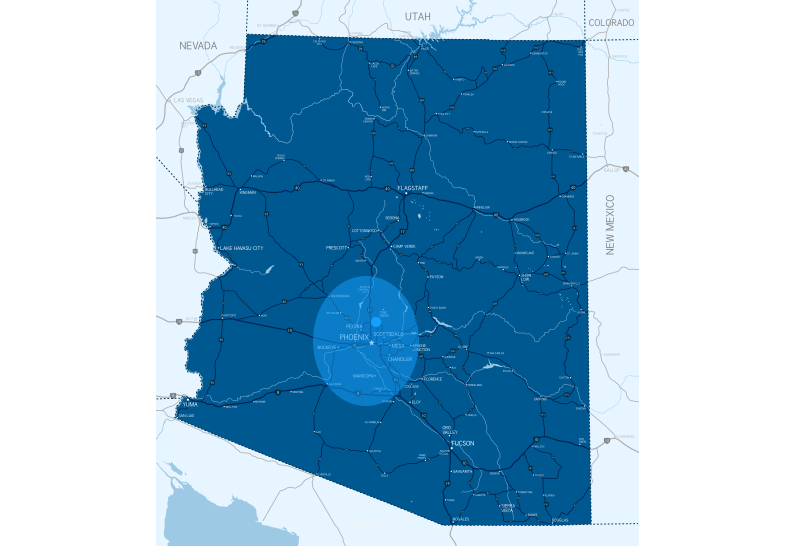
Knights of the Attic helps homeowners throughout the Phoenix metro area and surrounding Arizona communities find out why summer bills keep climbing, and fix the delivery losses behind them.
- Scottsdale
- Phoenix
- Mesa
- Tempe
- Gilbert
- Peoria
- Chandler
- Apache Junction
- Avondale
- Buckeye
- Carefree
- Casa Grande
- Cave Creek
- El Mirage
- Fountain Hills
- Gila Bend
- Glendale
- Goodyear
- Guadalupe
- Litchfield Park
- Maricopa
- Paradise Valley
- Queen Creek
- Surprise
- Tolleson
- Wickenburg
- Youngtown
Not sure whether we serve your home? Call (602) 675-6827 and we’ll be happy to assist.
Your Next Step
Stop Paying for Cooling You Never Feel. Find Out Where It’s Going.
Schedule the free Duct & Attic Assessment. We’ll measure the entire delivery path room by room, show you the evidence, and tell you plainly if nothing is wrong.
Free assessment · No obligation · Knights of the Attic does not sell or service HVAC equipment. We specialize in the duct and attic delivery system between the equipment and your rooms.