Attic Insulation · Phoenix Metro · Measured, Then Installed
Attic Insulation for Arizona Homes. Because Having Insulation Isn’t the Same as Having Enough.
On an Arizona summer afternoon, your attic turns into an extreme-heat environment sitting directly above every room you’re paying to cool. The insulation on the attic floor is the main barrier between the two. Knights of the Attic inspects and measures your existing insulation across the entire attic, shows you exactly where it’s thin, uneven, or missing, and installs only what your attic actually needs.


Sound Familiar?
When an Attic Is Under-Insulated, the Rooms Below Are the First to Know.
Most homeowners never see their insulation; they feel it. These are the signs that attic heat is getting through the barrier and into the rooms below.
Rooms That Turn Hot Every Afternoon
The timing is the tell: the attic reaches its peak heat in the afternoon, exactly when certain rooms start losing the battle, no matter the thermostat.
Ceilings Warm to the Touch
A ceiling that feels warm on a summer day is radiating attic heat straight into the room; the insulation above it isn’t stopping the transfer.
The AC Runs Longer Every Summer
Your AC removes heat; your attic keeps adding it from above. The less your insulation holds back, the longer the system has to run to break even.
Rooms Under the Attic Never Catch Up
Upstairs rooms and rooms directly beneath the hottest parts of the attic take on the most heat from above, so they lag behind the rest of the house all day.
Bills Climbing Beyond the Weather
Every degree of attic heat that gets through the ceiling is heat you pay to remove. Longer runtimes for the same comfort show up on the bill first.
The Cool Never Lasts
The AC cycles off and the house heats right back up within minutes, because the heat pressing down from the attic never stopped; the cooling just paused.
Take 30 Seconds. Check What Matches Your Home
Tick every box that sounds familiar. We’ll tell you right away whether a free attic assessment makes sense.
Heat From Above
Your AC Fights the Heat From Below. Your Attic Pushes It In From Above.
All summer long, the Arizona sun turns your attic into an extreme-heat environment sitting directly on top of every conditioned room in the house. The insulation on the attic floor is the primary barrier between those two worlds. Where it’s deep and even, the heat stays up there. Where it’s thin, compressed, disturbed, or missing, the heat presses through the ceiling, and your AC pays for it.
The Part Most Homeowners Never See
Having Insulation Isn’t the Same as Having Enough, Installed Evenly, Everywhere.
Almost every Valley attic has some insulation. Far fewer have enough of it, at an even depth, covering every section. Against Arizona attic heat, the difference between “some” and “enough” is the difference the rooms below can feel. These are the shortfalls we find most often.
Settled & Too Thin
Insulation loses loft as it ages and settles. An attic that was adequate when the home was built can quietly drop below the protection the house needs today.
Uneven Coverage
Deep drifts in one section, shallow valleys in another. The thin areas become the path of least resistance, and the rooms under them run hot.
Compressed by Storage & Traffic
Boxes, plywood decking, and foot traffic flatten insulation, and compressed insulation loses much of its ability to slow heat, even though it’s still “there.”
Disturbed by Past Work
Cable runs, AC service, roof repairs, pest treatments: every trade that crosses an attic moves insulation, and almost none of them put it back.
Missing or Bare Sections
Corners, edges, and hard-to-reach sections are often skipped entirely. If you can see ceiling framing poking through, the barrier is broken at that spot.
Air Gaps at the Top Plates
Where the walls meet the attic, unsealed gaps let attic air move where it shouldn’t; it’s a leak insulation alone can’t close, and one we check on every assessment.
You can’t diagnose any of these from the hallway, or from a glance through the attic hatch. Only measuring depth and coverage across the whole attic tells you which of these your home actually has. That’s exactly what the free assessment does.
Side by Side
An Under-Insulated Attic vs. a Properly Insulated Attic
Same house, same AC, same Arizona summer; what changes is how much of the attic’s heat ever reaches the rooms. Here’s what that difference looks like day to day.
| What you notice | Under-Insulated Attic | Properly Insulated Attic |
|---|---|---|
| Afternoon comfort | Falls behind as the attic peaks; hottest hours, weakest results | Holds the setting through the peak of the day |
| Ceiling temperature | Warm to the touch, radiating attic heat into the rooms | Stays near room temperature |
| AC runtime | Long cycles fighting heat pouring in from above | Normal cycles that finish the job and rest |
| Room-to-room evenness | Rooms under thin or bare spots run noticeably hotter | Even coverage, even temperatures |
| Cooling bills | You pay to remove heat that should never have gotten in | You pay for the home’s normal cooling load |
| Evenings after sunset | The heat-soaked attic keeps radiating into the rooms for hours | The house recovers quickly once the sun goes down |
The free assessment tells you, with a measurement instead of a guess, which column your attic is in today.
Measured, Not Guessed
Not Every Attic Needs the Same Amount or the Same Type. So We Measure First.
Plenty of companies will quote attic insulation over the phone by the square foot, sight unseen. We won’t, because the right recommendation depends on what’s already up there. The free assessment measures your existing insulation across the entire attic, so what we propose is matched to your home, not a script.
- Insulation depth measured across the attic, not eyeballed from the hatch
- Coverage mapped for thin, compressed, disturbed, and bare areas
- Existing insulation type and condition identified
- Hard-to-reach and inaccessible sections identified, so no area gets skipped
- Air gaps at the top plates checked, where the walls meet the attic
- Every area of concern photographed so you can see it yourself


Our Main Service
Blown-In Premium Fiberglass Insulation, Installed to a Measured Depth.
When the measurements show your attic needs more protection, our core correction is blown-in premium fiberglass insulation, applied evenly across the entire attic floor to the depth your attic calls for. Blowing the insulation in lets it flow around framing, wiring, and irregular corners, covering the thin spots and gaps that a “some insulation up there” attic always hides.
- Full-attic coverage at an even, measured depth, not a bag count
- Fills the corners, edges, and irregular spaces where heat sneaks through
- In most attics, installed right over the existing insulation; no removal needed
- The amount is set by your attic’s measurements, never a one-size-fits-all number
Every Attic Is Different
Two More Tools for Attics That Aren’t Straightforward
Low clearances, framed-off sections, and decades of past work mean some attics can’t be fully protected with a blower hose alone. The inspection decides which of these your attic needs, not a sales script.
Drill & Fill for Inaccessible Sections
Some attic sections can’t be reached from inside: low-slope edges, framed-off areas, additions with no access. Rather than leaving those sections unprotected, we fill them through small, patched access points, so the barrier is complete across the whole ceiling instead of stopping where the crawl space does.
Removal Only When Necessary
Most attics don’t need the old insulation removed; fresh insulation is blown in right over it. When the existing material’s condition genuinely calls for removal, we remove it first and start clean, and we’ll show you the evidence behind that call, because the inspection decides, not the invoice.
Either way, you’ll know before any work begins: what your attic has, what it needs, and exactly how we’d get it there.
A Supporting Upgrade
Sealing the Air Gaps Insulation Alone Can’t Close.
Where your walls meet the attic, the tops of the wall frames, called the top plates, are a common path for air to move between the attic and the living space below. Insulation slows heat; it doesn’t stop air. Insulated Attic Armor™ is our air-gap sealing at the top plate, closing those pathways so the insulation above it can do its full job. It’s a supporting upgrade we evaluate during the same free assessment, recommended only when your attic shows the need.
- Seals the air gaps at the top plates, where the walls meet the attic
- Helps the insulation above it deliver the protection it was installed for
- Evaluated during the same free assessment; no separate visit needed
Our Process
How the Free Duct & Attic Assessment Works
No guessing, no phone quotes, no upsell pressure; just a clear picture of what your attic has and what it needs, backed by evidence you can see.
Inspect & Measure the Whole Attic
We measure insulation depth and coverage across the entire attic: type, condition, thin spots, bare sections, and the air gaps at the top plates.
Photos & Findings You Can See
Every area of concern is photographed, so you see your own attic’s thin spots and gaps for yourself, not a stock photo or a diagram.
A Straightforward Recommendation
You get the amount, type, and method matched to your attic; if your insulation is already doing its job, we’ll tell you that plainly, before you spend a dollar.
Install & Verify
If you move forward, we install to the measured depth, evenly, across the whole attic, then verify the coverage when we’re done, so the result is proven rather than promised.
Backed in Writing
Guarantees That Prove It, Not Just Promises
Homeowners should never have to gamble on comfort. Our written guarantees come with our project packages; our Gold package includes blowing in full attic insulation across the entire attic.
20-Year Labor Workmanship Warranty
Most contractors cover labor for 1–2 years. We back ours for 20. If a problem ever arises from our work, the labor to fix it is fully covered.
Energy Savings Guarantee
We guarantee your completed improvements will reduce the energy your system wastes fighting attic heat. Performance is measured, so the results are supported by real data, not estimated by feel.
Comfort Guarantee
The rooms under your attic should hold their temperature noticeably better after the project; confirmed with you afterward, not just promised before.
Air Temperature Guarantee
We guarantee colder air from your supply vents in summer and warmer air in winter, with temperatures measured before and after the project to confirm the improvement.
Airflow Guarantee
Measured airflow at your registers improves after qualifying projects, verified with the same instruments we used before the work began.
Which guarantees apply depends on the package you choose; we’ll walk you through exactly what’s covered, in writing, before any work is scheduled.
Real Homeowners
What Valley Homeowners Say
Reviews from homeowners we’ve helped across the Phoenix metro, pulled live from Google.


Good Questions
Attic Insulation Questions Arizona Homeowners Ask Us
Yes. The full attic inspection, insulation depth and coverage measurements, photos, findings review, and any recommendations are free, with no obligation. You decide what, if anything, happens next.
You can’t tell by glancing through the attic hatch, and that’s the catch. An attic can look insulated while being too thin in half its area, compressed under storage, or bare in the corners you can’t see from the opening. Having insulation and having enough insulation, at an even depth, everywhere, are two different things. The only honest answer comes from measuring depth and coverage across the whole attic, which is exactly what the free assessment does.
Our core service is blown-in premium fiberglass insulation. Blowing it in lets the material flow around framing, wiring, and irregular corners for even, complete coverage. That’s the kind of coverage Phoenix attic heat punishes you for not having. The amount is set by your attic’s measurements, not a one-size-fits-all number.
Usually not. In most attics, fresh insulation is blown in right over the existing material and the two work together. Removal is the exception, not the rule; we only recommend it when the condition of the existing insulation genuinely calls for it, and we’ll show you the evidence behind that call.
It depends on the home; which is why we measure before we recommend. The right amount for your attic depends on what’s already up there, its condition, how evenly it’s distributed, and how the home is built. Anyone quoting a number before measuring your attic is guessing. For overall amount/depth of insulation: code minimum is R-38 (10-14in deep), but we recommend R-49 (14-17in deep) or higher to get the best performance. After the assessment, you’ll get a recommendation matched to your attic of how much is needed, with the measurements to back it up.
That’s what Drill & Fill is for. Low-slope edges, framed-off sections, and additions without attic access can’t be reached from inside, so we fill those cavities through small, patched access points instead of leaving them unprotected. The assessment identifies those sections up front, so nothing gets silently skipped.
Less attic heat getting into the house means less heat your AC has to remove: shorter runtimes for the same comfort. That’s the mechanism, and it’s why our project packages are backed by a written Energy Savings Guarantee. What the improvement looks like for your home depends on what the measurements find, and we’ll walk you through that honestly before any work begins.
Most blown-in insulation projects are completed in a single visit. The work happens in the attic; we protect the work area around the attic access, keep the hose path covered, and leave the living space the way we found it. You’ll get the specifics for your home, including timing, before anything is scheduled.
Insulated Attic Armor™ is our air-gap sealing at the top plates, the tops of the wall frames where your walls meet the attic. Insulation slows heat, but it doesn’t stop air moving through gaps at those junctions. Sealing them closes off that pathway so the insulation above can do its full job. We evaluate it during the same free assessment and recommend it only when your attic shows the need.
Proudly Local
Serving Homeowners Across the Valley
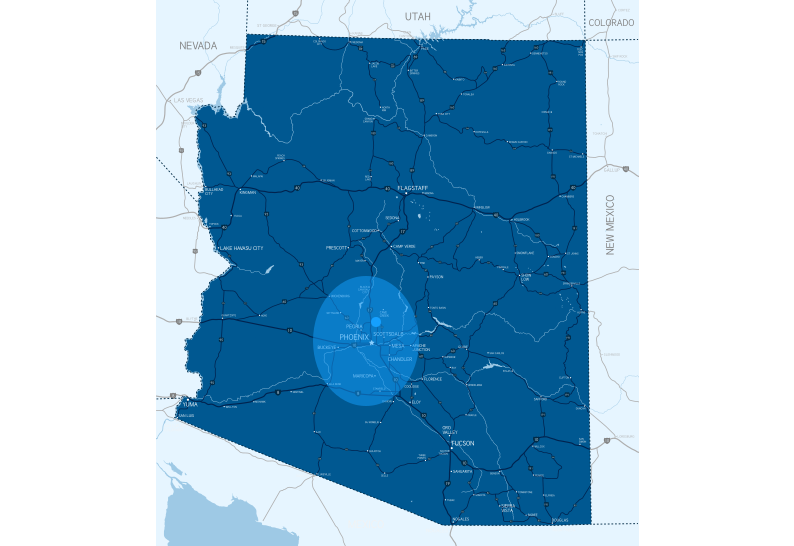
Knights of the Attic helps homeowners throughout the Phoenix metro area and surrounding Arizona communities measure what their attic insulation is really doing, and bring it up to what the Arizona heat demands.
- Scottsdale
- Phoenix
- Mesa
- Tempe
- Gilbert
- Peoria
- Chandler
- Apache Junction
- Avondale
- Buckeye
- Carefree
- Casa Grande
- Cave Creek
- El Mirage
- Fountain Hills
- Gila Bend
- Glendale
- Goodyear
- Guadalupe
- Litchfield Park
- Maricopa
- Paradise Valley
- Queen Creek
- Surprise
- Tolleson
- Wickenburg
- Youngtown
Not sure whether we serve your home? Call (602) 675-6827 and we’ll be happy to assist.
Your Next Step
Find Out Exactly How Much Insulation Your Attic Has, and How Much It Needs.
Schedule the free Duct & Attic Assessment. We’ll measure your insulation across the entire attic, show you the evidence, and tell you plainly if your attic is already fine.
Free assessment · No obligation · Knights of the Attic does not sell or service HVAC equipment. We specialize in the attic above your rooms: insulation, air sealing, and the duct system.